Best Books on Freelancing

Updated July 21, 2026 · 4 books

Best Books on Freelancing: ranked list of 4 books

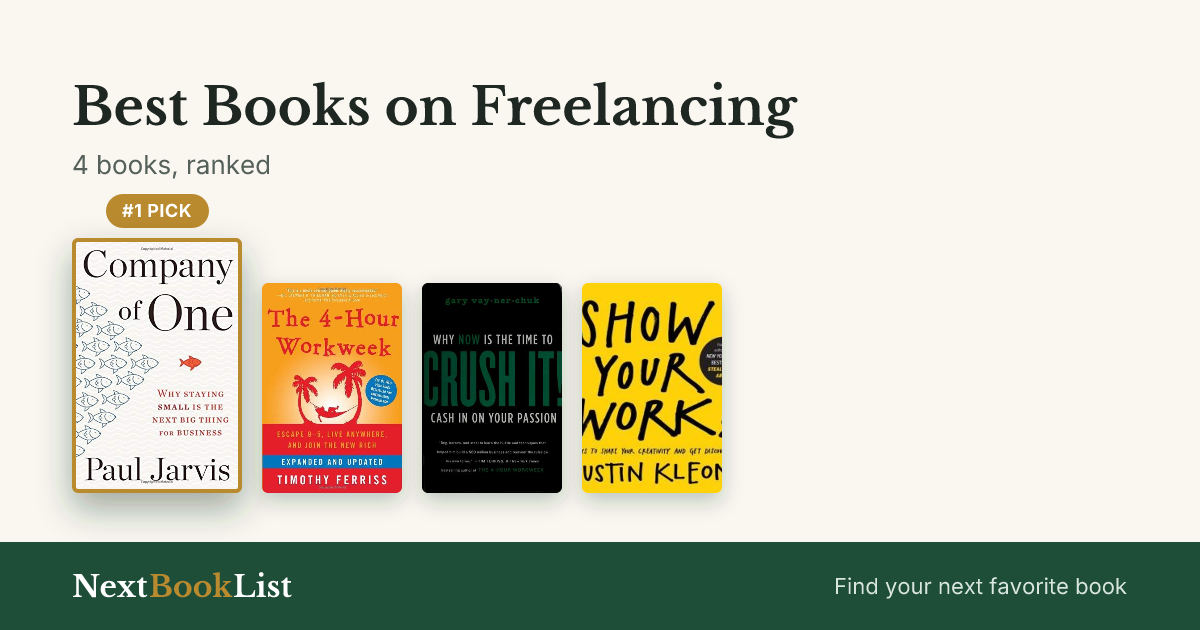
The best book for freelancing is Company of One, because the hardest thing about going independent isn’t finding clients, it’s resisting the pressure to scale into something you never wanted. Jarvis makes staying small a strategy instead of a failure to grow, and that reframe is worth more to most freelancers than another list of client-acquisition tactics.

The 4-Hour Workweek follows for the automation mindset: cut the tasks that don’t need to be you, outsource or eliminate the rest, and stop treating busywork as proof you’re working hard. Ferriss oversells the four-hour part, but the underlying move, ruthlessly cutting what doesn’t matter, is exactly what freelancers drowning in admin need.

Crush It and Show Your Work! solve the visibility problem from opposite temperaments. Vaynerchuk is hustle and attention as the asset; Kleon is quieter, document your process and let being findable replace the pitch deck. Most freelancers need one of these, not both, pick the one that matches your energy.

One warning: freelancing books are where people read four of them and still haven’t sent an invoice. Pick Company of One for the philosophy, Show Your Work! for visibility, and go get one client before reading a fifth book on how to get clients.

Quick Comparison

#BookBest for
1Company of OnePaul Jarvisyou're building a business and quietly dread the idea of managing 50 employees to get thereAmazon
2The 4-Hour WorkweekTim Ferrissemployees dreaming of escape and founders who want a lean, automated businessAmazon
3Crush ItGary Vaynerchukcreators and founders who want a no-excuses push to build a personal brandAmazon
4Show Your Work!Austin Kleoncreators and freelancers who do great work in private and wonder why nobody finds itAmazon

The Books

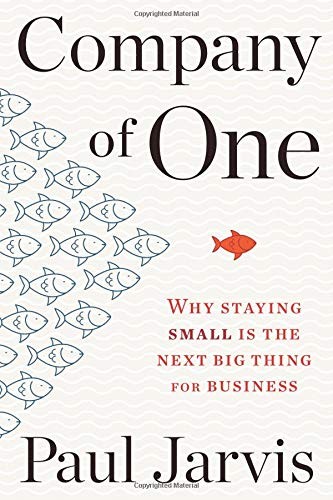
Company of One by Paul Jarvis book cover

1. Company of One

Paul Jarvis · 2019

What if the goal isn't to get bigger, but to stay exactly the size that works?

Jarvis runs his own small, deliberately un-scaled business, and this book reads like the case he’s made to himself for years: that the default startup script (raise, hire, grow, repeat) isn’t the only legitimate way to build something worthwhile. It won’t convince everyone, and it isn’t supposed to.

Read it if: you're building a business and quietly dread the idea of managing 50 employees to get there

Skip it if: you're building something that genuinely needs venture scale -- network effects, capital-intensive infrastructure -- staying small isn't a strategic option for every business
Full verdict: Company of One →

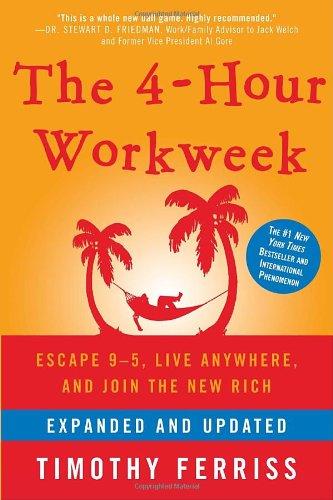
The 4-Hour Workweek by Tim Ferriss book cover

2. The 4-Hour Workweek

Tim Ferriss · 2007

Retirement is a failed concept. Build a business that runs without you and take the time now.

Ferriss wrote this as a 29-year-old who’d built a supplement business that ran on autopilot, and the energy shows. The tactics date in spots (some tools are dead), but the central heresy, that you can design your life now instead of after 40 years of deferring, is why the book still sells. Take the title with a grain of salt and keep the method.

Read it if: employees dreaming of escape and founders who want a lean, automated business

Skip it if: you're happy in a steady corporate career and find hustle-culture grating

Full verdict: The 4-Hour Workweek →

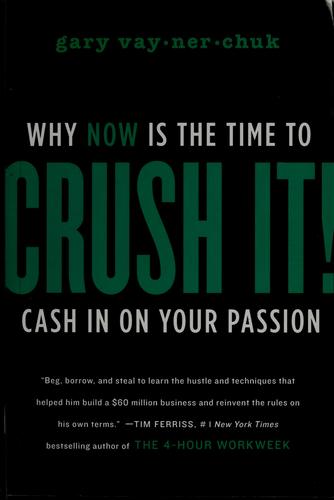
Crush It by Gary Vaynerchuk book cover

3. Crush It

Gary Vaynerchuk · 2009

Gary Vee's early rallying cry: turn your passion into a business using social media.

Crush It is Gary Vaynerchuk at his most energetic: document your passion, win on attention, hustle. Dated on the specific platforms, but the ‘attention is the asset’ thesis aged well. Skip it if you’ve internalized the hustle and need strategy over motivation.

Read it if: creators and founders who want a no-excuses push to build a personal brand

Skip it if: you're already monetizing your audience and want depth, not hype

Full verdict: Crush It →

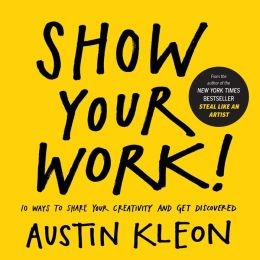
Show Your Work! by Austin Kleon book cover

4. Show Your Work!

Austin Kleon · 2014

You don't need to be a genius to get discovered. You need to be findable.

Kleon’s whole pitch is that the “overnight discovery” story is a myth, and the antidote is boring: post the process, not just the product, and do it small and often. It reads in an afternoon, and every chapter is a single habit rather than a theory, which is why it’s easier to actually apply than most creativity books.

The tradeoff is depth. This won’t teach you a content strategy or a funnel; it teaches you to stop being invisible. Pair it with something more tactical once the sharing habit sticks, and treat the criticism chapter as the most important one in the book – it’s the part that actually gets skipped in practice.

Read it if: creators and freelancers who do great work in private and wonder why nobody finds it

Skip it if: you already have an audience and need conversion tactics, not visibility

Full verdict: Show Your Work! →

Frequently Asked Questions

What is the best book for someone starting out as a freelancer?

Company of One. Jarvis makes the case for staying deliberately small instead of chasing growth for its own sake, which is the actual freelance advantage most people abandon the moment they get their first big client. Start here to set the philosophy before you build the systems.

Company of One or The 4-Hour Workweek?

Jarvis is the grounded operating philosophy: stay small on purpose, know your real constraints. Ferriss is the automation playbook: cut the busywork, outsource what you can, buy back your time. Read Jarvis for the mindset, Ferriss for specific tactics on reclaiming hours.

How do I actually get clients or an audience as a freelancer?

Crush It and Show Your Work! solve this from two angles. Vaynerchuk pushes documenting your work publicly and building attention through hustle, dated on the specific platforms but right about attention being the asset. Kleon's version is quieter, share the process, not just the finished product, and let being findable do the work that pitching used to.

I already have clients. What should I read next?

The 4-Hour Workweek, for systemizing and automating the parts of freelancing that don't need to be you personally. It's the book that pushes you from 'freelancer doing everything' toward 'operator running a lean business.'

Do I need to read all four freelancing books?

No. Company of One for the mindset and Show Your Work! for visibility cover most freelancers' actual gaps. Add Crush It if you need a jolt of hustle, and The 4-Hour Workweek once you have enough clients that automating matters.

Keep Reading