Best Books on Productivity: 8 That Respect Your Finite Time

Updated July 8, 2026 · 8 books

The best productivity book is Deep Work, because the real constraint isn’t hours, it’s undistracted attention — and Newport both proves it’s your most valuable asset and gives you the protocol to protect it. Read it and actually do the time-blocking, or the rest is decoration.

Then widen the frame. Buy Back Your Time is the external half: use money and delegation to reclaim your calendar once you know it’s valuable. Four Thousand Weeks and Essentialism stop you confusing speed with direction — accept you’ll never clear the list, then cut it to one thing. The ONE Thing is the daily version of that cut.

Close with the attention defense. Digital Minimalism and Indistractable are the phone-and-distraction pair; Hyperfocus is the short tactical complement on single-tasking.

One warning: productivity is the genre most prone to optimization theater. The point is to do fewer, better things — not to manage your tasks faster so you can do more of them.

Quick Comparison

#BookAuthorBest for
1Deep WorkCal Newportknowledge workers whose output depends on sustained concentrationAmazon
2Buy Back Your TimeDan Martellfounders and operators doing $10/hour tasks with $500/hour potentialAmazon
3Four Thousand WeeksOliver Burkemanproductivity addicts who clear their inbox and still feel behindAmazon
4EssentialismGreg McKeownovercommitted people who say yes by default and pay for itAmazon
5The ONE ThingGary Keller & Jay Papasanpeople juggling ten priorities who secretly know only one mattersAmazon
6Digital MinimalismCal Newportanyone whose default reaction to boredom is reaching for a deviceAmazon
7IndistractableNir Eyalanyone who blames their phone but suspects the problem runs deeperAmazon
8HyperfocusChris Baileyknowledge workers who want practical attention management with the research attachedAmazon

The Books

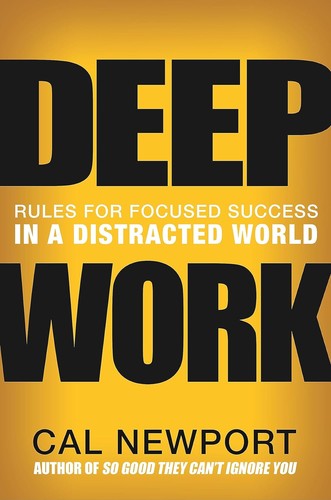
Deep Work by Cal Newport book cover

1. Deep Work

Cal Newport · 2016

Focus is the new superpower. Newport makes the case, then hands you the schedule.

Newport argues that deep, distraction-free work is both increasingly rare and increasingly valuable, which makes it the career leverage of this era. The second half is practical: time-block your day, embrace boredom, quit tools that don’t pass a cost-benefit test. One of the few productivity books whose advice compounds the longer you use it.

Read it if: knowledge workers whose output depends on sustained concentration

Skip it if: your work is genuinely reactive and meeting-driven (the advice will frustrate you)
Full verdict: Deep Work →

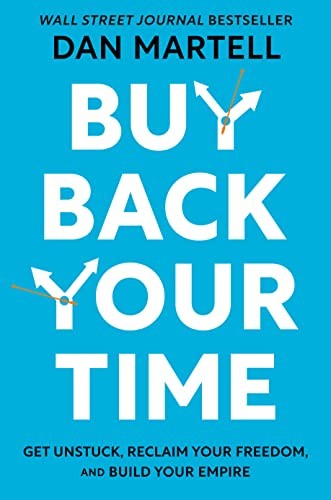
Buy Back Your Time by Dan Martell book cover

2. Buy Back Your Time

Dan Martell · 2023

Hire to buy back hours, not to grow headcount. A delegation system for drowning founders.

The buyback principle is simple: audit your calendar, price every task, and delegate everything below your buyback rate, starting with an executive assistant. Martell’s playbooks (inbox, calendar, camcorder method) are specific enough to use this week. Padded in places, but the system underneath is solid.

Read it if: founders and operators doing $10/hour tasks with $500/hour potential

Skip it if: you're an employee without hiring authority (most tactics assume you control budget)

Full verdict: Buy Back Your Time →

Four Thousand Weeks by Oliver Burkeman book cover

3. Four Thousand Weeks

Oliver Burkeman · 2021

You get about four thousand weeks. The anti-productivity book that ends the optimization arms race.

Burkeman spent years writing productivity columns before concluding the premise is broken: you will never do it all, and systems promising otherwise deepen the anxiety. Accepting finitude (choosing what to neglect, on purpose) is the actual skill. The rare self-help book that reduces what you demand of yourself and improves what you do.

Read it if: productivity addicts who clear their inbox and still feel behind

Skip it if: you want tactics (this book argues tactics are part of your problem)

Full verdict: Four Thousand Weeks →

Essentialism by Greg McKeown book cover

4. Essentialism

Greg McKeown · 2014

Do less, but better. The disciplined pursuit of the vital few over the trivial many.

McKeown’s rule: if it isn’t a clear yes, it’s a clear no. The book teaches trade-off thinking, graceful ways to decline, and how to cut good options to protect great ones. It repeats itself (ironic, for a book about less), but the core discipline sticks. Pairs naturally with Deep Work: this decides what matters, that protects the time for it.

Read it if: overcommitted people who say yes by default and pay for it

Skip it if: your problem is starting things, not stopping them

Full verdict: Essentialism →

The ONE Thing by Gary Keller & Jay Papasan book cover

5. The ONE Thing

Gary Keller & Jay Papasan · 2013

What's the one thing you can do such that everything else becomes easier or unnecessary?

The focusing question in the title is genuinely useful, and the domino framing (line up small wins that knock over bigger ones) makes prioritization concrete. Keller built the largest real estate company in the world on this operating system. The book stretches one insight, but it’s the right insight.

Read it if: people juggling ten priorities who secretly know only one matters

Skip it if: you already time-block your most important task daily (that's the whole book)

Full verdict: The ONE Thing →

Digital Minimalism by Cal Newport book cover

6. Digital Minimalism

Cal Newport · 2019

A philosophy for your phone, not another screen-time tip list. Includes the 30-day declutter.

Newport’s argument: willpower loses against attention engineering, so you need a philosophy, not tips. The 30-day digital declutter (remove optional technologies, rediscover analog leisure, reintroduce only what serves something you value) has a real completion rate because it’s a protocol, not a suggestion.

Read it if: anyone whose default reaction to boredom is reaching for a device

Skip it if: your digital life is already intentional (you've done the declutter, formally or not)

Full verdict: Digital Minimalism →

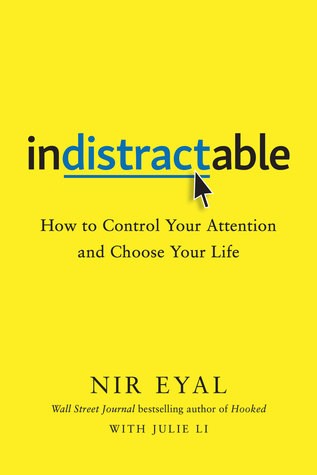
Indistractable by Nir Eyal book cover

7. Indistractable

Nir Eyal · 2019

Distraction starts within. From the man who wrote the book on hooking you, the book on unhooking.

Eyal wrote Hooked for product teams, then wrote this for the rest of us. His claim: distraction is escape from discomfort, so master internal triggers first, then make time for traction, hack back external triggers, and use pacts as the last line. More honest than tech-panic books because it hands responsibility back to you.

Read it if: anyone who blames their phone but suspects the problem runs deeper

Skip it if: you want a digital detox manifesto (Eyal argues abstinence misses the point)

Full verdict: Indistractable →

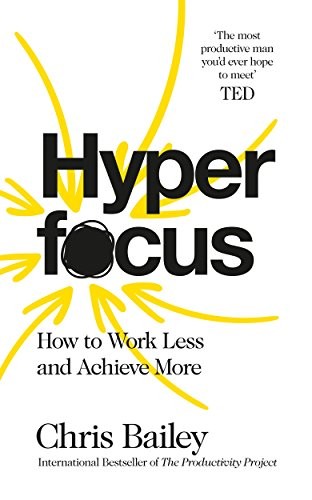
Hyperfocus by Chris Bailey book cover

8. Hyperfocus

Chris Bailey · 2018

Manage your attention, not your time. Includes the case for deliberate mind-wandering.

Bailey splits attention into two modes: hyperfocus for execution, scatterfocus for creativity and planning. The second half is the differentiator, arguing that intentional mind-wandering is where connections form, which most focus books treat as the enemy. Lighter than Newport, more actionable per page.

Read it if: knowledge workers who want practical attention management with the research attached

Skip it if: you've read Deep Work and implemented it (significant overlap, friendlier packaging)

Full verdict: Hyperfocus →

Frequently Asked Questions

What is the best productivity book to start with?

Deep Work by Cal Newport. It makes the case that focused, undistracted work is your rarest and most valuable asset — and then gives you the protocol to protect it. If you read one, read this and actually do the blocking.

Deep Work or Buy Back Your Time, which should I read?

Deep Work to protect your attention, Buy Back Your Time to buy back your calendar with money and delegation. Read Newport first to value the time, then Horowitz's framework to reclaim it. They're the internal and external halves of the same problem.

I'm productive but still drowning. What's wrong?

You're confusing speed with direction. Four Thousand Weeks and Essentialism fix that: accept you'll never clear the list, then cut it to the one thing that matters. More throughput on the wrong work is just efficient drowning.

My phone eats my focus. Which book?

Digital Minimalism and Indistractable together. Newport is the declutter-and-redesign plan for your leisure; Nir Eyal is the trigger-audit for staying in control. Hyperfocus is the shorter tactical complement on single-tasking.

Keep Reading