Best Books on Decision Making: 8 That Sharpen Your Judgment

Updated July 8, 2026 · 8 books

The best book on decision making is Thinking, Fast and Slow, because every good decision starts with knowing how your own mind lies to you. Kahneman’s two-system model — the fast, biased intuition and the slow, effortful reasoner — is the lens every other book on this list assumes you have. Read it first, or the rest will feel like tips without a theory.

Then make it usable. Poor Charlie’s Almanack is Munger turning Kahneman’s psychology into a latticework of mental models. Predictably Irrational and Influence show the specific levers — the ones marketers and your own brain pull on you. The Psychology of Money is the same machinery applied to your bank account.

Close with the judgment pair. Same as Ever argues that the future looks chaotic but the underlying drivers are constant — so decide on what doesn’t change. The Outsiders and The Almanack of Naval Ravikant show decision-making in the wild: Thorndike’s CEOs allocating capital with discipline, Naval cutting through noise with first principles.

One warning: reading about bias doesn’t grant immunity from it. The point of this list is to catch yourself in the act, not to feel smart about other people’s mistakes.

Quick Comparison

#BookAuthorBest for
1Thinking, Fast and SlowDaniel Kahnemanreaders who want the full science behind biases, not the blog-post versionAmazon
2Poor Charlie's AlmanackCharlie Munger (ed. Peter D. Kaufman)readers who want to think better across disciplines, not just invest betterAmazon
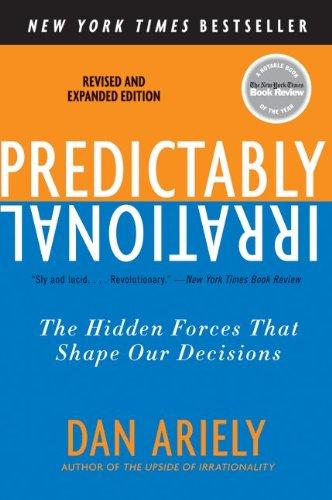
3Predictably IrrationalDan Arielybeginners who want behavioral economics made fun instead of academicAmazon
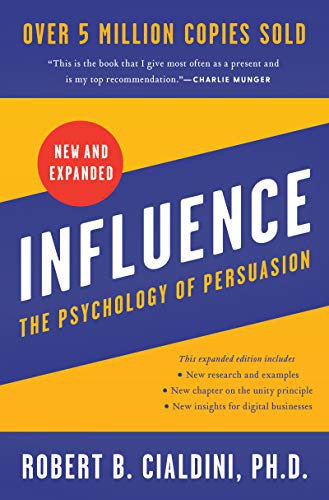
4InfluenceRobert B. Cialdinimarketers, salespeople, and anyone who wants to spot manipulation before it worksAmazon
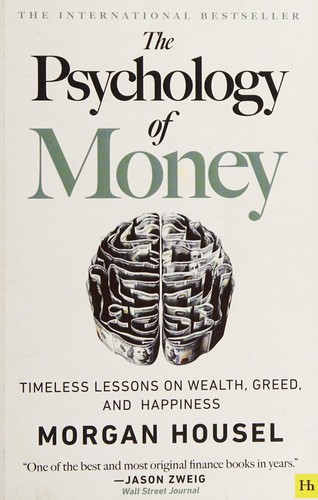
5The Psychology of MoneyMorgan Houselanyone who earns money and makes decisions about it, especially beginnersAmazon
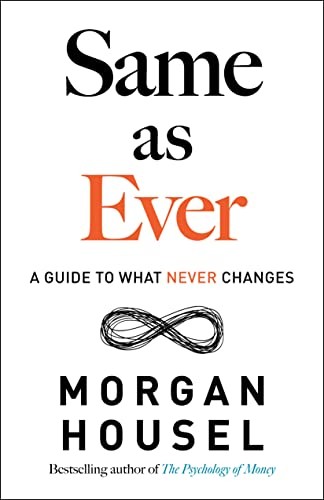
6Same as EverMorgan Houselfans of The Psychology of Money who want the same lens aimed wider than moneyAmazon
7The OutsidersWilliam N. Thorndikeinvestors and operators who want to understand capital allocationAmazon
8The Almanack of Naval RavikantEric Jorgensonbuilders who want to think about leverage, equity, and specific knowledgeAmazon

The Books

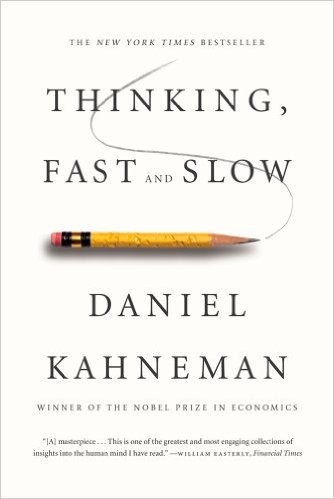
Thinking, Fast and Slow by Daniel Kahneman book cover

1. Thinking, Fast and Slow

Daniel Kahneman · 2011

A Nobel laureate's map of every way your brain fools you. Dense, and worth every page.

System 1 thinks fast and automatically; System 2 thinks slow and lazily. From that split, Kahneman explains anchoring, loss aversion, overconfidence, and why experts’ predictions fail. Some priming studies from the middle chapters failed replication, and Kahneman acknowledged it. The core framework remains the standard. Every other behavioral book cites this one.

Read it if: readers who want the full science behind biases, not the blog-post version

Skip it if: you want a light read (this is a textbook wearing a trade paperback cover)

Full verdict: Thinking, Fast and Slow →

Poor Charlie's Almanack by Charlie Munger (ed. Peter D. Kaufman) book cover

2. Poor Charlie's Almanack

Charlie Munger (ed. Peter D. Kaufman) · 2005

Munger's mental models and the psychology of human misjudgment, in one strange, wonderful book.

Munger’s talk on the 25 psychological tendencies that cause misjudgment is worth the whole volume, and the “latticework of mental models” idea launched a thousand blogs. The Stripe Press edition trimmed it well. Not really an investing book. A thinking book that happens to be written by an investor.

Read it if: readers who want to think better across disciplines, not just invest better

Skip it if: you want a linear how-to book (this is speeches, talks, and tangents)

Full verdict: Poor Charlie's Almanack →

Predictably Irrational by Dan Ariely book cover

3. Predictably Irrational

Dan Ariely · 2008

You're irrational in consistent, exploitable patterns. Ariely proves it with clever experiments.

Why free costs us money, why we overvalue what we own, why expectations change what we taste. Ariely’s experiments are memorable and the writing is the friendliest in behavioral economics. Read it as an entertaining introduction, hold specific findings loosely, and graduate to Kahneman when you want depth.

Read it if: beginners who want behavioral economics made fun instead of academic

Skip it if: you demand bulletproof research (some of Ariely's later work drew serious scrutiny)

Full verdict: Predictably Irrational →

Influence by Robert B. Cialdini book cover

4. Influence

Robert B. Cialdini · 1984

The seven levers of persuasion, from the researcher who went undercover to find them.

Cialdini trained inside sales organizations and cults to document how compliance actually happens: reciprocity, commitment, social proof, authority, liking, scarcity, and (new in the expanded edition) unity. Forty years later it doubles as a defense manual, since every funnel and pricing page you see runs on these levers.

Read it if: marketers, salespeople, and anyone who wants to spot manipulation before it works

Skip it if: you've read any modern marketing book (they all borrowed this one's skeleton)

Full verdict: Influence →

The Psychology of Money by Morgan Housel book cover

5. The Psychology of Money

Morgan Housel · 2020

Money decisions are behavior problems, not math problems. This book proves it in 19 short stories.

Housel writes like a friend who happens to be one of the best finance writers alive. Each chapter is a standalone essay: why rich people go broke, why enough beats more, why time beats timing. No formulas, no jargon. It changes how you think about money rather than what you do with it this week, which is exactly why it sticks.

Read it if: anyone who earns money and makes decisions about it, especially beginners

Skip it if: you want tactical advice like which funds to buy (this book is deliberately not that)

Full verdict: The Psychology of Money →

Same as Ever by Morgan Housel book cover

6. Same as Ever

Morgan Housel · 2023

Stop predicting what changes. Study what never does. Housel's follow-up bets on human nature.

Twenty-three short essays on constants: greed, fear, storytelling beating statistics, the way calm plants the seeds of crazy. It’s Housel’s Lindy manifesto in disguise, arguing the most valuable knowledge is whatever was true 100 years ago and will be true in 100 more. Slightly looser than his first book, same effortless readability.

Read it if: fans of The Psychology of Money who want the same lens aimed wider than money

Skip it if: you haven't read The Psychology of Money (start there; it's tighter)

Full verdict: Same as Ever →

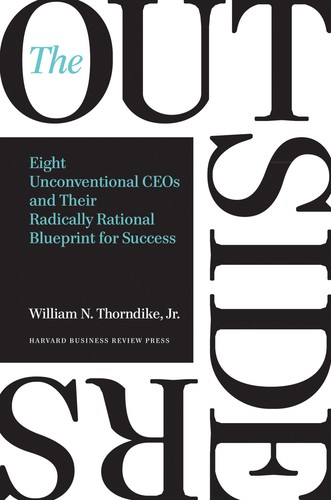
The Outsiders by William N. Thorndike book cover

7. The Outsiders

William N. Thorndike · 2012

Eight CEOs who crushed the market by ignoring everything CEOs are supposed to do.

Thorndike profiles eight unconventional CEOs (Henry Singleton, Katharine Graham, John Malone) who treated capital allocation as the CEO’s real job: buy back cheap stock, avoid dilution, decentralize everything. Buffett recommended it at a Berkshire meeting and it became an operator cult classic. Deservedly.

Read it if: investors and operators who want to understand capital allocation

Skip it if: you want leadership inspiration (these CEOs were ruthless calculators, not visionaries)

Full verdict: The Outsiders →

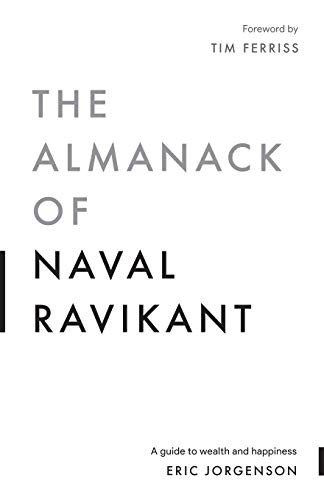
The Almanack of Naval Ravikant by Eric Jorgenson book cover

8. The Almanack of Naval Ravikant

Eric Jorgenson · 2020

Wealth and happiness compressed into aphorisms. Free online, worth owning anyway.

A curated collection of Naval’s tweets, podcasts, and essays on getting rich without getting lucky: seek specific knowledge, use leverage (code, media, capital), play long-term games with long-term people. The happiness half is weaker than the wealth half, but the wealth half is dense enough to reread yearly.

Read it if: builders who want to think about leverage, equity, and specific knowledge

Skip it if: you dislike aphorism-style wisdom without step-by-step application

Full verdict: The Almanack of Naval Ravikant →

Frequently Asked Questions

What is the best book on decision making?

Thinking, Fast and Slow by Daniel Kahneman. It's the foundation: the two-system model of thought and the biases that ride along with it. Everything else on this list is an application of Kahneman's framing to a specific domain.

Kahneman or Poor Charlie's Almanack, which should I read?

Kahneman to understand the machinery of your mind, Munger to see it weaponized as a practical toolkit. Read Kahneman first for the theory, then Poor Charlie's Almanack for the latticework of mental models you'll actually use to decide.

What decision-making book is about money specifically?

The Psychology of Money and The Outsiders, from different angles. Housel is about your behavior with money; Thorndike's CEOs show disciplined capital allocation as the ultimate leadership decision. For pure investing judgment, pair them with the investing beginners list.

I want to get better at decisions under uncertainty. What do I read?

Same as Ever and The Almanack of Naval Ravikant. Taleb's constant-in-a-chaotic-world framing and Naval's first-principles clarity both train you to separate what you can predict from what you can't — the core skill of good judgment.

Keep Reading