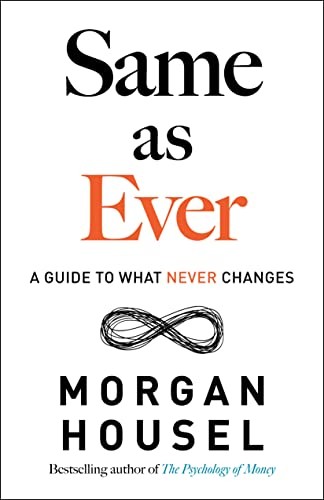
Same as Ever
by Morgan Housel · 2023
Stop predicting what changes. Study what never does. Housel's follow-up bets on human nature.
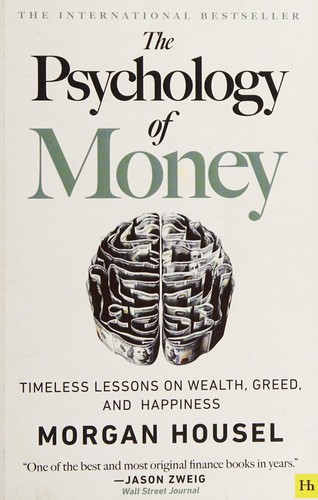
Worth reading? Housel's wider-lens follow-up to The Psychology of Money, and the better book for readers who want his calm voice aimed at human nature instead of just finance. The thesis is simple and liberating: stop forecasting what changes and study what never does. Skip it if you haven't read The Psychology of Money -- start there; it's tighter.
| Author | Morgan Housel |
|---|---|
| Published | 2023 |
| Category | Business & Money |
The Verdict
Twenty-three short essays on constants: greed, fear, storytelling beating statistics, the way calm plants the seeds of crazy. It’s Housel’s Lindy manifesto in disguise, arguing the most valuable knowledge is whatever was true 100 years ago and will be true in 100 more. Slightly looser than his first book, same effortless readability.
fans of The Psychology of Money who want the same lens aimed wider than money
you haven't read The Psychology of Money (start there; it's tighter)
Book Summary
The constants -- greed, fear, storytelling beating statistics, the appeal of pessimism -- were true 100 years ago and will be true in 100 more, so the most useful knowledge is the kind that doesn't age. Housel bets on what's permanent, not on next quarter's headline.
Getting wealthy and staying wealthy are different skills: the first rewards risk and obsession, the second rewards humility, frugality, and room for error. Most people train for the first and wreck themselves at the second.
Surprises are the only sure thing, so you build for the range of outcomes, not a single forecast. Room for error and a long time horizon beat any clever prediction about what's coming next.
Top 6 Lessons from Same as Ever
- Study what never changes instead of predicting what will.
- Getting rich and staying rich are different skills.
- Pessimism sounds smart; optimism compounds.
- Leave room for error; surprises are guaranteed.
- Storytelling beats statistics in every crowd.
- A long time horizon is the cheat code most people skip.
Frequently Asked Questions
Is Same as Ever worth reading?
Yes for fans of The Psychology of Money who want the same lens aimed beyond finance. Skip it if you haven't read The Psychology of Money -- start there; it's tighter.
What is the main idea of Same as Ever?
Forget forecasting what changes; study human nature's constants -- greed, fear, the pull of stories -- because those are what actually drive outcomes, and they never go out of date.
How long does it take to read Same as Ever?
About 256 pages in short essays, so a weekend or a few evenings, and it's built to be dipped into.
Who should read Same as Ever?
Fans of The Psychology of Money who want the same lens aimed wider than money. Skip it if you haven't read The Psychology of Money.
Ready to read it?
Get Same as Ever on Amazon