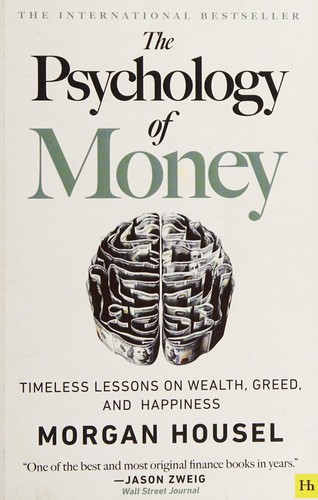
The Psychology of Money
by Morgan Housel · 2020
Money decisions are behavior problems, not math problems. This book proves it in 19 short stories.
Worth reading? The best behavioral money book for normal people, and it's a fast read. Housel's 19 stories show that doing well with money is about behavior, not IQ or math. Skip it if you want a tactical buy-this-fund plan; this book deliberately won't give you one.
| Full Title | The Psychology of Money: Timeless Lessons on Wealth, Greed, and Happiness |
|---|---|
| Author | Morgan Housel |
| Published | 2020 |
| Category | Business & Money |
| Favorite quote | “Spending money to show people how much money you have is the fastest way to have less money.” |
The Verdict
Housel writes like a friend who happens to be one of the best finance writers alive. Each chapter is a standalone essay: why rich people go broke, why enough beats more, why time beats timing. No formulas, no jargon. It changes how you think about money rather than what you do with it this week, which is exactly why it sticks.
anyone who earns money and makes decisions about it, especially beginners
you want tactical advice like which funds to buy (this book is deliberately not that)
Book Summary
Financial success is driven by behavior, not knowledge. People don't make money choices on a spreadsheet; they make them at the dinner table, where ego, pride, and personal history tangle up. The same facts produce opposite decisions depending on who holds them.
Wealth is what you don't see — the spending you didn't do. Housel's lessons: give yourself room for error, let compounding run for decades, and define 'enough' so you stop chasing more at the cost of your life.
Top 10 Lessons from The Psychology of Money
- Money behavior matters more than what you know.
- Wealth is invisible — it's the spending you chose not to do.
- Give yourself a margin of error; plans break.
- Compounding needs time, so start early and don't interrupt it.
- Define 'enough' or you'll never feel rich.
- Your financial decisions are shaped by your own history, not universal truth.
- Freedom and control over your time is the real dividend of wealth.
- Luck and risk look identical from the outside — don't copy someone else's exact bet.
- A handful of decisions drive most of your results; get those few right.
- No one is as impressed by your car or house as you are — buying status doesn't buy respect.
Top 5 Quotes from The Psychology of Money
"Wealth is what you don't see. It's the cars not purchased, the diamonds not bought, the renovations postponed, the clothes forgone and the first-class upgrade declined."
Morgan Housel, The Psychology of Money
"Doing well with money has a little to do with how smart you are and a lot to do with how you behave."
Morgan Housel, The Psychology of Money
"There is no reason to risk what you have and need for what you don't have and don't need."
Morgan Housel, The Psychology of Money
"Use money to gain control over your time, because not having control of your time is a powerful and universal drag on happiness."
Morgan Housel, The Psychology of Money
"Progress happens too slowly to notice, but setbacks happen too quickly to ignore."
Morgan Housel, The Psychology of Money
Frequently Asked Questions
Is The Psychology of Money worth reading?
Yes, for anyone who earns and decides about money, especially beginners — it reframes finance as behavior, not math. Skip it if you want tactical fund-picking advice; it won't give you that.
What is the main idea of The Psychology of Money?
Doing well with money is about how you behave, not what you know. Housel uses 19 short stories to show that ego, history, and incentives drive financial decisions more than spreadsheets do.
How long does it take to read The Psychology of Money?
About 242 pages in 19 short chapters, so roughly 6 to 7 hours, and the stories make it a quick read.
Who should read The Psychology of Money?
Anyone who earns money and makes decisions about it, especially beginners. It's not for readers who want specific tactical investment advice.
Ready to read it?
Get The Psychology of Money on AmazonRead Next
- Best Books on Financial Freedom: 9 That Get You Independent
- Best Books on Decision Making: 8 That Sharpen Your Judgment
- Best Investing Books for Beginners: 8 Picks Ranked
- Best Personal Finance Books: 8 Ranked by Who They Help
- Books Every Investor Should Read: 8 From Beginner to Disciplined Allocator
- Naval Ravikant Book List: What He Points People To