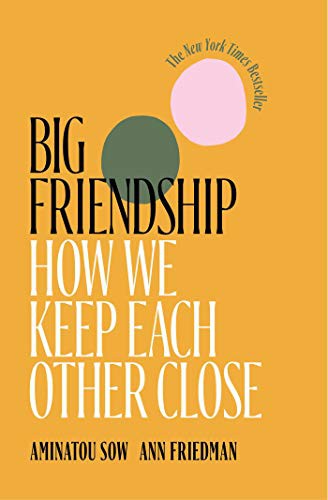
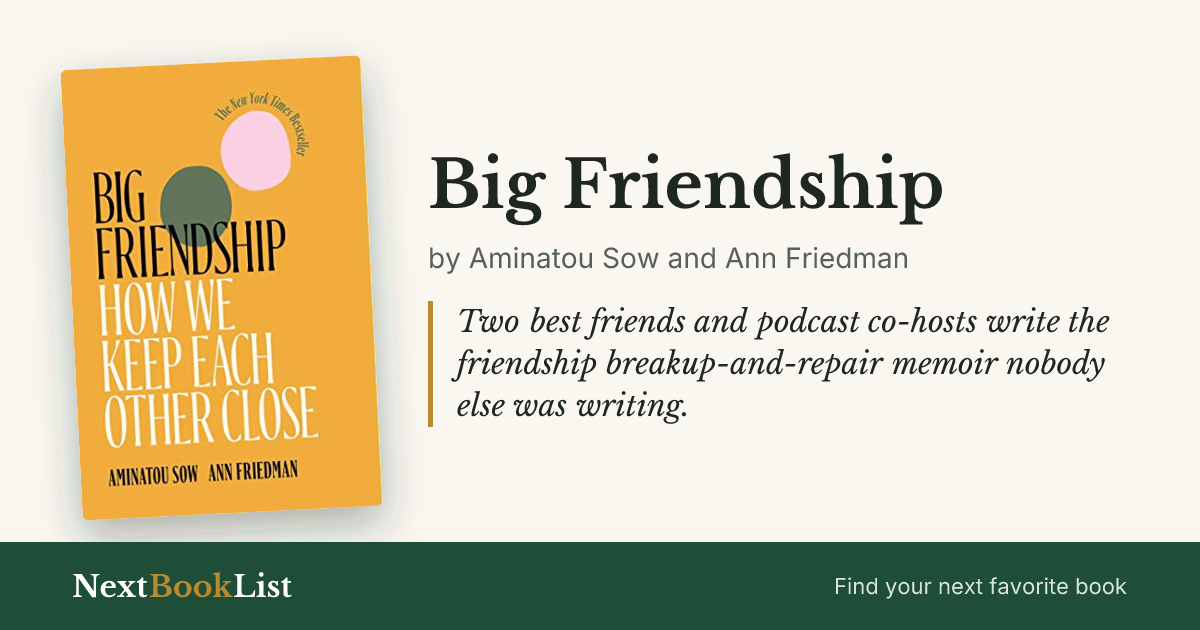
Big Friendship
by Aminatou Sow and Ann Friedman · 2020
Two best friends and podcast co-hosts write the friendship breakup-and-repair memoir nobody else was writing.
Worth reading? Sow and Friedman's central move is treating friendship as a relationship that requires real work, the same way we already accept that marriages do -- and then proving it by narrating their own friendship's near-collapse and repair, including a period they went to see a couples therapist together. Shine Theory, their term for actively championing a friend's success instead of quietly competing with her, is the concept most people take away, but the more honest contribution is normalizing that a 'big friendship' can genuinely rupture and still be worth repairing. It reads more like memoir-with-concepts than a structured framework, so don't expect a step-by-step system. Skip it if you want tactics over narrative -- the insight here comes from their story, not from bullet points.
| Full Title | Big Friendship: How We Keep Each Other Close |
|---|---|
| Author | Aminatou Sow and Ann Friedman |
| Published | 2020 |
| Category | Parenting & Relationships |
The Verdict
Most friendship advice assumes friendships either work or they don’t, with no real maintenance in between. Sow and Friedman reject that. Their friendship, deep enough to build a podcast around, nearly came apart – and Big Friendship is the account of what it took to repair it.
Shine Theory is the concept that traveled furthest from this book: actively rooting for a friend’s success instead of quietly competing with her. It’s a good idea, but it’s not the most useful one. The more useful one is simpler and harder to say out loud – a friendship serious enough to matter can still fracture, and going to a couples therapist together isn’t an overreaction to a platonic bond, it’s proportionate to what the bond is actually worth.
It reads like memoir with concepts folded in, not a structured self-help system. You won’t get a five-step repair framework. You’ll get two people narrating exactly what a real rupture between close friends looks like, and what it took to get back.
That’s also the limit of the book. If you want tactics you can apply tomorrow, this gives you fewer than a more clinical book would. What it gives you instead is permission – to take a friendship seriously enough to fight for it.
Read it if you have a close friendship under real strain and want to see that repair is normal, not a red flag. Skip it if you want a structured how-to over a shared story.
adults with a close, long-running friendship that's hit real strain -- distance, a fight, drifting priorities -- and want language for treating it as seriously as a romantic relationship
you want a research-heavy how-to guide -- this is closer to a co-written memoir with concepts woven in than a structured self-help framework
Book Summary
A friendship serious enough to shape your life -- a "big friendship" -- deserves the same intentional work we already grant to romantic relationships. Most people never learn to name or repair friendship conflict because we're not taught to take platonic bonds that seriously.
Shine Theory means actively investing in a friend's success and relying on their help in return, rather than letting insecurity or quiet competition erode the relationship. It's a conscious choice, not a default state.
Even a deep, long-running friendship can fracture over real strain -- distance, unspoken resentment, diverging life stages -- and going to therapy together, or otherwise doing deliberate repair work, isn't an overreaction. It's what the relationship's value actually justifies.
Top 7 Lessons from Big Friendship
- Treat a serious, life-shaping friendship with the same intentional effort you'd grant a marriage, instead of assuming it should stay effortless.
- Practice Shine Theory -- actively champion a friend's success instead of quietly competing with her.
- Expect friendship conflict to happen in a long-running bond and don't treat its appearance as proof the friendship failed.
- Name friendship problems directly rather than letting resentment build silently over years.
- Consider structured repair work (therapy, explicit conversations) for a friendship worth saving, not just for romantic relationships.
- Notice when life-stage differences (marriage, kids, moving, career) are quietly straining a friendship before resentment sets in.
- Don't measure a friendship's seriousness only by proximity -- distance doesn't have to mean the bond is shrinking.
Frequently Asked Questions
Is Big Friendship worth reading?
Yes, especially if you have a close, long-running friendship that's under real strain and you want language for taking that seriously instead of just letting it drift.
What is the main idea of Big Friendship?
Serious friendships deserve the same intentional work as romantic relationships, and even deep bonds can fracture and need deliberate repair -- that's not a sign the friendship failed.
What is Shine Theory?
A term Sow and Friedman coined for actively investing in a friend's success and relying on their help in return, rather than letting envy or quiet competition erode the relationship.
Is Big Friendship a memoir or a self-help book?
Mostly memoir -- it's built around Sow and Friedman's own friendship, including a real rupture and their decision to see a couples therapist together, with concepts woven through the narrative.
Who are Aminatou Sow and Ann Friedman?
Co-hosts of the podcast Call Your Girlfriend, and the book grew out of their own decade-plus friendship, including the strain that nearly ended it.
Ready to read it?
Get Big Friendship on Amazon