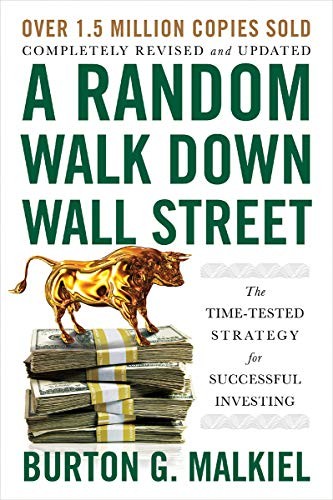
A Random Walk Down Wall Street
by Burton G. Malkiel · 1973
Fifty years of editions, one conclusion: you probably can't beat the market, so own all of it.
Worth reading? The definitive case for index funds, and after fifty years of editions it has aged better than any stock-picker's pitch. It buries the chart-readers with evidence you can't wave away. Skip it if you want a short read — it's comprehensive, which means long, and it covers every bubble in detail.
| Author | Burton G. Malkiel |
|---|---|
| Published | 1973 |
| Category | Business & Money |
The Verdict
Malkiel walks through every strategy people use to beat the market (technical analysis, stock picking, market timing) and shows why each fails for most people most of the time. Updated constantly since 1973, and each edition’s new bubble chapter proves the old chapters right. The intellectual foundation under the entire index fund movement.
investors who want the academic case for index funds explained clearly
you want a short read (it's comprehensive, which means long)
Book Summary
Markets are largely efficient and prices follow a random walk, so beating the index consistently is a loser's game for nearly everyone. Costs and taxes eat active returns alive; a low-fee broad index fund mathematically wins over time against managed funds. Every generation rediscovers the same bubbles — from tulips to dot-com to crypto — and the pattern never changes because human behavior doesn't.
Top 7 Lessons from A Random Walk Down Wall Street
- You probably can't beat the market, so own all of it cheaply.
- Fees and taxes are the only guarantees; minimize both.
- Past performance is the worst predictor of future returns.
- Bubbles repeat because fear and greed don't evolve.
- Dollar-cost average into broad index funds and ignore the noise.
- Technical analysis and fundamental forecasting both fail more than they work.
- Time in the market beats timing the market.
Frequently Asked Questions
Is A Random Walk Down Wall Street worth reading?
Yes, for investors who want the academic case for index funds explained clearly. Skip it if you want a short read — it's comprehensive, which means long.
What is the main idea of A Random Walk Down Wall Street?
You can't reliably beat the market, so buy and hold a low-cost diversified index fund and stop trying to outsmart it.
How long does it take to read A Random Walk Down Wall Street?
A long one at about 432 pages — roughly 8 hours.
Who should read A Random Walk Down Wall Street?
Investors who want the academic case for index funds explained clearly. Skip it if you want a short read (it's comprehensive, which means long).
Ready to read it?
Get A Random Walk Down Wall Street on Amazon