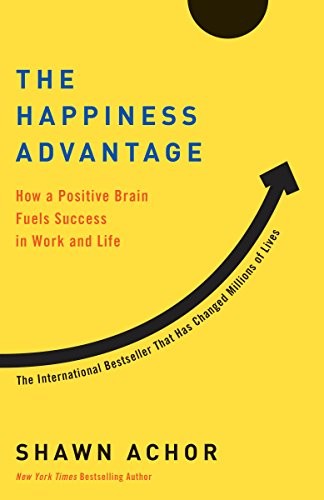
The Happiness Advantage
by Shawn Achor · 2010
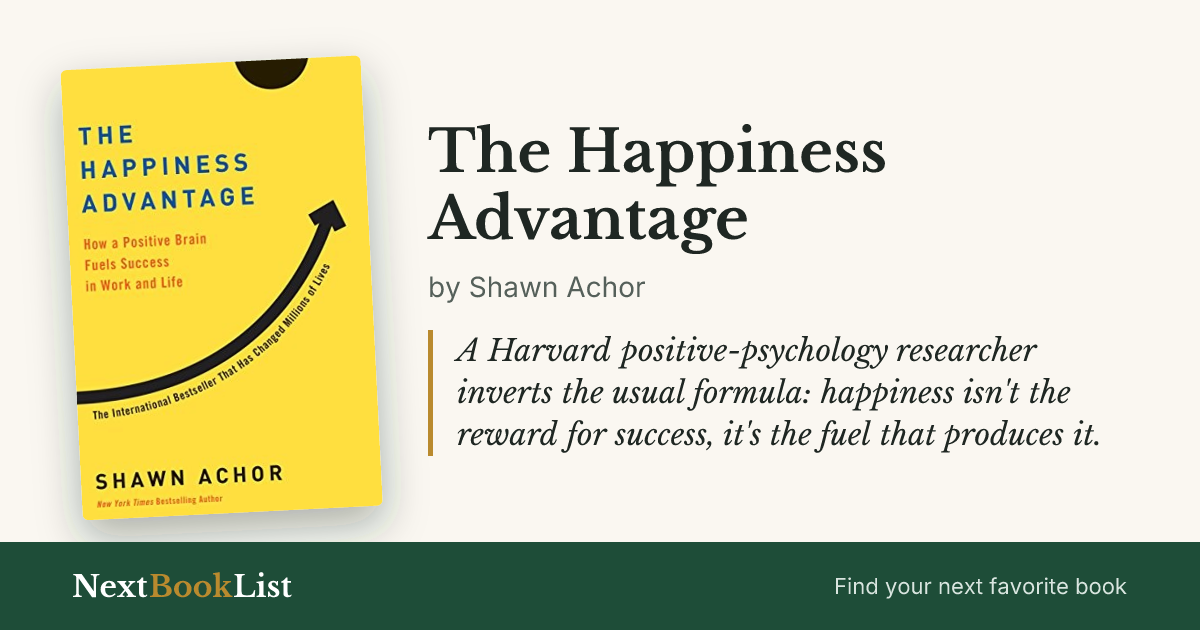
A Harvard positive-psychology researcher inverts the usual formula: happiness isn't the reward for success, it's the fuel that produces it.
Worth reading? Achor's central inversion is backed by real research from his time at Harvard: a positive brain measurably outperforms a negative or neutral one on creativity, productivity, and resilience, which means chasing success first in hopes happiness will follow has the causal order backwards. It's aimed at workplace performance more than personal wellbeing generally, which distinguishes it from broader positive-psychology books like The Happiness Hypothesis -- practical, business-friendly, and easy to actually apply.
| Full Title | The Happiness Advantage: The Seven Principles of Positive Psychology That Fuel Success and Performance at Work |
|---|---|
| Author | Shawn Achor |
| Published | 2010 |
| Category | Self-Improvement & Psychology |
| Favorite quote | “Happiness is not the belief that we don't need to change; it is the realization that we can.” |
The Verdict
Achor’s Harvard research background gives the happiness-drives-success inversion real evidentiary weight, which separates this from the broader positive-thinking genre it gets shelved next to. Read it for the activation-energy habit technique alone – it’s a simple, immediately usable idea independent of whether you buy the full performance thesis.
you assume happiness comes after achieving your goals and want the research showing the causation runs the other way
you distrust corporate-flavored positive psychology on principle -- the research is more solid than most in the genre, but the framing is aimed squarely at workplace performance
Book Summary
Happiness precedes and drives success rather than following it -- a brain in a positive state processes information more broadly, spots opportunities a threat-focused brain misses, and recovers from setbacks faster, which compounds into measurably better performance over time, not just a nicer mood along the way.
Achor also focuses heavily on lowering the "activation energy" required for good habits (making the positive behavior 20 seconds easier to start) and raising it for bad ones (making the negative behavior 20 seconds harder), a small-friction reframe of habit change that predates and parallels Atomic Habits' similar argument, applied specifically here to sustaining a positive mindset under real workplace pressure.
Top 7 Lessons from The Happiness Advantage
- Happiness precedes and drives success, not the other way around -- the causal order most people assume is backwards.
- A positive brain outperforms a neutral or negative one on creativity, productivity, and resilience.
- Train your mind to actively spot opportunity, not just threat -- attention is trainable, not fixed.
- Reframe setbacks as a path upward rather than a dead end; how you interpret a setback shapes what you do next.
- Lower the 'activation energy' for good habits -- make the desired behavior 20 seconds easier to start.
- Raise the activation energy for bad habits -- add small friction that makes the unwanted behavior harder to fall into.
- Strong social connections are one of the biggest predictors of sustained wellbeing and performance.
Top 3 Quotes from The Happiness Advantage
"Happiness is not the belief that we don't need to change; it is the realization that we can."
Shawn Achor, The Happiness Advantage
"The greatest competitive advantage in the modern economy is a positive and engaged brain."
Shawn Achor, The Happiness Advantage
"Happiness is the joy you feel when you're striving after your potential."
Shawn Achor, The Happiness Advantage
Frequently Asked Questions
Is The Happiness Advantage worth reading?
Yes, for actionable, research-backed techniques connecting positive psychology to workplace performance. It's more evidence-based than most books in the corporate-positivity genre.
What is the main idea of The Happiness Advantage?
Happiness drives success rather than following it -- a positive brain measurably outperforms a negative or neutral one, which reverses the common assumption that you'll be happy once you succeed.
Who should read The Happiness Advantage?
Professionals and managers who want practical, research-backed positive-psychology techniques applied specifically to workplace performance, not just general wellbeing.
How is this different from The Happiness Hypothesis?
The Happiness Hypothesis (Jonathan Haidt) is a broader synthesis of ancient wisdom and modern psychology on happiness generally. The Happiness Advantage is narrower and more applied, focused specifically on the link between positive psychology and workplace performance.
Ready to read it?
Get The Happiness Advantage on Amazon