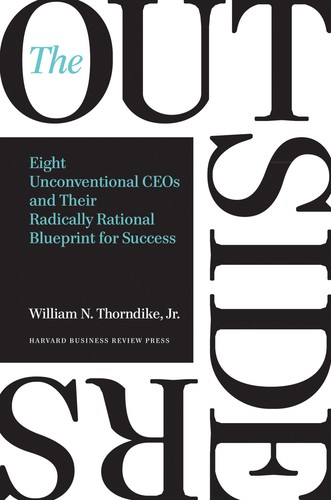
The Outsiders
by William N. Thorndike · 2012
Eight CEOs who crushed the market by ignoring everything CEOs are supposed to do.
Worth reading? The best book on capital allocation in print, and the one that proves great CEOs often look like bad ones to the business press. Thorndike's eight outliers -- Singleton, Buffett, Malone, and company -- beat the market by ignoring the usual playbook: they bought back stock when it was cheap, acquired when it wasn't, and ran lean, decentralized shops. Skip it if you want leadership inspiration -- these CEOs were ruthless calculators, not visionaries.
| Full Title | The Outsiders: Eight Unconventional CEOs and Their Radically Rational Blueprint for Success |
|---|---|
| Author | William N. Thorndike |
| Published | 2012 |
| Category | Business & Money |
| Favorite quote | “There is a fundamental humility to decentralization, an admission that headquarters does not have all the answers and that much of the real value is created by local managers in the field.” |
The Verdict
Thorndike profiles eight unconventional CEOs (Henry Singleton, Katharine Graham, John Malone) who treated capital allocation as the CEO’s real job: buy back cheap stock, avoid dilution, decentralize everything. Buffett recommended it at a Berkshire meeting and it became an operator cult classic. Deservedly.
investors and operators who want to understand capital allocation
you want leadership inspiration (these CEOs were ruthless calculators, not visionaries)
Book Summary
The job of a CEO is allocating capital, and the best ones treated it like a portfolio manager would: buy back your own undervalued stock, acquire when the math works, and return cash when nothing does. Most managers fritter that freedom away.
Decentralize and stay quiet. These outsiders ran thin headquarters, pushed decisions to the front line, and avoided the spotlight -- low ego, high IQ, and allergic to the ego-driven deals that destroy shareholder value.
Contrarian, not flashy, wins. They issued stock when it was richly priced and bought when it was cheap, the opposite of the empire-building reflex, and their long-term returns crushed the indexes and their louder peers.
Top 7 Lessons from The Outsiders
- A CEO's real job is allocating capital, not being visible.
- Buy back your stock when it's cheap; issue it when it's rich.
- Run a lean, decentralized company and push decisions down.
- Acquire only when the math clearly works.
- Ignore the press; the market rewards results, not appearances.
- Patient, contrarian capital allocation beats empire-building.
- Measure success in value per share, not the size of the empire.
Top 4 Quotes from The Outsiders
"Basically, CEOs have five essential choices for deploying capital, investing in existing operations, acquiring other businesses, issuing dividends, paying down debt, or repurchasing stock, and three alternatives for raising it, tapping internal cash flow, issuing debt, or raising equity. Think of these options collectively as a tool kit."
William N. Thorndike, The Outsiders
"There is a fundamental humility to decentralization, an admission that headquarters does not have all the answers and that much of the real value is created by local managers in the field."
William N. Thorndike, The Outsiders
"Independent thinking is essential to long-term success, and interactions with outside advisers can be distracting and time-consuming."
William N. Thorndike, The Outsiders
"At the core of their shared worldview was the belief that the primary goal for any CEO was to optimize long-term value per share."
William N. Thorndike, The Outsiders
Frequently Asked Questions
Is The Outsiders worth reading?
Yes for investors and operators who want to understand capital allocation done right. Skip it if you want leadership inspiration -- these CEOs were ruthless calculators, not visionaries.
What is the main idea of The Outsiders?
The best CEOs act like disciplined capital allocators -- buying back cheap stock, acquiring only on good math, and decentralizing -- and they beat the market by ignoring the conventional leadership playbook.
How long does it take to read The Outsiders?
Around 240 pages of tight case studies (page count not on record, this is an honest estimate), so a weekend or a week of short sittings gets you through it.
Who should read The Outsiders?
Investors and operators who want to understand capital allocation. Skip it if you want leadership inspiration -- these CEOs were ruthless calculators, not visionaries.
Ready to read it?
Get The Outsiders on AmazonRead Next


- Best Business Books: 14 That Are Actually Worth Your Time
- Best Books on Decision Making: 10 That Sharpen Your Judgment
- Best Leadership Books: 20 That Actually Make You a Better Boss
- Best Startup Books of All Time: 15 Every Founder Should Know
- Books Every Founder Should Read: 9 in the Order That Matters
- Books Every Investor Should Read: 16 From Beginner to Disciplined Allocator
- Naval Ravikant Book List: 22 Books He Actually Names
- Warren Buffett's Bookshelf: 8 Books He Actually Recommends