Best Books on Copywriting

Updated July 21, 2026 · 4 books

Best Books on Copywriting: ranked list of 4 books

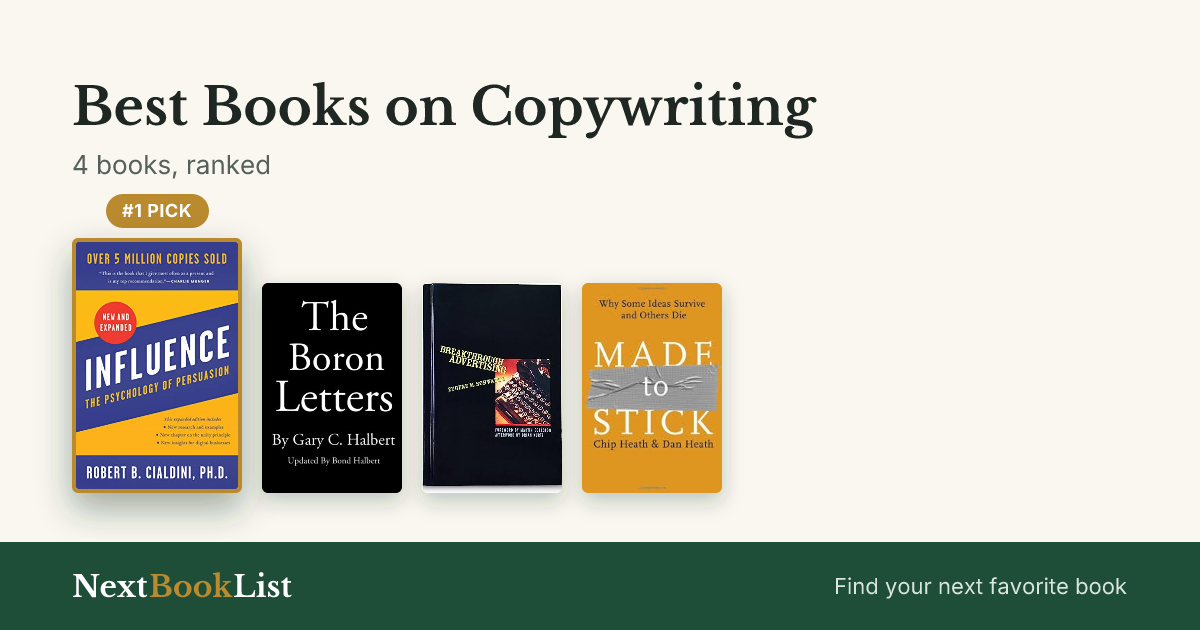
The best copywriting book isn’t a copywriting book at all. Influence explains why people say yes in the first place, reciprocity, social proof, scarcity, authority, before you ever get to the sentence-level craft of writing the ad. Every modern copywriting guide borrowed its skeleton from Cialdini’s research, whether it credits him or not. Start here, then move into the books that are actually about writing the copy.

The Boron Letters is next because it’s the most human entry point into direct response: Gary Halbert’s actual letters to his son from a federal prison camp, teaching the trade one lesson at a time. The “starving crowd” idea alone (find the hungry audience before you obsess over your pitch) reorients how you think about who you’re writing to. It’s short, blunt, and unpolished in the best way.

Breakthrough Advertising is the harder, denser follow-up. Eugene Schwartz’s central claim, that copy can only channel desire that already exists in a market, never create it, is the deepest single idea in this list, but the book demands rereading over months, not a weekend. Save it for after you’ve written real copy and hit a ceiling Halbert’s letters don’t explain.

Made to Stick closes the list because persuasion without memorability still loses. The Heaths’ SUCCESs framework (simple, unexpected, concrete, credible, emotional, stories) is the checklist for why some headlines and hooks survive contact with a reader’s attention span and most get forgotten by lunch.

One warning: copywriting books are the easiest genre to read compulsively instead of practice. Halbert himself would tell you the same thing he told his son, write the ad, test the ad, then come back and read the next chapter. Reading four books on persuasion and writing zero ads is its own form of procrastination.

Quick Comparison

#BookBest for
1InfluenceRobert B. Cialdinimarketers, salespeople, and anyone who wants to spot manipulation before it worksAmazon
2The Boron LettersGary Halbertyou write sales copy, emails, or ads and want the underground classic every working copywriter has already readAmazon
3Breakthrough AdvertisingEugene Schwartzyou write copy or ads and want the deepest, hardest book on why people actually buyAmazon
4Made to StickChip Heath and Dan Heathanyone who has to explain, pitch, or sell an idea and needs people to actually remember itAmazon

The Books

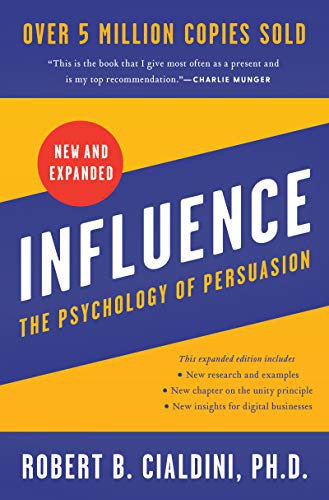
Influence by Robert B. Cialdini book cover

1. Influence

Robert B. Cialdini · 1984

The seven levers of persuasion, from the researcher who went undercover to find them.

Cialdini trained inside sales organizations and cults to document how compliance actually happens: reciprocity, commitment, social proof, authority, liking, scarcity, and (new in the expanded edition) unity. Forty years later it doubles as a defense manual, since every funnel and pricing page you see runs on these levers.

Read it if: marketers, salespeople, and anyone who wants to spot manipulation before it works

Skip it if: you've read any modern marketing book (they all borrowed this one's skeleton)

Full verdict: Influence →

The Boron Letters by Gary Halbert book cover

2. The Boron Letters

Gary Halbert · 2013

A father teaches his son direct-response copywriting through prison letters, and it's still the most-quoted copywriting book alive.

Halbert wrote these letters to his son Bond from a federal prison camp in Boron, California, meaning to teach him the trade before Gary could teach him in person. Forty years later, copywriters still pass this book around like contraband, because the advice inside (the starving crowd, writing to one person, list over copy) has outlived every marketing trend that came after it.

It’s not polished. The letters ramble, repeat themselves, and occasionally wander into Halbert’s personal grievances. That’s the honest trade-off: you’re reading a real father’s real advice to his real kid, not a ghostwritten business book optimized for a chapter-by-chapter table of contents.

Skip it if you want something conventionally structured, but if you write copy for a living and haven’t read this yet, you’re missing the book most of your competitors already have.

One note on sourcing: this book has a murky, self-published print history (Halbert died in 2007; his son compiled and released the letters afterward), so treat the print edition as the best available version rather than a definitively “final” text.

Read it if: you write sales copy, emails, or ads and want the underground classic every working copywriter has already read

Skip it if: you want a polished, professionally edited business book (this is a photocopied prison letter collection, and that's part of its charm)

Full verdict: The Boron Letters →
Breakthrough Advertising by Eugene Schwartz book cover

3. Breakthrough Advertising

Eugene Schwartz · 1966

The 1966 copywriting bible that says your ad can't create desire, only channel desire that already exists.

Eugene Schwartz wrote this in 1966, and it went out of print for years, which is exactly how it turned into the book working copywriters pass around like a trade secret instead of a bestseller everyone’s already read. The central claim (that an ad’s power comes from the market’s pre-existing desire, not the writer’s cleverness) reframes the entire job of writing copy, from “invent something persuasive” to “find what’s already there and point at it correctly.”

It’s genuinely hard reading. Schwartz repeats himself, circles back, and assumes you already understand basic marketing concepts before he’ll take you further. This isn’t a flaw so much as the design: the book rewards rereading over months, not a single weekend pass.

Skip it if you’re new to marketing and haven’t read something more foundational yet, Influence or even Made to Stick will make more sense on a first pass. Come back to this one once you’re actually writing ads for money, because that’s who it was written for.

One note on sourcing: this is a decades-old, cult-classic direct-response text with a genuinely tangled print history (long out-of-print stretches, multiple reprint editions); the ASIN above points to a widely-circulated reprint edition, not necessarily the original 1966 printing.

Read it if: you write copy or ads and want the deepest, hardest book on why people actually buy

Skip it if: you're new to marketing and haven't read Influence or a beginner copywriting guide yet (this book assumes you already know the basics and rewards you for rereading it, it does not hold your hand)

Full verdict: Breakthrough Advertising →

Made to Stick by Chip Heath and Dan Heath book cover

4. Made to Stick

Chip Heath and Dan Heath · 2007

A six-part checklist for why some ideas spread and most get forgotten by lunch.

Every idea in this book is itself an example of the book’s own advice, which is either a clever trick or the whole point: concrete stories carry the abstract framework so you actually remember SUCCESs instead of just nodding along. The six traits (simple, unexpected, concrete, credible, emotional, stories) aren’t groundbreaking individually. What’s useful is having them named and checklisted so you can audit your own pitch, memo, or headline against all six before you ship it.

It runs a little repetitive in the middle third, the Heaths reuse the same handful of case studies (Subway’s Jared, the kidney-heist urban legend) across multiple chapters to prove different points. That’s forgivable given the subject matter.

Skip it if you already write direct-response copy for a living, you’re closer to Breakthrough Advertising and the Boron Letters, which are about triggering desire rather than making an idea memorable. This book is for the explainer, not the closer.

Read it if: anyone who has to explain, pitch, or sell an idea and needs people to actually remember it

Skip it if: you write direct-response copy for a living (this is about memorability, not persuasion mechanics, go read Breakthrough Advertising instead)

Full verdict: Made to Stick →

Frequently Asked Questions

What is the best copywriting book to start with?

Influence by Robert Cialdini. It's not a copywriting book by title, but it's the psychology every copywriting book since has borrowed from, reciprocity, social proof, scarcity, authority. Understand why people say yes before you study how to write the sentence that gets them there.

The Boron Letters or Breakthrough Advertising, which first?

The Boron Letters first. It's shorter, more personal, and easier to actually finish. Breakthrough Advertising is denser and assumes you already understand the basics, save it for after you've written some copy and hit a ceiling.

Is Made to Stick a copywriting book?

Not directly, it's about making ideas memorable, not persuasive. But a memorable idea that isn't persuasive still fails commercially, so it earns its spot as the book that makes your headlines and hooks stick in someone's head after they've already decided to buy.

Are the Halbert and Schwartz books hard to find or verify?

Both have unusually murky print histories for how influential they are. Halbert self-published his letters, and his son compiled the print edition after Gary's death. Schwartz's 1966 original went out of print for years before reprints brought it back. Treat both as the best available versions of a genuinely underground classic, not polished, editorially pristine texts.

Keep Reading