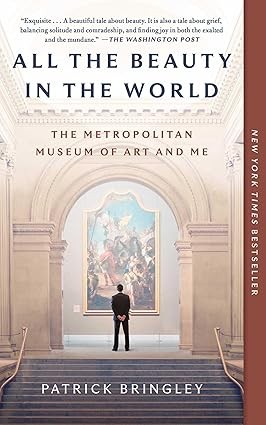
All the Beauty in the World
by Patrick Bringley · 2023
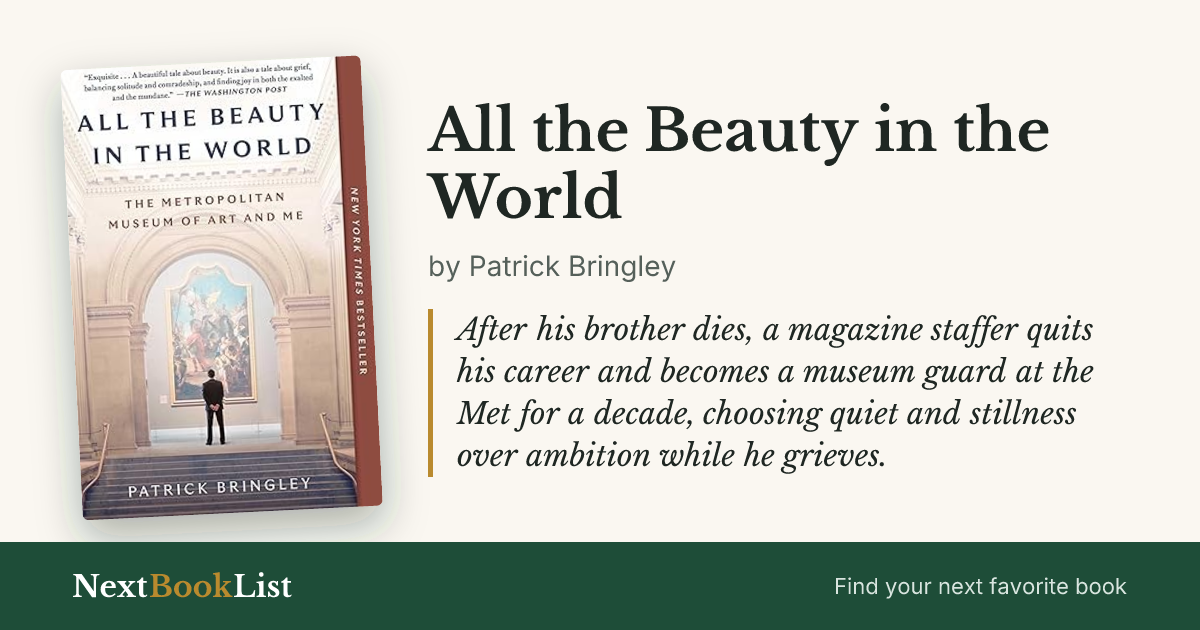
After his brother dies, a magazine staffer quits his career and becomes a museum guard at the Met for a decade, choosing quiet and stillness over ambition while he grieves.
Worth reading? Bringley walks away from a New Yorker job after his brother's death and takes a museum guard position at the Met, which sounds like downshifting until you realize it's the opposite: he's choosing ten years of proximity to great art and real stillness over the ambition that no longer means anything to him. The book has almost no plot, and that's deliberate -- it's built like the museum galleries themselves, room by room, observation by observation.
| Full Title | All the Beauty in the World: The Metropolitan Museum of Art and Me |
|---|---|
| Author | Patrick Bringley |
| Published | 2023 |
| Publisher | Simon & Schuster |
| Category | Biographies & Memoirs |
The Verdict
Bringley’s decision to quit a magazine career and stand quietly in museum galleries for ten years sounds, on paper, like giving up. The book’s real argument is that it’s the opposite: after his brother’s death, ambition stopped meaning anything, and what he needed instead was stillness, proximity to beauty, and time that didn’t demand output.
There’s barely a plot, and that’s by design – the book moves like a walk through the Met’s rooms, one observation at a time. Read it if you want a genuinely calming meditation on grief and art. Skip it if you need narrative tension; this book isn’t chasing any.
you want a gentle memoir about grief and art that argues slowing down and doing an 'unambitious' job can be exactly the right move at the right time
you want career or workplace drama -- there's very little conflict here; it's a meditative, low-plot book about standing still in front of paintings for a decade
Book Summary
Grief can make conventional ambition feel meaningless, and stepping away from a career track isn't necessarily a failure response -- it can be the most honest thing to do while you're actually grieving, rather than performing productivity through it.
Standing still, literally, for a decade of museum shifts gave Bringley something achievement-oriented work couldn't: sustained, unhurried proximity to art and to his own thoughts, which turned out to be exactly what mourning required.
A 'lesser' job, in conventional terms, can be the correct choice at a given point in a life. Bringley never frames the guard job as a fallback -- it's the deliberate opposite of the career path he left, and the book argues that's not a compromise.
Top 8 Lessons from All the Beauty in the World
- Grief can make ambition feel meaningless, and stepping off a career track can be an honest response, not a failure.
- Sustained stillness and quiet observation can do emotional work that busyness and achievement can't.
- A 'lesser' job by conventional standards can be exactly the right choice for a specific season of life.
- Museums reward slow, repeated looking -- the same painting can say something different on the hundredth visit.
- Grief doesn't move on a schedule set by career expectations or other people's timelines.
- Proximity to beauty, sustained over years rather than rushed visits, changes how you see it.
- Choosing a quiet life isn't the same as choosing a small one.
- Watching how strangers respond to great art, day after day, teaches you as much as the art itself.
Frequently Asked Questions
Is All the Beauty in the World worth reading?
Yes, if you want a quiet, reflective memoir about grief and art rather than a plot-driven story. It's gentle and specific in a way that rewards slow reading.
What is All the Beauty in the World about?
Patrick Bringley's decade working as a security guard at the Metropolitan Museum of Art after leaving a magazine career following his brother's death.
Is All the Beauty in the World a fast-paced memoir?
No. It's low-plot and meditative, organized more like a walk through museum galleries than a traditional narrative arc.
Do you need to know art history to enjoy this book?
No. Bringley writes for a general reader; the art serves the meditation on grief and stillness rather than requiring specialist knowledge.
Ready to read it?
Get All the Beauty in the World on Amazon