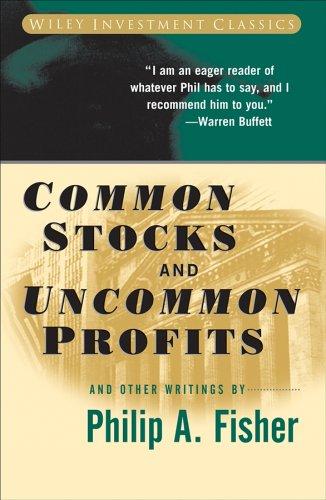
Common Stocks and Uncommon Profits
by Philip A. Fisher · 1958
The growth investing classic Buffett says shaped him almost as much as Graham did.
Worth reading? Buy this if you want to pick winning companies, not just cheap stocks. Fisher's 'scuttlebutt' method, talk to customers, competitors, and ex-employees, beats Graham's balance-sheet-only approach for growth. Skip it if you're new to investing; start with Graham or an index fund and come back when you can read a financial statement without flinching.
| Full Title | Common Stocks and Uncommon Profits and Other Writings |
|---|---|
| Author | Philip A. Fisher |
| Published | 1958 |
| Category | Business & Money |
| Favorite quote | “Never promote someone who hasn't made some bad mistakes, because if you do, you are promoting someone who has never done anything.” |
The Verdict
Fisher’s fifteen points for finding outstanding companies and his “scuttlebutt” method (ask customers, suppliers, and competitors what they think) are still how the best quality investors work. Buffett describes himself as mostly Graham plus a meaningful dose of Fisher. Dry in places, permanent in substance.
long-term investors who want to evaluate business quality, not just price
you're new to investing (start with Graham or an index fund book first)
Book Summary
Fisher's core move is 'scuttlebutt': gather qualitative intelligence about a company from everyone around it, suppliers, customers, ex-employees, competitors, because the best information isn't in the annual report. His 15-point checklist grades a business on things like a long-term sales outlook, a stubborn commitment to R&D, and honest, competent management.
Once you've found a truly exceptional business, hold it for years. Fisher argues most investors sell winners too early and tolerate losers too long; the real money comes from letting superior companies compound. Price matters far less than the durability of the franchise.
Top 7 Lessons from Common Stocks and Uncommon Profits
- Talk to customers and competitors before you trust a company's own pitch.
- Buy outstanding businesses and hold them for years, not quarters.
- Management honesty and depth matter more than this quarter's earnings.
- Don't over-diversify; a few well-researched bets beat a closet index.
- Selling a great company to book a small gain is usually a mistake.
- R&D and reinvestment signal whether growth will keep coming.
- A stock isn't cheap or expensive because of its past price, judge it against the business today.
Top 4 Quotes from Common Stocks and Uncommon Profits
"Even in those earlier times, finding the really outstanding companies and staying with them through all the fluctuations of a gyrating market proved far more profitable to far more people than did the more colorful practice of trying to buy them cheap and sell them dear."
Philip A. Fisher, Common Stocks and Uncommon Profits
"Never promote someone who hasn't made some bad mistakes, because if you do, you are promoting someone who has never done anything."
Philip A. Fisher, Common Stocks and Uncommon Profits
"Doing what everybody else is doing at the moment, and therefore what you have an almost irresistible urge to do, is often the wrong thing to do at all."
Philip A. Fisher, Common Stocks and Uncommon Profits
"Investors have been so oversold on diversification that fear of having too many eggs in one basket has caused them to put far too little into companies they thoroughly know and far too much in others which they know nothing about."
Philip A. Fisher, Common Stocks and Uncommon Profits
Frequently Asked Questions
Is Common Stocks and Uncommon Profits worth reading?
Yes, if you're past the basics and want to judge business quality, not just price. It's the book Buffett says shaped him almost as much as Graham. Skip it if you're still learning to read a balance sheet.
What is the main idea of Common Stocks and Uncommon Profits?
You beat the market by researching a company's long-term quality through 'scuttlebutt', talking to the people around it, then holding exceptional businesses for years.
How long does it take to read Common Stocks and Uncommon Profits?
The catalog lists 6 pages, which is a metadata error; the book runs about 300 pages, so plan on 9 to 10 hours, or a few evenings.
Who should read Common Stocks and Uncommon Profits?
Long-term investors who want to evaluate business quality, not just price. New investors should start with Graham or an index fund first.
Ready to read it?
Get Common Stocks and Uncommon Profits on Amazon