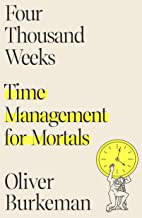
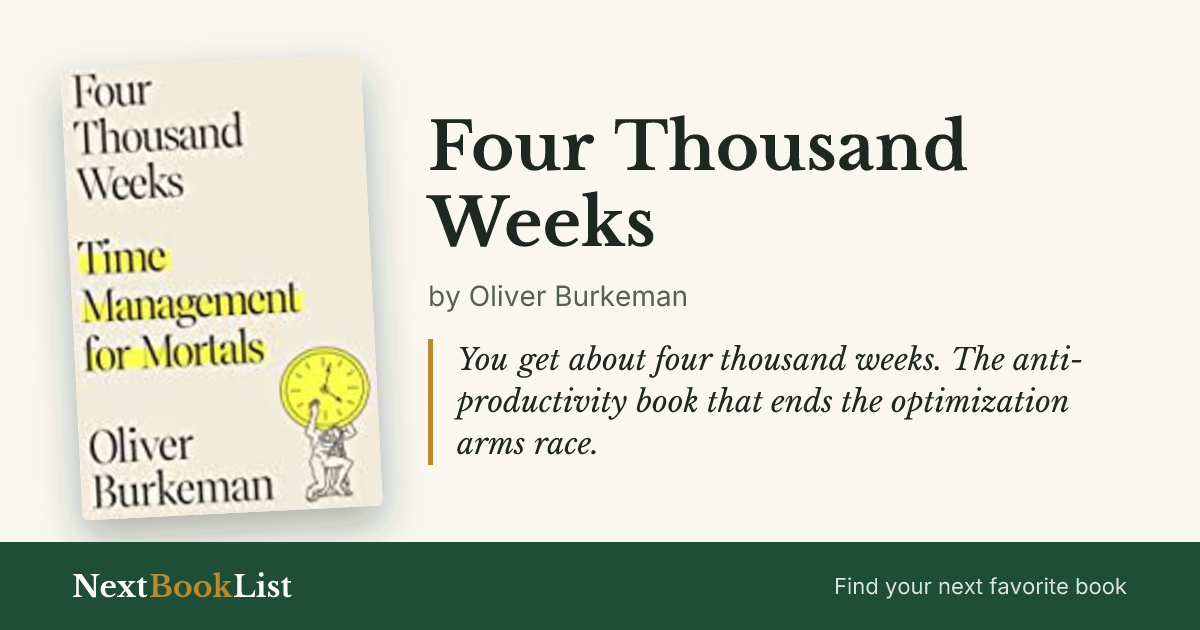
Four Thousand Weeks
by Oliver Burkeman · 2021
You get about four thousand weeks. The anti-productivity book that ends the optimization arms race.
Worth reading? The best antidote to the productivity shelf, and the rare self-help book that tells you to do less on purpose. If you're drowning in systems that promise you'll finally get caught up, read this before buying another planner. Skip it if you want tactics, this book argues tactics are the trap.
| Full Title | Four Thousand Weeks: Time Management for Mortals |
|---|---|
| Author | Oliver Burkeman |
| Published | 2021 |
| Category | Self-Improvement & Psychology |
| Favorite quote | “The average human lifespan is absurdly, outrageously, insultingly brief: if you live to 80, you have about four thousand weeks on earth.” |
The Verdict
Burkeman spent years writing productivity columns before concluding the premise is broken: you will never do it all, and systems promising otherwise deepen the anxiety. Accepting finitude (choosing what to neglect, on purpose) is the actual skill. The rare self-help book that reduces what you demand of yourself and improves what you do.
productivity addicts who clear their inbox and still feel behind
you want tactics (this book argues tactics are part of your problem)
Book Summary
You will never get everything done, and every system that promises otherwise just moves the anxiety elsewhere. The real skill is choosing, on purpose, what to neglect, because neglect is unavoidable, only the choosing is optional. Finite time is a gift, not a problem to solve. Burkeman borrows from Stoics and monks to argue that embracing limits frees you to actually show up for the few things that matter, instead of frantically touching all of them.
Top 7 Lessons from Four Thousand Weeks
- Getting everything done" is a lie; decide what to miss instead.
- Our obsession with efficiency is often a way to avoid hard choices.
- Finitude is freeing once you stop fighting it.
- Pay attention to what's in front of you; the present is the only time you have.
- Big projects rarely get "finished", ship the meaningful version and move on.
- Meaning comes from constraint, not from unlimited optionality.
- Cosmic insignificance therapy: you won't be remembered forever, so stop performing for history and start living now.
Top 4 Quotes from Four Thousand Weeks
"The core challenge of managing our limited time isn't about how to get everything done, that's never going to happen, but how to decide most wisely what not to do, and how to feel at peace about not doing it."
Oliver Burkeman, Four Thousand Weeks
"What you pay attention to will define, for you, what reality is."
Oliver Burkeman, Four Thousand Weeks
"The day will never arrive when you finally have everything under control. Let's start by admitting defeat: none of this is ever going to happen. But you know what? That's excellent news."
Oliver Burkeman, Four Thousand Weeks
"All a plan is, all it could ever possibly be, is a present-moment statement of intent. It's an expression of your current thoughts about how you'd ideally like to deploy your modest influence over the future. The future, of course, is under no obligation to comply."
Oliver Burkeman, Four Thousand Weeks
Frequently Asked Questions
Is Four Thousand Weeks worth reading?
Yes for productivity addicts who clear the inbox and still feel behind, it's the book that ends the optimization race. Skip it if you want tactics.
What is the main idea of Four Thousand Weeks?
You have about 4,000 weeks; accept that you'll neglect most things and choose what to neglect on purpose.
How long does it take to read Four Thousand Weeks?
At 301 pages it's roughly 7 to 9 hours of reading.
Who should read Four Thousand Weeks?
Productivity addicts who clear their inbox and still feel behind, and anyone burnt out on self-optimization.
Ready to read it?
Get Four Thousand Weeks on AmazonRead Next

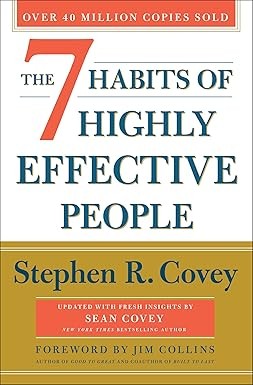
- Best Books for Personal Growth: 13 That Compound Over Years
- Best Books on Productivity: 10 That Respect Your Finite Time
- Best Books to Change Your Life: 15 That Actually Shift How You Live
- Best Books to Stop Overthinking: 11 That Quiet the Spiral
- Best Books on Focus and Deep Work: 8 Ranked
- Best Self-Improvement Books: 16 That Survive a Skeptic