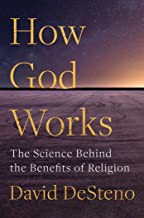
How God Works
by David DeSteno · 2021
A psychology professor tests religious practices, prayer, ritual, fasting, meditation, the way you'd test a drug, and finds most of them actually work.
Worth reading? How God Works is the rare religion book written by someone who isn't trying to convert or debunk you. DeSteno, a psychology professor, sets aside the question of whether God exists entirely and asks a narrower, more testable one: do religious practices, prayer, ritual, fasting, chanting, meditation, actually produce the psychological and physical benefits believers claim, and if so, through what mechanism. His answer, backed by his own lab work and a wide read of the literature, is mostly yes: these practices reliably build self-control, compassion, grief processing, and social trust, and they do it through ordinary psychological mechanisms, not magic. That framing makes it useful to both a devout reader looking for evidence their practices matter and a skeptic who wants the benefits without the metaphysics.
| Full Title | How God Works: The Science Behind the Benefits of Religion |
|---|---|
| Author | David DeSteno |
| Published | 2021 |
| Publisher | Simon & Schuster |
| Category | Religion & Spirituality |
The Verdict
DeSteno’s trick is refusing the fight most religion books pick. He’s not arguing God exists and he’s not debunking anyone’s faith. He’s a psychologist asking a narrower question: do the actual practices, prayer, ritual, fasting, communal chanting, do anything measurable, and if they do, what’s the mechanism. The answer, backed by his own lab work, is mostly yes, and the mechanism is ordinary psychology: attention regulation, group synchrony, structured mourning, not magic.
That framing is what makes the book useful to two different readers at once. A devout reader gets real evidence their practices matter beyond faith alone. A skeptic gets permission to take the benefits without swallowing the metaphysics. Read it if you want a rigorous, non-polemical look at what religious practice actually does to a mind and a body. Skip it if you came looking for a case for or against belief itself, DeSteno isn’t making that argument.
you're skeptical of religion's truth claims but curious whether its practices do anything measurable -- DeSteno treats ritual like a testable intervention, not a doctrine to defend
you want a book that argues for or against God's existence -- DeSteno deliberately brackets that question and stays in the psychology lab
Book Summary
Religious practices can be studied like any other psychological intervention, and DeSteno treats them exactly that way: testing prayer, ritual, fasting, and meditation for measurable effects on self-control, grief, compassion, and trust rather than treating faith as untestable.
The benefits are real but the mechanism is ordinary psychology, not the supernatural. Ritual synchrony builds group trust, structured mourning practices speed grief processing, and practices like prayer function as attention and emotion-regulation tools whether or not the person praying is aware of the mechanism.
You don't need to believe the metaphysical claims to get real value from the practices, according to DeSteno's read of the evidence, which makes the book useful to both a devout reader and a committed skeptic without asking either one to change their theology.
Top 8 Lessons from How God Works
- Religious practices can be tested for measurable psychological effects the same way any other intervention can.
- Ritual and prayer often work through ordinary mechanisms, attention regulation, emotion regulation, group bonding, not through anything supernatural.
- Ritual synchrony, moving or chanting together, reliably builds trust and cooperation within a group, a finding replicated across religious and secular contexts.
- Structured mourning rituals appear to speed grief processing compared to grieving without any structure at all.
- Compassion and generosity increase measurably after practices like prayer and meditation, independent of the practitioner's theology.
- Self-control is one of the most consistently boosted traits across religious practices DeSteno reviews, from fasting to regular prayer.
- You can extract real psychological benefit from a practice without accepting the metaphysical claims that traditionally come with it.
- Secular versions of religious practices, gratitude journals, secular meditation, still borrow the same mechanisms that make the religious originals work.
Frequently Asked Questions
Is How God Works worth reading?
Yes, especially if you're skeptical of religious truth claims but curious whether its practices do anything real -- DeSteno tests them like interventions and mostly finds they work.
Does How God Works argue for or against God's existence?
No, DeSteno deliberately brackets that question entirely and focuses on whether religious practices produce measurable psychological benefits.
What is the main idea of How God Works?
Religious practices like prayer, ritual, and fasting reliably build self-control, compassion, and social trust through ordinary psychological mechanisms, not supernatural ones.
Is this book only useful for religious readers?
No, it's built to work for both devout readers looking for evidence their practices matter and skeptics who want the benefits without the metaphysics.
Is How God Works based on real research?
Yes, DeSteno draws on his own psychology lab's studies and a wide review of the research literature on ritual, prayer, and religious practice.
Ready to read it?
Get How God Works on Amazon