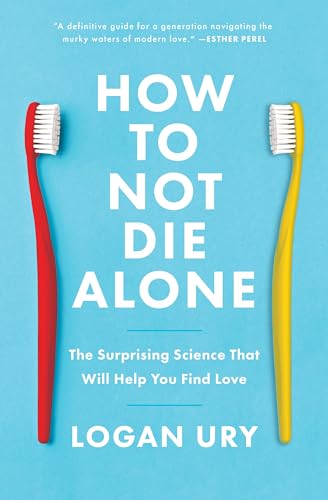
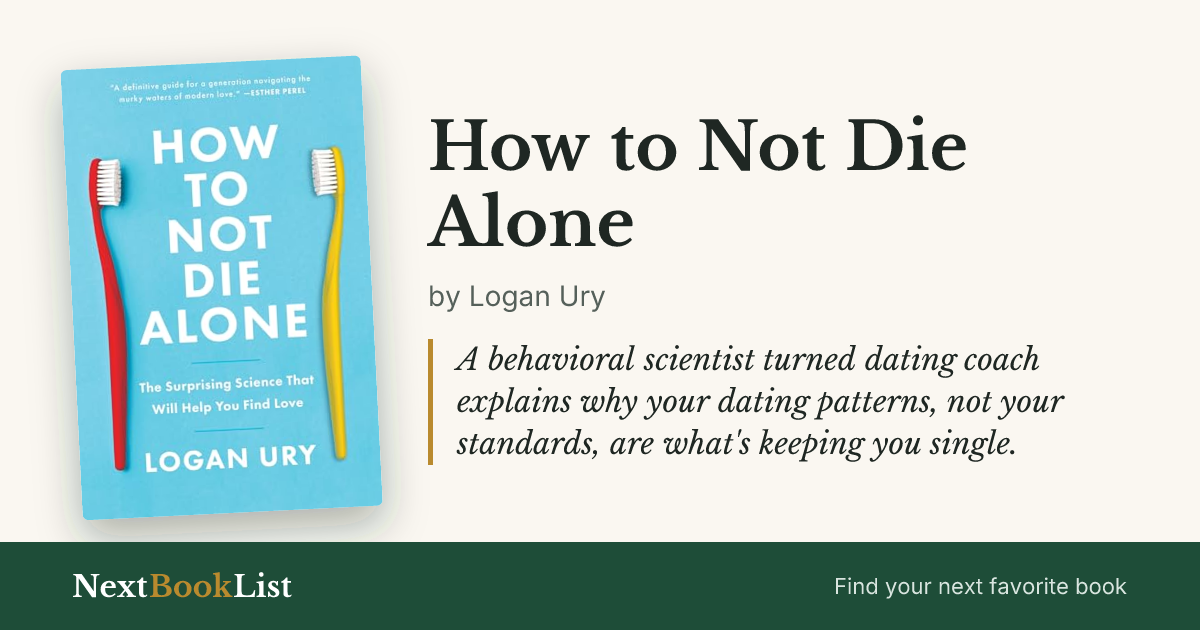
How to Not Die Alone
by Logan Ury · 2021
A behavioral scientist turned dating coach explains why your dating patterns, not your standards, are what's keeping you single.
Worth reading? Ury's background in behavioral science shows in the best way -- instead of generic dating advice, she names specific decision-making biases (the Monet Effect, dating as a maximizer versus a satisficer) and shows exactly how they sabotage smart, otherwise self-aware people. Her three dater archetypes -- the Romanticizer, the Maximizer, the Hesitater -- are the kind of framework that makes you wince because you recognize yourself immediately. The 'work-it-out mindset' versus a soulmate-or-nothing mindset is arguably the most useful reframe in the book: great relationships are built, not found intact. It's squarely about the search-and-early-dating phase, not long-term relationship maintenance. Skip it if you're already partnered and want maintenance advice instead.
| Full Title | How to Not Die Alone: The Surprising Science That Will Help You Find Love |
|---|---|
| Author | Logan Ury |
| Published | 2021 |
| Publisher | Simon & Schuster |
| Category | Parenting & Relationships |
| Favorite quote | “Great relationships are created, not discovered.” |
The Verdict
Most dating advice assumes you just haven’t met the right person yet. Ury, a former Google behavioral scientist, assumes something less flattering: you’ve probably met several right-enough people and sabotaged it yourself, in a predictable way.
She sorts daters into three types – the Romanticizer chasing a spark, the Maximizer who can’t stop comparing options, the Hesitater who won’t commit even when it’s going well. Naming your own type is the uncomfortable, useful part; you’ll likely recognize yourself in one immediately.
The Monet Effect is the sharpest concept here: a profile or a few good texts look far more compatible than the actual person will be up close, because your brain fills in the gaps optimistically. The fix isn’t more scrutiny of the profile, it’s meeting sooner instead of extending the fantasy over text.
The real reframe, though, is the work-it-out mindset – great relationships are built through ongoing effort, not discovered fully formed. That’s a useful correction for anyone treating dating as a search for a person who requires no work at all.
It’s squarely about the search phase, so if you’re already partnered, there’s less here for you. Read it if you keep repeating the same dating mistakes and want the behavioral pattern named. Skip it if you’re past the search phase and want maintenance advice instead.
single people who keep repeating the same dating mistakes (chasing unavailable people, over-optimizing on apps, ghosting good matches) and want the behavioral-science explanation for why
you're in a relationship already and looking for relationship-maintenance advice -- this is almost entirely about the search phase, not sustaining a partnership
Book Summary
Most single people believe their problem is bad luck or insufficient standards, when it's usually a specific, repeatable decision-making pattern -- over-texting before meeting in person, chasing unavailable people, or refusing to commit even to good matches. Ury sorts these into three archetypes: the Romanticizer, the Maximizer, and the Hesitater.
The Monet Effect: from a distance (a dating profile, a few texts), your brain optimistically fills in gaps and makes near-strangers seem far more compatible than they are. You only find out if it's real by actually spending time together, not by analyzing the profile further.
Great relationships are built, not found. People with a "work-it-out mindset" -- who treat love as an ongoing effort rather than a discovery you either get right or don't -- tend to fare better than people waiting to find a soulmate who requires no work at all.
Top 8 Lessons from How to Not Die Alone
- Identify which dater archetype you default to -- Romanticizer, Maximizer, or Hesitater -- since each sabotages dating in a different specific way.
- Distrust the Monet Effect -- a promising profile or text thread often looks far more compatible from a distance than it will up close.
- Meet in person sooner rather than extending text conversation, since compatibility can't be verified from a distance.
- Adopt a work-it-out mindset -- treat relationships as something built through effort, not a soulmate you either find intact or don't.
- Stop over-optimizing dating apps like a shopping catalog -- endless comparison shopping (maximizing) tends to produce worse outcomes than picking a good-enough match and investing.
- Evaluate a partner on how they show up during ordinary and hard moments, not just how attractive the highlight-reel version of them is.
- Recognize hesitation patterns (waiting for certainty, avoiding commitment to good matches) as a fixable habit, not a permanent trait.
- Treat compatibility as something revealed through actual shared experience, not deduced from résumé traits on an app.
Top 4 Quotes from How to Not Die Alone
"Great relationships are created, not discovered."
Logan Ury, How to Not Die Alone
"Those with the work-it-out mindset believe that relationships take effort, that love is an action you take, not something that happens to you."
Logan Ury, How to Not Die Alone
"When we have only a rough perception of someone, our brain, hoping for a great outcome, fills in all the gaps optimistically. People seem way more desirable than they actually are."
Logan Ury, How to Not Die Alone
"Apps primarily give us résumé traits and nothing more. Only by spending time with someone can you appreciate that person for the 'experiential good' they are."
Logan Ury, How to Not Die Alone
Frequently Asked Questions
Is How to Not Die Alone worth reading?
Yes, especially if you keep repeating the same dating mistakes and want a behavioral-science explanation rather than another list of generic dating tips.
What is the main idea of How to Not Die Alone?
Being single longer than you want usually traces back to a specific, nameable decision-making pattern -- not bad luck or insufficient standards -- and Ury sorts these into three dater archetypes you can recognize and correct.
What are the three dater archetypes in the book?
The Romanticizer (waits for a spark or soulmate), the Maximizer (over-optimizes and endlessly compares options), and the Hesitater (avoids commitment even to good matches).
Is this book only for people using dating apps?
No, though a lot of the advice specifically addresses app-based dating patterns like over-texting before meeting and treating profiles like a shopping catalog.
Is How to Not Die Alone useful for people already in a relationship?
Less so -- it's focused almost entirely on the search and early-dating phase, not on maintaining a long-term partnership.
Ready to read it?
Get How to Not Die Alone on Amazon