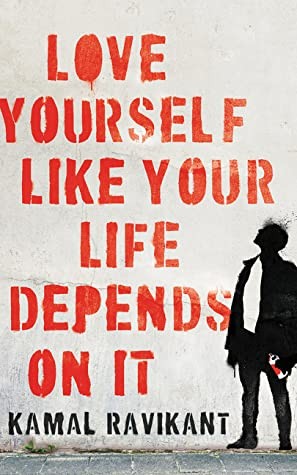
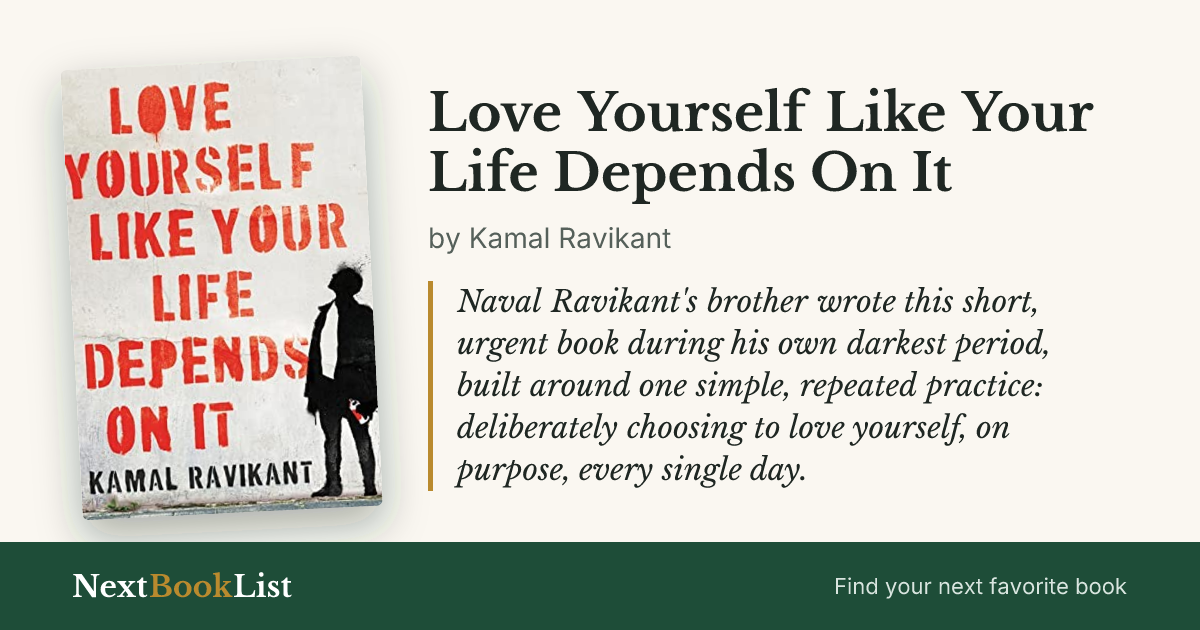
Love Yourself Like Your Life Depends On It
by Kamal Ravikant · 2012
Naval Ravikant's brother wrote this short, urgent book during his own darkest period, built around one simple, repeated practice: deliberately choosing to love yourself, on purpose, every single day.
Worth reading? Kamal Ravikant wrote this during a period of serious depression and business failure, and its core practice is almost embarrassingly simple: repeat 'I love myself' to yourself, meaning it, every day, until it starts to actually change how you treat yourself and what you tolerate. Naval has called his brother the philosopher in the family, and the book's power comes precisely from that plainness, it isn't dressed up in research citations, it's one person's honest account of what actually pulled him out of a genuinely low place. Read it if you want a short, honest account of self-worth rebuilt from very little. Skip it if you need heavy research backing before trying a practice, this book asks you to just try it.
| Author | Kamal Ravikant |
|---|---|
| Published | 2012 |
| Category | Self-Improvement & Psychology |
The Verdict
This isn’t a book that hides behind research citations, it’s one person’s honest account of what actually worked when very little else did. Naval’s own description, calling his brother the family’s real philosopher, tells you exactly the register this book operates in: plain, sincere, and short enough to read in one sitting.
readers who want a short, honest, first-person account of climbing out of a genuinely dark period
you want a research-heavy, citation-dense self-help book, this is personal narrative and a single practice, not a literature review
Book Summary
Kamal's core argument, made without much hedging or academic scaffolding, is that self-love isn't a vague feeling you either have or don't, it's a practice you can deliberately choose and repeat, the same way you'd build any other habit, and that the repetition itself, saying and meaning "I love myself" daily, gradually changes what you tolerate from yourself and from others.
The book's honesty about its own origin, written during genuine depression and failure rather than from a position of already having it figured out, is central to its appeal, it reads as documentation of a practice that actually worked for the author in a specific dark moment, not theory handed down from someone who never struggled.
Top 7 Lessons from Love Yourself Like Your Life Depends On It
- Self-love can be treated as a deliberate, repeatable practice, not just a feeling you passively have or lack.
- Repeating a simple, sincere internal statement daily can gradually shift what you tolerate from yourself and others.
- A book written from inside a genuinely dark period carries different weight than advice from someone who never struggled.
- Simplicity in a practice isn't the same as lack of power, the plainness here is closer to the point than an obstacle to it.
- Rebuilding self-worth doesn't require first fixing your external circumstances, the practice can start regardless.
- Personal narrative, honestly told, can be as persuasive as research citations for certain kinds of change.
- A short book that gets read in one sitting can still produce a real, lasting shift if the reader actually does the practice.
Frequently Asked Questions
Is Love Yourself Like Your Life Depends On It worth reading?
Yes, especially if you want a short, honest, first-person account of rebuilding self-worth from a genuinely low point, rather than research-heavy self-help.
What is Love Yourself Like Your Life Depends On It about?
Kamal Ravikant's account of using a simple, repeated daily practice, sincerely telling himself "I love myself", to climb out of depression and business failure.
Is Kamal Ravikant related to Naval Ravikant?
Yes, they're brothers. Naval has called Kamal the philosopher of the two and has specifically recommended this book, quoting a line from it about a monk who says "yes" to everything that happens.
Ready to read it?
Get Love Yourself Like Your Life Depends On It on Amazon