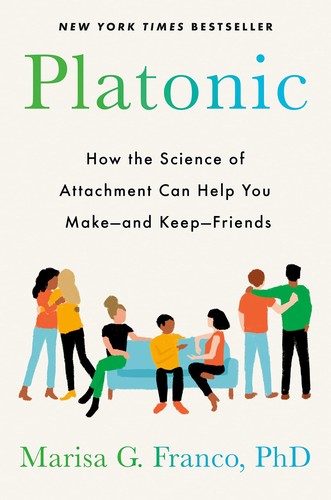
Platonic
by Marisa G. Franco · 2022
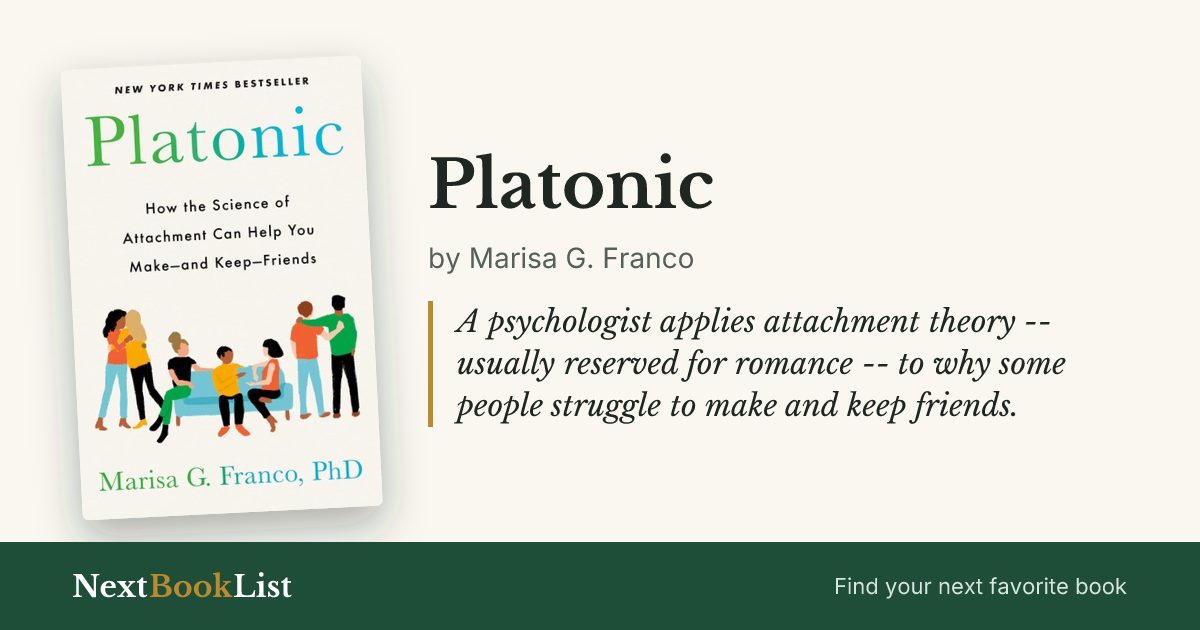
A psychologist applies attachment theory -- usually reserved for romance -- to why some people struggle to make and keep friends.
Worth reading? Franco's real contribution is importing attachment theory wholesale into friendship, a move self-help usually reserves for romantic relationships. Once you see your own anxious or avoidant attachment patterns showing up in how you approach (or avoid) friendship, a lot of confusing adult loneliness starts making causal sense instead of just feeling like bad luck. She backs it with real research -- the loneliness-mortality comparisons are genuinely striking -- and the book earns its bestseller status by being more explanatory than prescriptive. It's less a step-by-step system than an account of why friendship is harder for some people than others. Skip it if you want a pure how-to over the psychology behind it.
| Full Title | Platonic: How the Science of Attachment Can Help You Make—and Keep—Friends |
|---|---|
| Author | Marisa G. Franco |
| Published | 2022 |
| Publisher | G.P. Putnam's Sons |
| Category | Parenting & Relationships |
| Favorite quote | “Our friends advertise the kaleidoscope of ways we can live. They expose us to new ways of being in the world, showing us another life is possible.” |
The Verdict
Attachment theory usually gets reserved for romance – anxious, avoidant, secure, applied to whether you can trust a partner. Franco’s move is to point the same framework at friendship, and it holds up better than you’d expect.
If you’re the person who reads into a friend’s slow text reply for three days, that’s an attachment pattern, not a personality quirk, and it’s been quietly running your friendships the same way it might run a relationship. Franco backs this with real research, including a genuinely striking comparison: the mortality impact of loneliness rivals that of heavy smoking. That’s not a throwaway stat – it reframes friendship-building from a nice-to-have into something with real stakes.
The book is more explanatory than prescriptive. You’ll understand why you avoid vulnerability with friends, or why you over-invest and then feel hurt when it’s not reciprocated, more than you’ll get a script for the next coffee invite. That’s the honest tradeoff of a psychologist-written book: better diagnosis, lighter on the step-by-step.
Read it if adult friendship has felt more confusing or harder to sustain than you expected, and you want the psychology behind why. Skip it if you want pure conversation-starter tactics over the theory.
adults who feel isolated or find making friends as adults harder than it used to be, and want a research-backed explanation rather than generic 'just put yourself out there' advice
you want purely practical scripts for starting conversations -- this leans on the psychology and research behind friendship more than a tactics list
Book Summary
Attachment styles -- secure, anxious, avoidant -- don't just shape romantic relationships. They shape how easily you approach, trust, and stay close to friends, and understanding your own pattern explains a lot of confusing adult friendship struggles.
Loneliness isn't a minor quality-of-life issue -- the research Franco cites ranks lack of social connection as a stronger predictor of early death than many physical health risk factors, which reframes friendship-building as a genuinely high-stakes project, not a nice-to-have.
Friends aren't just company -- they expand your sense of what's possible for your own life by showing you other ways of being, and having someone to witness your life is part of what makes it feel significant.
Top 7 Lessons from Platonic
- Identify your own attachment style (secure, anxious, avoidant) and notice how it shows up in your friendship patterns, not just your romantic ones.
- Treat vulnerability as the mechanism that deepens a friendship, not a risk to be minimized.
- Initiate more than feels natural -- adults chronically underestimate how much other people want to be reached out to.
- Don't let cultural norms that deprioritize friendship (canceling plans with friends before canceling work) go unquestioned.
- Recognize that loneliness carries real health costs, not just emotional discomfort, which justifies actively investing in friendship.
- Look for friends who expand your sense of what's possible in your own life, not just people who are convenient to be around.
- Expect friendship maintenance to require ongoing effort as life stages change -- it doesn't sustain itself passively.
Top 4 Quotes from Platonic
"Our friends advertise the kaleidoscope of ways we can live. They expose us to new ways of being in the world, showing us another life is possible."
Marisa G. Franco, Platonic
"We are at our most powerful the moment we no longer need to be powerful."
Marisa G. Franco, Platonic
"For our life to feel significant, we crave someone to witness it, to verify its importance."
Marisa G. Franco, Platonic
"We live in a society in which it is acceptable to cancel plans with friends for work, but never vice versa."
Marisa G. Franco, Platonic
Frequently Asked Questions
Is Platonic worth reading?
Yes, especially if adult friendship has felt harder to build or maintain than it used to, and you want a research-backed explanation rather than generic advice to 'put yourself out there.'
What is the main idea of Platonic?
Attachment styles that usually get applied to romance -- secure, anxious, avoidant -- also shape how people approach, trust, and maintain friendships, and understanding your own pattern explains a lot of adult friendship struggles.
Do I need to know my attachment style before reading this?
No, the book explains the framework and helps you identify your own pattern as you go.
Is Platonic more research or more self-help?
It leans research-backed and explanatory -- Franco is a psychologist, and the book cites real studies rather than offering just anecdote-driven advice.
Who is Platonic for?
Adults who feel isolated, have drifted from old friends, or find making new friends much harder than it was earlier in life.
Ready to read it?
Get Platonic on Amazon