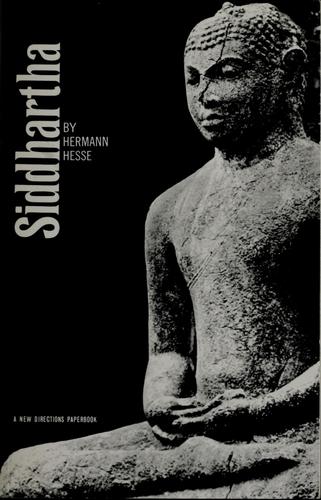
Siddhartha
by Hermann Hesse · 1922
A young man walks away from both his father's religious tradition and the Buddha's own teaching to find enlightenment entirely on his own terms, in Hesse's slim, widely-gifted classic.
Worth reading? Hesse follows Siddhartha, a young man in the time of the historical Buddha, as he rejects both his father's Brahmin tradition and, remarkably, the Buddha's own teaching itself, insisting that enlightenment has to be lived and earned firsthand, not simply accepted secondhand even from the wisest possible source. It's short, spare, and has been a gateway into philosophical fiction for generations of readers precisely because of how little it demands and how much it leaves you sitting with afterward. Read it as the most approachable entry point into fiction about the search for meaning. Skip it if you need external plot conflict to stay engaged, this is entirely an internal journey.
| Author | Hermann Hesse |
|---|---|
| Published | 1922 |
| Category | Fiction |
| Favorite quote | “Wisdom is not communicable. The wisdom which a wise man attempts to communicate always sounds foolish.” |
The Verdict
This is the book people actually give away, and it’s easy to see why: short enough to read in an afternoon, but built to be sat with for years after. Siddhartha’s refusal to simply accept the Buddha’s teaching secondhand is the whole book in miniature.
readers who want the most accessible entry point into philosophical fiction about the search for meaning
you want a plot-driven novel, this is a quiet, contemplative journey, not a story built on external conflict
Book Summary
Hesse's central provocation is Siddhartha's refusal to become a follower even of the Buddha, whom the novel treats with real reverence, arguing that wisdom genuinely taught by another person, no matter how enlightened, can never fully become your own until it's lived and tested firsthand through direct experience, including through error and worldly indulgence.
The novel's structure, tracing Siddhartha through asceticism, worldly wealth and pleasure, fatherhood, and finally a kind of settled peace as a ferryman, deliberately refuses a single clean answer about what enlightenment actually is, suggesting instead that the search itself, undertaken honestly and without shortcuts, is inseparable from whatever wisdom eventually gets found.
Top 7 Lessons from Siddhartha
- Wisdom taught secondhand, even by the wisest teacher available, isn't fully yours until lived and tested firsthand.
- Rejecting an authority's teaching isn't automatically disrespect, it can be the most serious way of taking the search seriously.
- A search for meaning that includes real worldly indulgence and error isn't a detour from wisdom, it can be part of the path.
- There's no single clean answer to what enlightenment is, the novel deliberately resists offering one.
- A quiet, ordinary later-life role (Siddhartha becomes a ferryman) can hold as much wisdom as a dramatic spiritual achievement.
- Short, spare prose can carry as much philosophical weight as a much longer, denser treatise.
- The book's brevity and gift-ability have made it many readers' actual first exposure to philosophical fiction.
Top 4 Quotes from Siddhartha
"Wisdom is not communicable. The wisdom which a wise man attempts to communicate always sounds foolish."
Hermann Hesse, Siddhartha
"I have had to experience so much stupidity, so many vices, so much error, so much nausea, disillusionment and sorrow, just in order to become a child again and begin anew."
Hermann Hesse, Siddhartha
"When someone is seeking, it happens quite easily that he only sees the thing that he is seeking; that he is unable to find anything, unable to absorb anything, because he always thinks only about the thing he is seeking."
Hermann Hesse, Siddhartha
"Knowledge can be communicated, but not wisdom."
Hermann Hesse, Siddhartha
Frequently Asked Questions
Is Siddhartha worth reading?
Yes, it's one of the most widely recommended entry points into philosophical fiction, short and accessible while carrying real weight about the search for meaning.
What is Siddhartha about?
A young man in the time of the historical Buddha rejects both his father's religious tradition and the Buddha's own teaching, insisting enlightenment must be lived and earned firsthand rather than accepted secondhand.
Do I need to know about Buddhism to read Siddhartha?
No. Hesse wrote it for a general Western audience and it works as a standalone philosophical novel, though familiarity with the Buddha's basic story adds useful context.
Ready to read it?
Get Siddhartha on Amazon