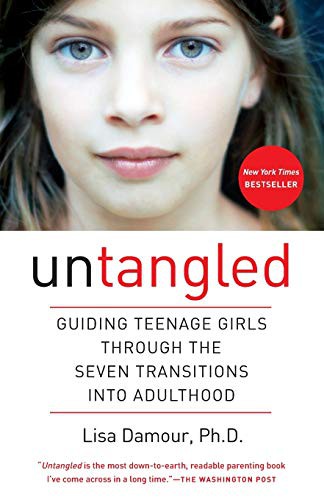
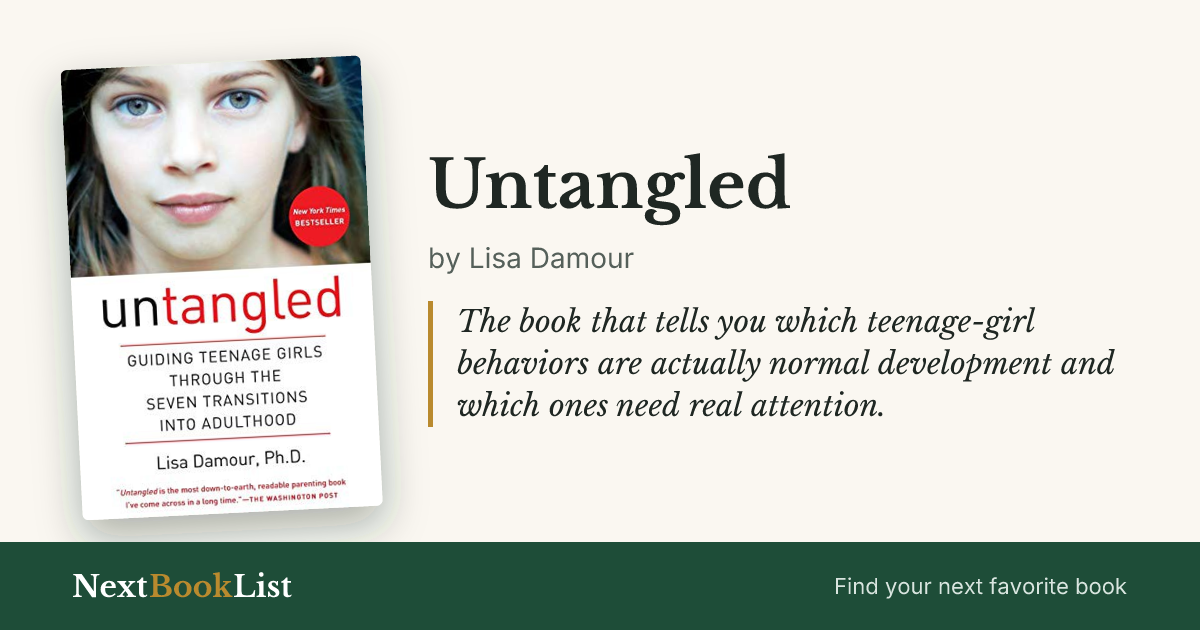
Untangled
by Lisa Damour · 2016
The book that tells you which teenage-girl behaviors are actually normal development and which ones need real attention.
Worth reading? Untangled earns its keep by doing the thing most parenting books skip: telling you what's actually normal. Damour organizes teenage development into seven clear transitions (separating from parents, finding a tribe, harnessing emotion, and so on), and for each one she draws a line between the uncomfortable-but-healthy version and the version that means you should worry. That distinction alone will save you a lot of unnecessary panic. It's grounded in her clinical psychology practice, not just anecdote, which gives the reassurance real weight. Skip it if your kid isn't a teenage girl -- the examples won't map cleanly, even if some principles transfer.
| Full Title | Untangled: Guiding Teenage Girls Through the Seven Transitions Into Adulthood |
|---|---|
| Author | Lisa Damour |
| Published | 2016 |
| Category | Parenting & Relationships |
The Verdict
Most parents of teenage girls are working off pure instinct and secondhand horror stories. Damour gives you an actual map: seven transitions every teenage girl moves through, each with a normal version and a version worth worrying about.
That distinction is the whole value of the book. Eye-rolling and secrecy feel alarming in the moment, but Damour shows you they’re often the healthy work of separating from parents, not a relationship falling apart.
She’s just as clear about where the line actually is. This isn’t a book that tells you everything is fine – it tells you specifically what would make something not fine, so you can stop panicking about normal stuff and start paying attention to what actually matters.
It’s grounded in her clinical psychology practice, which gives the reassurance weight instead of just vibes. You come away with a framework, not just a pep talk.
Read it if you’re raising a teenage girl and want to know what’s normal and what’s a real flag. Skip it if you’re raising a teenage boy – the examples are built specifically around girls.
parents of teenage or pre-teen girls who want to know what's developmentally normal versus what's a real red flag
you're raising a teenage boy specifically -- this book's examples and framing are built around girls, even though some of the underlying developmental psychology overlaps
Book Summary
Teenage development runs through seven predictable transitions: parting with childhood, joining a new tribe, harnessing emotions, contending with adult authority, planning for the future, entering the romantic world, and caring for herself. Each has a normal, healthy version and a version that signals real trouble.
Eye-rolling, pulling away, and secrecy are often signs of healthy separation from parents, not a relationship breaking down. The job isn't to stop the separation, it's to stay close enough that she can come back when she needs to.
Emotional intensity in teenage girls is often developmentally appropriate, not pathological -- but Damour is clear about the line where mood becomes something clinical, and parents need to know that line rather than assume every bad week is "just being a teenager."
Parents do better by staying calm and available than by trying to control or fix every friction point. The goal is to be a stable base a teenager can push against, not a wall she has to break through.
Top 8 Lessons from Untangled
- Learn the seven developmental transitions so you can tell normal friction from a real warning sign.
- Expect and tolerate some pulling away and secrecy -- it's often healthy separation, not a broken relationship.
- Stay emotionally available even when your teen is pushing you away; don't take the distance personally.
- Know the difference between normal moodiness and symptoms that warrant professional attention.
- Let her practice conflict with adult authority in low-stakes ways rather than shutting every pushback down.
- Support her forming a peer 'tribe' even when you don't love the friend group -- it's a needed developmental step.
- Help her plan for the future without taking over the planning yourself.
- Model calm regulation during her emotional storms instead of escalating alongside her.
Frequently Asked Questions
Is Untangled worth reading?
Yes, especially if you're parenting a teenage girl and want a clear sense of what's developmentally normal versus what's a genuine red flag. That distinction is the book's core value.
What is the main idea of Untangled?
Teenage girls move through seven predictable developmental transitions, and most of the friction parents find alarming -- pulling away, moodiness, secrecy -- is a normal, healthy part of one of those transitions.
What age range is Untangled for?
Roughly ages 11 through the college years, though most examples center on the core teenage years.
Does Untangled apply to teenage boys too?
The book is written specifically about girls, and the examples reflect that. Some of the underlying developmental psychology overlaps with boys, but the framing won't map cleanly.
Is Untangled a clinical or academic book?
It's written for general parents, not clinicians, but it's grounded in Damour's practice as a clinical psychologist, which gives the reassurance real backing.
Ready to read it?
Get Untangled on Amazon