Best Books on Remote Work and Async Teams

Updated July 21, 2026 · 4 books

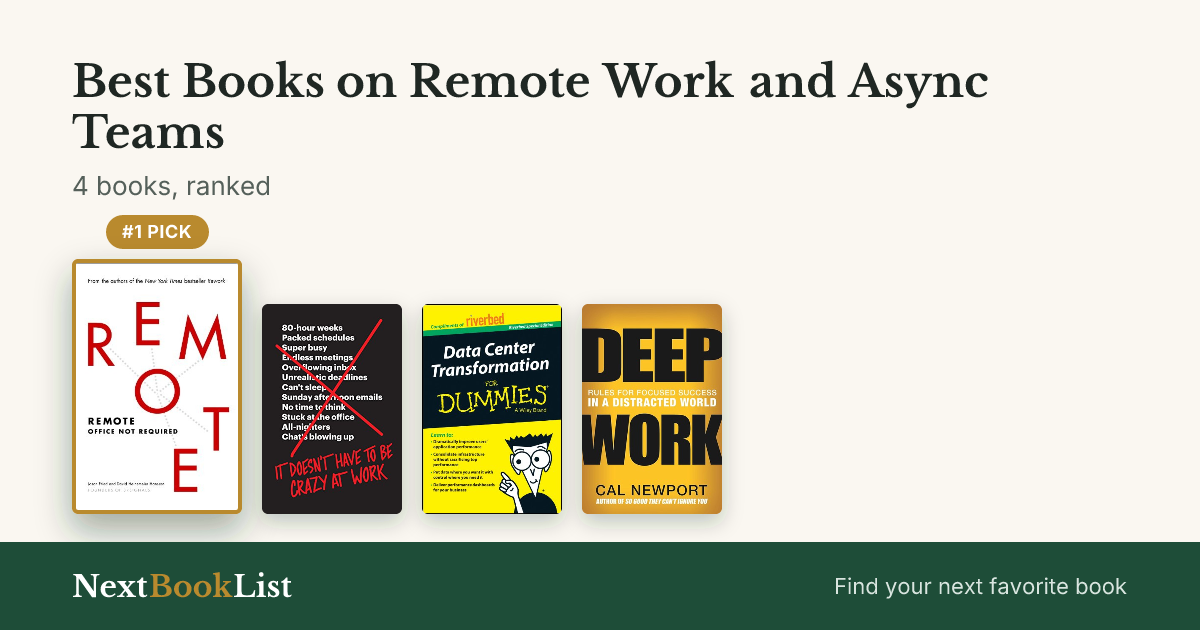
Best Books on Remote Work and Async Teams: ranked list of 4 books

Start with Remote. Fried and Hansson’s core argument, that the office produces more interruption than collaboration, is the foundational case every other book on this list either builds on or assumes you already accept. It’s short, blunt, and holds up better than most decade-old business books because Basecamp had already run distributed for years before writing it.

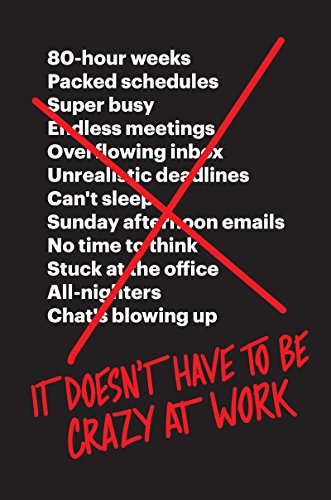
It Doesn’t Have to Be Crazy at Work follows as the same authors’ fix for the trap remote teams fall into next: mistaking always-available for productive. Shrink the meetings, protect long blocks of focus, say no to growth for its own sake, calm is the actual competitive advantage, not hustle.

The Year Without Pants is the ground-level reality check. Berkun spent a year inside Automattic’s fully distributed team and documented what the pitch books leave out, real hiring friction, real management, real loneliness, alongside what genuinely worked. Read it after the first two so the idealized case gets tested against a real team’s year.

Close with Deep Work, which isn’t about remote work directly but solves the problem underneath it: without an office enforcing structure, protecting real focus becomes your job alone. Newport’s four rules are the individual discipline every distributed team eventually needs once the company-level case is settled.

One warning: remote-work books are easy to read as permission to skip the harder problem, building real communication habits and real trust with people you’ll rarely see in person. None of these four is a substitute for actually doing that work.

Quick Comparison

#BookBest for
1RemoteJason Fried and David Heinemeier Hanssonmanagers and founders deciding whether to let a team work remotely, and skeptical about itAmazon
2It Doesn't Have to Be Crazy at WorkJason Fried and David Heinemeier Hanssonfounders and managers whose team is busy, exhausted, and quietly resentful of itAmazon
3The Year Without PantsScott Berkunmanagers curious what a real, working, fully remote team looks like day to day, not just in theoryAmazon
4Deep WorkCal Newportknowledge workers whose output depends on sustained concentrationAmazon

The Books

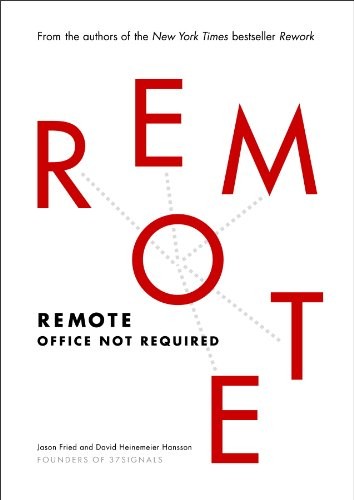
Remote by Jason Fried and David Heinemeier Hansson book cover

1. Remote

Jason Fried and David Heinemeier Hansson · 2013

The office isn't where work happens anymore -- it's where work gets interrupted.

Fried and Hansson wrote this while running Basecamp fully distributed years before most companies had a reason to try it, and it shows: this isn’t theory borrowed from a pandemic, it’s a company that had already stress-tested the idea for a decade. The argument is blunt – offices interrupt more than they enable – and it doesn’t dress that up with hedging.

Where it’s thinner is the “how”: specific tools, specific rituals, the operational texture of actually running a distributed team day to day. Read it for the case, not the manual, and pair it with something more current for the tactics.

Read it if: managers and founders deciding whether to let a team work remotely, and skeptical about it

Skip it if: your team is already fully remote and past the 'is this legitimate' argument
Full verdict: Remote →

It Doesn't Have to Be Crazy at Work by Jason Fried and David Heinemeier Hansson book cover

2. It Doesn't Have to Be Crazy at Work

Jason Fried and David Heinemeier Hansson · 2018

Calm is a competitive advantage. Most companies never even try for it.

This is Basecamp’s most quotable book, and it earns the quotability: “workaholism is a symptom of fear” is the kind of line that reframes a whole management philosophy in one sentence. The chapters are short, almost aphoristic, and stack up into a coherent argument that most business urgency is manufactured, not real.

The blind spot is scale and stage. This is easy advice for a profitable, bootstrapped company with no investors breathing down its neck – much harder for anyone in a genuine fundraising or survival sprint. Read it as the target state to build toward, not a rule for right now if you’re not there yet.

Read it if: founders and managers whose team is busy, exhausted, and quietly resentful of it

Skip it if: you're pre-revenue and still need to sprint; this is a book for companies that can afford calm

Full verdict: It Doesn't Have to Be Crazy at Work →

The Year Without Pants by Scott Berkun book cover

3. The Year Without Pants

Scott Berkun · 2013

A year embedded inside a fully distributed team, working in pajamas, shipping code that runs a chunk of the internet.

Most remote-work books argue the case; Berkun just shows you the year, warts included. He’s candid about the friction (hiring by trial, awkward video calls, the specific loneliness of never meeting your team) in a way that more polished management books tend to smooth over.

It’s not a framework you can lift and apply Monday morning, and that’s the honest tradeoff. Read it after a book like Remote for the theory, and use this one to sanity-check whether the idealized version matches what a real team going through it actually looks like.

Read it if: managers curious what a real, working, fully remote team looks like day to day, not just in theory

Skip it if: you want a tactics manual -- this is a memoir with lessons woven in, not a how-to guide

Full verdict: The Year Without Pants →

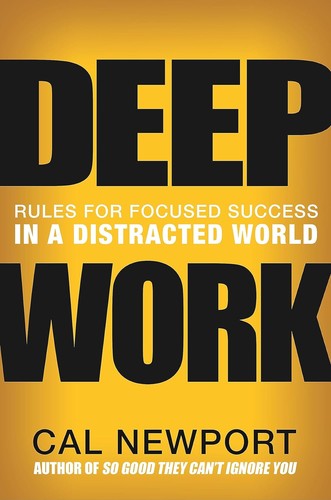
Deep Work by Cal Newport book cover

4. Deep Work

Cal Newport · 2016

Focus is the new superpower. Newport makes the case, then hands you the schedule.

Newport argues that deep, distraction-free work is both increasingly rare and increasingly valuable, which makes it the career leverage of this era. The second half is practical: time-block your day, embrace boredom, quit tools that don’t pass a cost-benefit test. One of the few productivity books whose advice compounds the longer you use it.

Read it if: knowledge workers whose output depends on sustained concentration

Skip it if: your work is genuinely reactive and meeting-driven (the advice will frustrate you)

Full verdict: Deep Work →

Frequently Asked Questions

What is the best book on remote work to start with?

Remote, by Jason Fried and David Heinemeier Hansson. It's the clearest, most direct case for why distributed teams beat office-bound ones, made years before the rest of the business world was forced to test the idea themselves.

I already believe in remote work. What should I read next?

It Doesn't Have to Be Crazy at Work. It's the same authors' follow-up on pace and culture, not location specifically, and it's the antidote to the "always-on" trap that swallows a lot of remote teams that never fixed their meeting and workload habits.

Is there a book that shows what remote work actually looks like day to day, not just the argument for it?

The Year Without Pants. Scott Berkun spent a year embedded on Automattic's fully distributed WordPress.com team and wrote down the real friction, hiring, management, culture, that the more polished pitch books tend to skip.

Why is Deep Work on a remote-work list?

Because the hardest part of remote work isn't the distance, it's protecting focus without an office enforcing structure around you. Newport's four rules are the individual-level discipline that makes the team-level ideas in the first three books actually work.

Do these books agree with each other?

Mostly, but The Year Without Pants is a useful check on the other two. Fried and Hansson argue the case; Berkun shows you the messier reality of running it, which is worth reading before you assume remote solves problems on its own.

Keep Reading