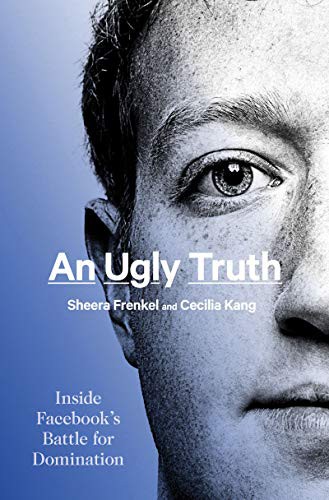
An Ugly Truth
by Sheera Frenkel & Cecilia Kang · 2021
Facebook never collapsed like Theranos -- it just kept growing while its own executives knew exactly what it was doing wrong.
Worth reading? Bad Blood and An Ugly Truth are both corporate-expose journalism, but they end differently, and that's the more disturbing book. Theranos collapsed once the fraud was exposed -- the system worked, eventually. Facebook, in Frenkel and Kang's reporting, made the same pattern of choices -- internal warnings ignored, problems buried, growth prioritized over harm -- and simply kept growing anyway. There's no Theranos-style ending here, no dramatic collapse, which is precisely the point the authors are making about power at that scale. Worth reading for the access -- two experienced tech reporters got current and former Facebook insiders on record describing decisions from inside the room. Skip it if you want a balanced "both sides" take on social media's role in society; this book has a clear point of view about who knew what and when.
| Full Title | An Ugly Truth: Inside Facebook's Battle for Domination |
|---|---|
| Author | Sheera Frenkel & Cecilia Kang |
| Published | 2021 |
| Category | Business & Money |
The Verdict
Frenkel and Kang spent years building sources inside a company built to resist exactly that kind of scrutiny, and it shows in how specific the reporting gets. Where the book is short on genuinely quotable pull-lines, it makes up for in documented detail – named meetings, named decisions, named tradeoffs – which is arguably more damning than a memorable sentence would be.
you want the reporting on how Facebook's leadership repeatedly chose growth over the harm it knew it was causing
you want a redemption arc or a tidy ending -- this book closes with the company still growing, mostly unpunished
Book Summary
Frenkel and Kang's reporting traces a repeated pattern inside Facebook: employees and researchers flagged real harms -- election interference, genocide-adjacent misinformation in Myanmar, teen mental health effects, data misuse that led to Cambridge Analytica -- and leadership, especially Zuckerberg and Sandberg, consistently chose to prioritize growth and engagement metrics over acting decisively on those warnings.
The book argues this wasn't incompetence or ignorance. Facebook had the data internally, often years before scandals broke publicly, and the decision to delay, downplay, or bury findings was a deliberate response to protect growth and avoid regulatory or reputational fallout, not a failure to notice the problem in the first place.
A recurring theme is how Sandberg's public image as a corporate feminist icon and Zuckerberg's "connect the world" idealism provided cover for decisions that, examined individually, prioritized the platform's growth curve over the specific, documented harms flowing from it. The company's response to crisis after crisis followed the same script: minimize publicly, promise reform, then quietly protect the metrics that mattered to the business.
Top 10 Lessons from An Ugly Truth
- Internal researchers flagged real harms years before those harms became public scandals.
- Leadership chose growth and engagement metrics over acting on internal warnings.
- Cambridge Analytica wasn't a surprise inside the company -- data misuse risks were known.
- Facebook's role in Myanmar's violence was flagged internally before it made headlines.
- Public crisis response followed a script: minimize, promise reform, protect the metrics.
- Sandberg's public image provided cover that delayed accountability for platform harms.
- Zuckerberg's 'connect the world' framing masked decisions driven by growth targets.
- Scale itself becomes a shield -- a company this large can absorb scandal after scandal.
- Regulators and lawmakers repeatedly failed to keep pace with what insiders already knew.
- The absence of a dramatic collapse doesn't mean the harm reporting was wrong -- it means the company was too big to fail that way.
Frequently Asked Questions
Is An Ugly Truth worth reading?
Yes if you want deeply reported detail on what Facebook's leadership knew and when, rather than a surface-level media narrative. Skip it if you want a hopeful ending -- this book doesn't offer one.
What is the main idea of An Ugly Truth?
Facebook's leadership repeatedly knew about serious harms flowing from the platform and chose growth and engagement over decisive action, using crisis-management scripts to manage the fallout instead.
Is An Ugly Truth similar to Bad Blood?
Both are investigative corporate-expose journalism, but Bad Blood ends in Theranos's collapse. An Ugly Truth ends with Facebook still growing -- the more unsettling comparison.
Who should read An Ugly Truth?
Anyone who wants the reported, sourced version of how Facebook's internal decisions led to its biggest public scandals, told by two tech reporters with deep access to insiders.
Ready to read it?
Get An Ugly Truth on Amazon