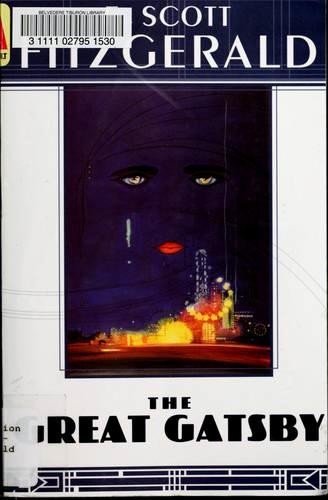
The Great Gatsby
by F. Scott Fitzgerald · 1925
A small-town nobody reinvents himself as a mysterious millionaire to win back the woman who married someone else -- and the American Dream turns out to be a very expensive lie.
Worth reading? The Great Gatsby earns its spot as the tightest classic in American fiction -- Fitzgerald says more about class, longing, and self-invention in 180 pages than most novels manage in 500. It beats Fitzgerald's other work (Tender Is the Night) on sheer economy: not a wasted scene. Skip it only if you want your tragedies to feel earned slowly -- this one lands its punches fast.
| Author | F. Scott Fitzgerald |
|---|---|
| Published | 1925 |
| Publisher | Scribner |
| Category | Fiction |
| Favorite quote | “So we beat on, boats against the current, borne back ceaselessly into the past.” |
The Verdict
What holds up is the control – every party, every glance across the bay, is doing double duty as plot and symbol, and Fitzgerald never once slows down to explain the trick. Read it once for the romance, once for the class critique; it survives both readings.
you want the sharpest, shortest classic on the gap between reinvention and reality -- 180 pages that still land
you want a straightforward romance -- this is a tragedy about longing and status dressed up as a love story, and everyone involved is more compromised than they look
Book Summary
Gatsby's entire fortune and persona exist for one purpose: to erase the fact that he was once a poor nobody named James Gatz. Fitzgerald uses him to argue that American self-reinvention has a ceiling -- you can buy the mansion and throw the parties, but you can't buy your way into old money's actual acceptance, and you definitely can't buy back the past.
Nick Carraway's narration is not neutral. He's dazzled by Gatsby even as he catalogs everyone's moral failures, which is the book's real trick: it lets you fall for the same golden light that fooled Gatsby, then makes you watch it collapse.
The green light at the end of Daisy's dock is the whole novel in one image -- something visible, desired, and permanently out of reach, no matter how much money or hope you throw at it.
Top 8 Lessons from The Great Gatsby
- Reinvention has limits -- money can buy the surface of a new identity but not the history to back it up.
- Old money and new money look similar from a distance and are worlds apart up close; Gatsby never fully clears that gap.
- Chasing a fixed idea of the past (Daisy, five years ago) blinds you to who someone actually is now.
- Wealth without purpose curdles into spectacle -- the parties are empty because Gatsby only wants one guest.
- The powerful and careless (Tom and Daisy) can walk away from wreckage that destroys everyone around them.
- A narrator who admires the people he's judging is more revealing than one who simply condemns them.
- Symbols (the green light, the eyes of Doctor T.J. Eckleburg) carry more emotional weight than exposition in short, controlled prose.
- The 'self-made man' myth often has an erased, uncomfortable origin story underneath it.
Top 6 Quotes from The Great Gatsby
"So we beat on, boats against the current, borne back ceaselessly into the past."
F. Scott Fitzgerald, The Great Gatsby
"In my younger and more vulnerable years my father gave me some advice that I've been turning over in my mind ever since."
F. Scott Fitzgerald, The Great Gatsby
"Gatsby believed in the green light, the orgastic future that year by year recedes before us."
F. Scott Fitzgerald, The Great Gatsby
"I hope she'll be a fool -- that's the best thing a girl can be in this world, a beautiful little fool."
F. Scott Fitzgerald, The Great Gatsby
"Her voice is full of money."
F. Scott Fitzgerald, The Great Gatsby
"Can't repeat the past? Why of course you can!"
F. Scott Fitzgerald, The Great Gatsby
Frequently Asked Questions
Is The Great Gatsby worth reading?
Yes -- it's one of the shortest, tightest classics in American fiction, and its critique of wealth and reinvention still lands a century later.
Is The Great Gatsby hard to read?
No, it's short and the prose is clean, though the symbolism and unreliable narration reward a slow, attentive read over a skim.
What is the main theme of The Great Gatsby?
That the American Dream of self-reinvention has a ceiling -- money can build a new identity but can't buy back the past or force acceptance from old money.
Who should read The Great Gatsby?
Anyone who wants the classic, compact American novel on class, longing, and the cost of chasing a fixed idea of the past.
Ready to read it?
Get The Great Gatsby on Amazon