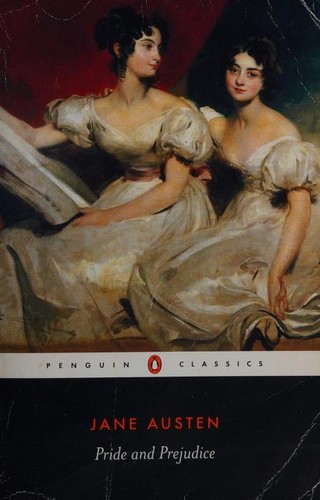
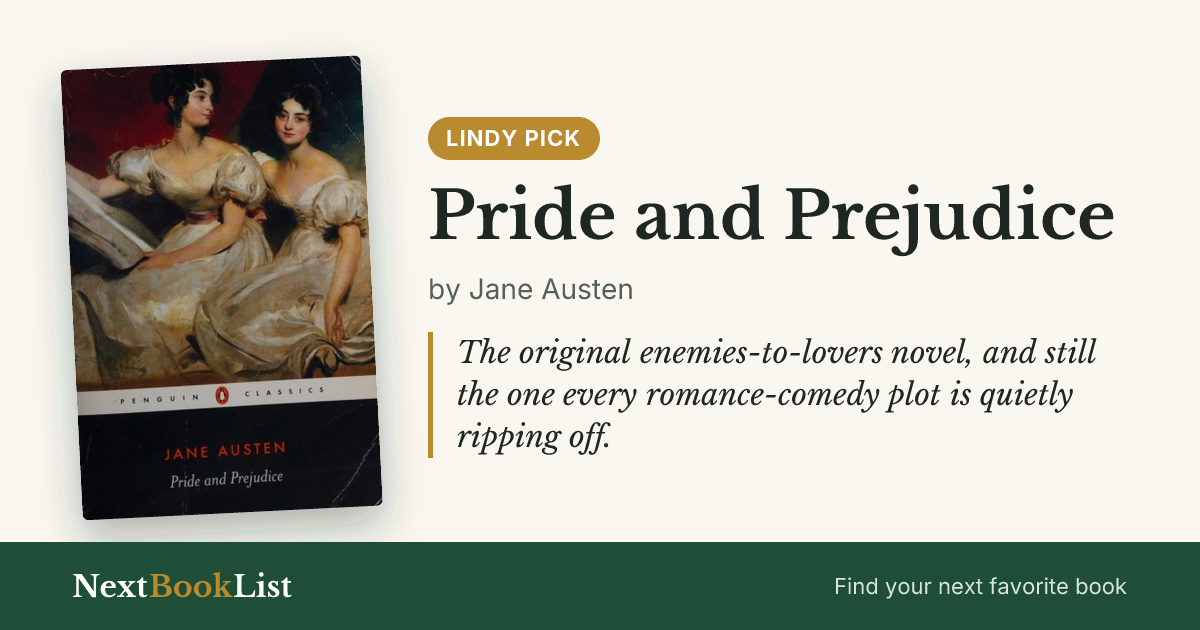
Pride and Prejudice
by Jane Austen · 1813
The original enemies-to-lovers novel, and still the one every romance-comedy plot is quietly ripping off.
Worth reading? Pride and Prejudice has outlasted almost every other novel of its era because Austen's wit hasn't dated the way the social rules around it have. It beats most 'classic romance' recommendations because Elizabeth Bennet is actually funny and actually wrong about things, not just a passive love interest. Skip it only if you want plot over character -- the entire book is people talking themselves into and out of judgments.
| Author | Jane Austen |
|---|---|
| Published | 1813 |
| Publisher | Penguin Classics |
| Category | Fiction |
| Favorite quote | “It is a truth universally acknowledged, that a single man in possession of a good fortune must be in want of a wife.” |
The Verdict
Everyone remembers the romance and forgets how funny this book is. Austen’s narration is dry and merciless about nearly every character except Elizabeth and Jane, and even they don’t get a total pass.
The reason this beats most “classic romance” recommendations is that Elizabeth is allowed to be wrong. She’s clever, she’s likable, and she still completely misreads Darcy and Wickham for most of the book. That’s a harder trick to pull off than a simple obstacle-then-happy-ending plot, and it’s why the book has outlasted two centuries of imitators.
you want sharp, funny, socially observant fiction about money, marriage, and getting your first impression of someone completely wrong
you need constant plot momentum -- this is a novel of conversation and manners, not action, and the pace is closer to a slow-burn sitcom than a page-turner
Book Summary
Elizabeth Bennet meets Mr. Darcy, decides he's arrogant and cold, and spends most of the novel being right about his manners and wrong about his character. Darcy meanwhile has to unlearn the assumption that wealth and status excuse rudeness. The title is the plot: pride on his side, prejudice on hers, and the novel is the slow correction of both.
Underneath the romance is a hard economic engine. The Bennet estate is entailed away from the five Bennet daughters, so marriage isn't just romantic -- it's the only financial security available to women in this world. Charlotte Lucas marrying the ridiculous Mr. Collins for security, not love, is the novel's clearest reminder that Elizabeth's insistence on marrying for respect is a genuine risk, not just a personality trait.
Austen's real subject is how easily first impressions calcify into certainty. Wickham's charm and Darcy's reserve get read exactly backwards by everyone in Meryton, and the novel's structure is built to make the reader fall for the same misreading before correcting it alongside Elizabeth.
Top 9 Lessons from Pride and Prejudice
- A strong first impression can be exactly backwards -- Wickham's charm and Darcy's reserve both get misread by everyone in town.
- Money determines who can afford to marry for love and who can't -- Charlotte Lucas marries Mr. Collins for security, not affection.
- Elizabeth's wit and quick judgment are both her best trait and her biggest liability -- the same sharpness that makes her fun makes her wrong about Darcy.
- Darcy's first proposal fails because being technically honest ('I love you against my better judgment') isn't the same as being kind.
- Mr. Collins is a satire of blind deference -- to rank, to patrons, to social forms -- rather than a real romantic option for anyone.
- Lydia's elopement with Wickham threatens the whole family's reputation, showing how one relative's bad judgment could sink five sisters' marriage prospects at once.
- Darcy's quiet intervention to fix the Lydia-Wickham scandal, done without asking for credit, is what actually proves his character to Elizabeth -- not his words.
- Jane and Bingley's relationship almost fails purely from misunderstanding and outside interference, showing how fragile even a mutual, uncomplicated match can be.
- The entail on the Bennet estate means the daughters' whole future rests on marriage -- the romantic plot never fully escapes that financial pressure.
Top 6 Quotes from Pride and Prejudice
"It is a truth universally acknowledged, that a single man in possession of a good fortune must be in want of a wife."
Jane Austen, Pride and Prejudice
"I could easily forgive his pride, if he had not mortified mine."
Jane Austen, Pride and Prejudice
"There is a stubbornness about me that never can bear to be frightened at the will of others. My courage always rises with every attempt to intimidate me."
Jane Austen, Pride and Prejudice
"In vain have I struggled. It will not do. My feelings will not be repressed."
Jane Austen, Pride and Prejudice
"I declare after all there is no enjoyment like reading!"
Jane Austen, Pride and Prejudice
"Vanity and pride are different things, though the words are often used synonymously."
Jane Austen, Pride and Prejudice
Frequently Asked Questions
Is Pride and Prejudice worth reading?
Yes -- it holds up because Austen's wit hasn't aged the way the social rules around it have, and Elizabeth Bennet is genuinely funny, not just a passive romantic lead.
Is Pride and Prejudice hard to read?
Not especially. The sentences are longer than modern prose but the dialogue is sharp and the plot is easy to follow -- the challenge is pace, not difficulty.
What is the main theme of Pride and Prejudice?
That first impressions are unreliable, and that pride (Darcy's) and prejudice (Elizabeth's) both need to be corrected before two people can actually see each other clearly.
Who should read Pride and Prejudice?
Anyone who wants sharp, character-driven fiction about money, class, and misjudging people. Skip it if you need constant plot momentum rather than conversation and social observation.
Ready to read it?
Get Pride and Prejudice on Amazon