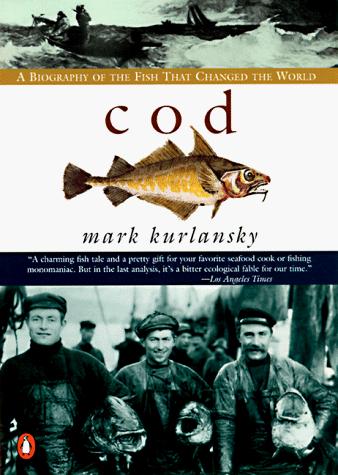
Cod
by Mark Kurlansky · 1997
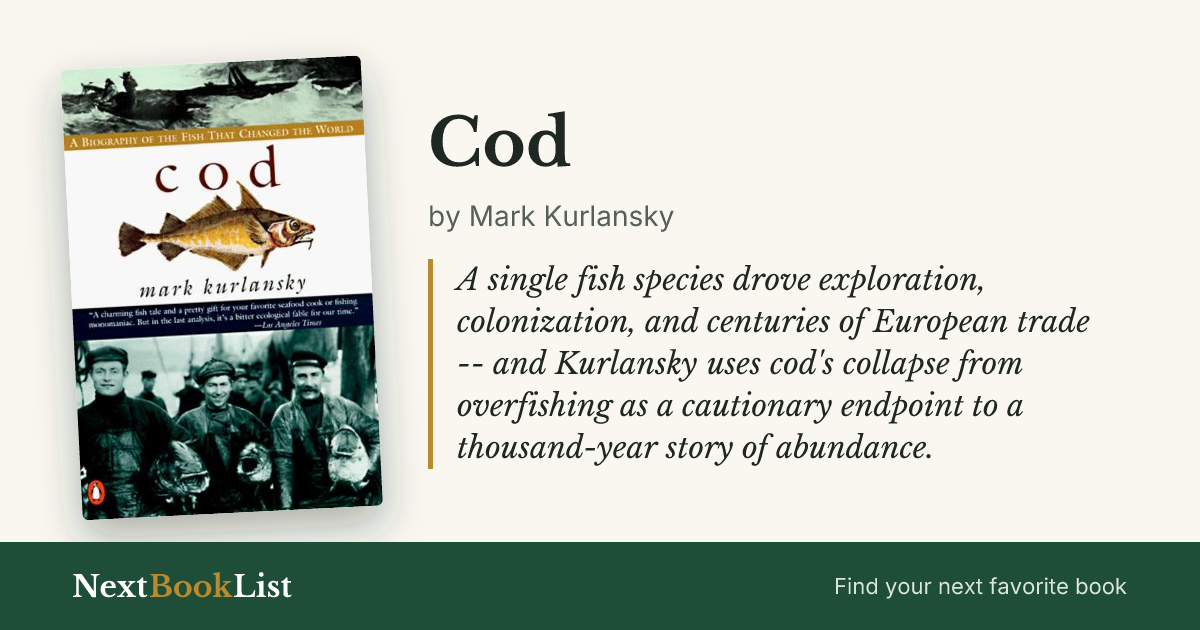
A single fish species drove exploration, colonization, and centuries of European trade -- and Kurlansky uses cod's collapse from overfishing as a cautionary endpoint to a thousand-year story of abundance.
Worth reading? Cod set the template Kurlansky would later reuse for Salt: take an overlooked commodity and trace its fingerprints across centuries of history. It works especially well here because the book has a genuine endpoint -- the 1990s collapse of Atlantic cod stocks -- that turns a historical survey into something closer to a cautionary tale about treating an apparently limitless resource as actually limitless.
| Full Title | Cod: A Biography of the Fish That Changed the World |
|---|---|
| Author | Mark Kurlansky |
| Published | 1997 |
| Publisher | Walker and Company / Penguin |
| Category | History |
The Verdict
The book’s real strength is its ending – centuries of apparent abundance building toward a sudden, real-world collapse gives the whole historical survey a weight that a purely celebratory commodity history wouldn’t have.
Kurlansky’s connection of salt cod to the broader triangular trade, including its role feeding enslaved populations in the Caribbean, is one of the sharper threads here, tying a seemingly mundane food commodity directly into some of history’s darkest economic systems.
The fishery collapse chapters toward the end are the most urgent reading in the book, and arguably should have been given even more space given how directly they speak to present-day resource management.
Read it if you want a well-researched single-commodity history that builds to a genuine environmental cautionary tale. Skip it if you want that environmental argument foregrounded from page one rather than arriving mostly in the back half.
you want the single-commodity-history format done well, with a genuine environmental warning underneath the historical sweep -- cod fishing collapsed in the 1990s, and this book explains exactly how
you want the book's environmental argument to be its main focus from the start -- most of it is historical survey, with the fishery collapse addressed more concentratedly toward the end
Book Summary
Kurlansky traces how Basque fishermen were likely harvesting cod in the North Atlantic before Columbus reached the Americas, and how the fish's abundance off Newfoundland's Grand Banks helped drive early European exploration and colonization of North America, with cod serving as both a food source stable enough to sustain long voyages and a commodity valuable enough to justify them.
Salt cod became a foundational trade good across centuries of European and colonial economies -- it was durable, transportable without refrigeration, and central to feeding populations across Europe, the Caribbean, and colonial North America, tying cod directly into the broader triangular trade networks (including the slave trade, which used salt cod to feed enslaved populations in the Caribbean).
The book's back half turns to the 20th-century industrialization of fishing -- factory trawlers, sonar fish-finding technology, and increasingly efficient nets -- that let fishing fleets extract cod far faster than the population could replenish, culminating in the 1992 collapse of Canada's Grand Banks cod fishery and Newfoundland's cod moratorium, which put tens of thousands of fishermen out of work virtually overnight and reframed the entire preceding history as a story about the limits of an apparently endless resource.
Top 8 Lessons from Cod
- Basque fishermen likely harvested North Atlantic cod before Columbus's voyages, meaning European familiarity with the fish predates the 'discovery' of the Americas that cod fishing later helped drive.
- Cod's abundance off Newfoundland's Grand Banks was a real economic driver of early European exploration and colonization of North America, not just a byproduct of it.
- Salt cod's durability and transportability without refrigeration made it a foundational trade commodity that connected directly to the broader triangular trade, including feeding enslaved populations in the Caribbean.
- 20th-century industrial fishing technology -- factory trawlers, sonar, more efficient nets -- allowed fleets to extract cod at a rate the population couldn't sustain, a technological leap that outpaced any regulatory response.
- The 1992 collapse of the Grand Banks cod fishery and Canada's resulting moratorium put tens of thousands of Newfoundland fishermen out of work almost overnight, ending a fishery that had operated continuously for roughly 500 years.
- The book treats the cod collapse as a case study in the tragedy of the commons -- individually rational fishing decisions collectively depleted a resource everyone depended on.
- Cod fishing shaped entire regional cultures and economies (Newfoundland, the Basque Country, coastal New England) whose identities were built around an assumption of the fishery's permanence.
- The book's chronology -- centuries of apparent abundance followed by sudden 20th-century collapse -- is structured deliberately to build toward its environmental warning about treating natural resources as inexhaustible.
Frequently Asked Questions
Is Cod worth reading?
Yes -- it's a well-researched single-commodity history with a genuine environmental warning built into its narrative arc, culminating in the 1990s cod fishery collapse.
What is Cod about?
A history of the cod fish's role in driving European exploration, colonization, and centuries of Atlantic trade, ending with the 1992 collapse of the Grand Banks fishery from industrial overfishing.
Is Cod mainly a history book or an environmental warning?
It's primarily historical survey, but the book builds toward the 20th-century fishery collapse as a cautionary conclusion about resource depletion.
Did Mark Kurlansky write other books like this?
Yes, Cod established the format he later reused in Salt: A World History (2002), tracing a single commodity's history across centuries and civilizations.
What happened to the cod fishery after the 1992 collapse?
Canada's moratorium put tens of thousands of Newfoundland fishermen out of work, and Atlantic cod stocks have only partially recovered decades later.
Ready to read it?
Get Cod on Amazon