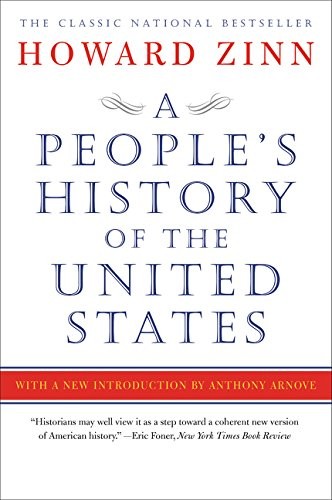
A People's History of the United States
by Howard Zinn · 1980
Howard Zinn rewrites 500 years of American history from the ground up -- told through the people who built, farmed, fought, and sometimes rioted their way through it, not the presidents who signed the paperwork.
Worth reading? A People's History earned its reputation the hard way: it's been assigned in classrooms and banned from classrooms in roughly equal measure since 1980, and both reactions tell you something true about it. Zinn isn't pretending to be neutral -- he says so in the first chapter -- and the book reads less like a survey and more like a prosecutor's brief for everyone the standard textbook leaves out. That makes it essential as a corrective and unreliable as a complete picture; read it alongside a conventional history, not instead of one.
| Author | Howard Zinn |
|---|---|
| Published | 1980 |
| Category | History |
| Favorite quote | “The history of any country, presented as the history of a family, conceals fierce conflicts of interest (sometimes exploding, most often repressed) between conquerors and conquered, masters and slaves, capitalists and workers, dominators and dominated in race and sex.” |
The Verdict
Zinn wrote most of this from secondary sources, not new archival research – his contribution was framing and selection, not discovery. That’s worth knowing before you cite it as primary evidence in an argument; treat it as the sharpest available synthesis of the story usually left out, not as the last word on any of it.
you want the counter-narrative to the textbook version of American history, told through workers, enslaved people, women, and war resisters instead of generals and presidents
you want a balanced, two-sided survey -- Zinn openly writes as an advocate for the marginalized, not a neutral referee, so read it as a deliberate corrective, not the whole story
Book Summary
Zinn's organizing move is simple and radical: instead of writing American history through the people who held power (Columbus, the Founders, industrialists, presidents), he writes it through the people who were acted upon (enslaved Africans, displaced Native nations, immigrant factory workers, Reconstruction-era sharecroppers, Vietnam-era draft resisters). Every chapter reframes a familiar event -- the American Revolution, the Civil War, the New Deal -- as a story with winners who wrote the history and losers who didn't.
His deeper argument is that class conflict, not national unity, is the real throughline of American history: elites across every era have needed to convince ordinary people that their interests align, and Zinn reads strikes, slave revolts, and protest movements as evidence they usually don't. It's history written explicitly to arm the reader for the next fight, not to settle old ones.
Top 9 Lessons from A People's History of the United States
- American history taught as a single national story hides real, recurring conflicts of class, race, and gender interest.
- The 'discovery' of America reads very differently once you center the Arawak people Columbus encountered instead of Columbus himself.
- Slave revolts, labor strikes, and tenant uprisings happened far more often and more organized than most standard textbooks suggest.
- Wars often get sold to the public on moral grounds that don't match the economic or strategic reasons elites actually fought them for.
- Reconstruction's failure wasn't an accident -- it was abandoned once it stopped serving Northern economic interests.
- The labor movement's gains (8-hour days, child labor laws, safety standards) were won through sustained conflict, not granted out of goodwill.
- Government responses to protest, from the Whiskey Rebellion to Vietnam-era demonstrations, follow a consistent pattern of protecting existing power.
- 'Progress' for the country as a whole often meant real costs for whichever group was least politically powerful at the time.
- History textbooks are themselves political documents -- the choice of what to include and omit already picks a side.
Top 3 Quotes from A People's History of the United States
"The history of any country, presented as the history of a family, conceals fierce conflicts of interest (sometimes exploding, most often repressed) between conquerors and conquered, masters and slaves, capitalists and workers, dominators and dominated in race and sex."
Howard Zinn, A People's History of the United States
"If history is to be creative, to anticipate a possible future without denying the past, it should, I believe, emphasize new possibilities by disclosing those hidden episodes of the past when, even if in brief flashes, people showed their ability to resist, to join together, occasionally to win."
Howard Zinn, A People's History of the United States
"There is not a country in world history in which racism has been more important, for so long a time, as the United States."
Howard Zinn, A People's History of the United States
Frequently Asked Questions
Is A People's History of the United States biased?
Yes, deliberately. Zinn states outright that he's writing history from the perspective of the oppressed and dispossessed, not a neutral account -- treat it as an advocate's corrective, not a textbook replacement.
Why is A People's History controversial?
It rejects the 'great men' framing of American history in favor of class conflict and systemic injustice, which draws sharp criticism from historians and politicians who see it as one-sided propaganda rather than history.
Is A People's History historically accurate?
Most of the underlying facts and events are documented and real; the controversy is over emphasis and interpretation, not fabrication -- Zinn selects and frames evidence to make an argument, which is a legitimate approach but not a neutral one.
What's a good book to read alongside A People's History for balance?
Pair it with a mainstream survey text (or a direct critic of Zinn's method) so you get both the corrective and the conventional narrative it's reacting against.
Ready to read it?
Get A People's History of the United States on Amazon