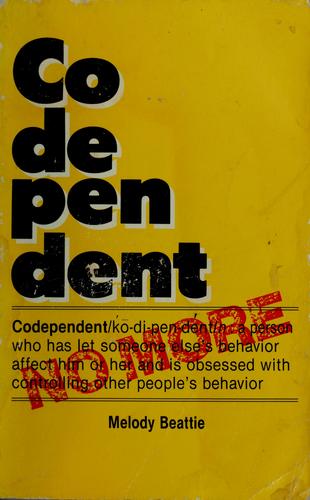
Codependent No More
by Melody Beattie · 1986
The book that gave 'codependent' its modern meaning and a generation of over-givers permission to stop.
Worth reading? Codependent No More is the book that turned a fuzzy pop-psych word into a concrete, actionable pattern: obsessing over someone else's problems, controlling to feel safe, and neglecting your own needs to stay needed. Pair it with Boundaries if you want the same territory from a more structured, skills-based angle -- Beattie is stronger on naming the pattern, Cloud and Townsend are stronger on the fix.
| Full Title | Codependent No More: How to Stop Controlling Others and Start Caring for Yourself |
|---|---|
| Author | Melody Beattie |
| Published | 1986 |
| Category | Self-Improvement & Psychology |
| Favorite quote | “Detachment is based on the premise that each person is responsible for himself.” |
The Verdict
Beattie writes from her own recovery, not from a research lab, and the book is stronger for it – specific, lived-in, and free of academic hedging. If you’ve ever felt responsible for someone else’s mood or sobriety, this names the exact trap. Read it alongside Boundaries for the how-to layer this book doesn’t fully provide.
you keep managing other people's problems, feelings, or addictions at the expense of your own life
you're looking for a clinical, research-heavy diagnosis. Beattie writes from recovery experience and case stories, not academic psychology
Book Summary
Codependency, as Beattie defines it, is an excessive emotional or behavioral reliance on another person -- usually someone with an addiction or a serious problem -- to the point that your own needs, moods, and identity get organized entirely around managing theirs. It's not weakness so much as a learned survival strategy that stops working once you leave the situation that trained it.
Recovery starts with detachment: not abandoning the person you care about, but withdrawing your obsessive control over outcomes you were never actually able to control in the first place. Beattie frames this as "letting go with love" -- you can still care deeply about someone while refusing to manage their life for them.
Top 7 Lessons from Codependent No More
- Obsessively managing someone else's problems is a pattern, not a personality trait, and patterns can change.
- Detachment means releasing control over outcomes you can't actually control, not withdrawing care.
- Codependency often develops as a survival strategy in a chaotic or addicted household.
- Taking care of yourself isn't selfish -- it's the precondition for helping anyone else sustainably.
- You can't fix, cure, or control another person's choices, however much you love them.
- Notice when helping someone is really about managing your own anxiety, not their actual needs.
- Recovery is a daily practice, not a single realization.
Top 6 Quotes from Codependent No More
"Detachment is based on the premise that each person is responsible for himself."
Melody Beattie, Codependent No More
"We can learn to feel provoked, but not hooked."
Melody Beattie, Codependent No More
"The best thing we can do for the people we love is to let them take responsibility for their own lives."
Melody Beattie, Codependent No More
"We cannot begin to work on ourselves, to live our own lives, feel our own feelings, and solve our own problems, until we have detached from the object of our obsession."
Melody Beattie, Codependent No More
"Real power comes from feeling our feelings, not from ignoring them. Real strength comes, not from pretending to be strong all the time, but from acknowledging our weaknesses and vulnerabilities when we feel this way."
Melody Beattie, Codependent No More
"Rescuing or caretaking is not an act of love."
Melody Beattie, Codependent No More
Frequently Asked Questions
Is Codependent No More worth reading?
Yes, especially if you recognize the pattern of managing someone else's problems at the expense of your own needs. It's the book that popularized the term and still explains the pattern clearly.
What is the main idea of Codependent No More?
Codependency is a learned pattern of excessive focus on another person's problems and feelings, and recovery means detaching from controlling their outcomes while still caring about them.
Is Codependent No More only for people with addicted family members?
No. Beattie writes from that context, but the pattern -- over-managing others, neglecting your own needs -- shows up in friendships, romantic relationships, and work too.
How is this different from Boundaries?
Codependent No More is stronger at naming and explaining the codependent pattern. Boundaries is more structured and skills-based on how to actually set limits day to day.
Ready to read it?
Get Codependent No More on Amazon