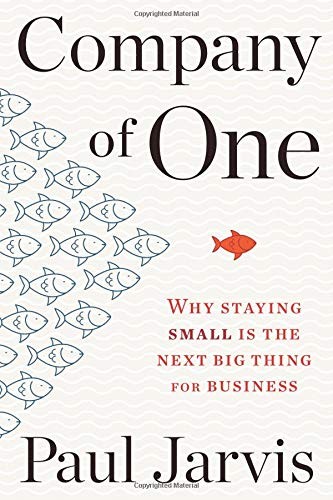
Company of One
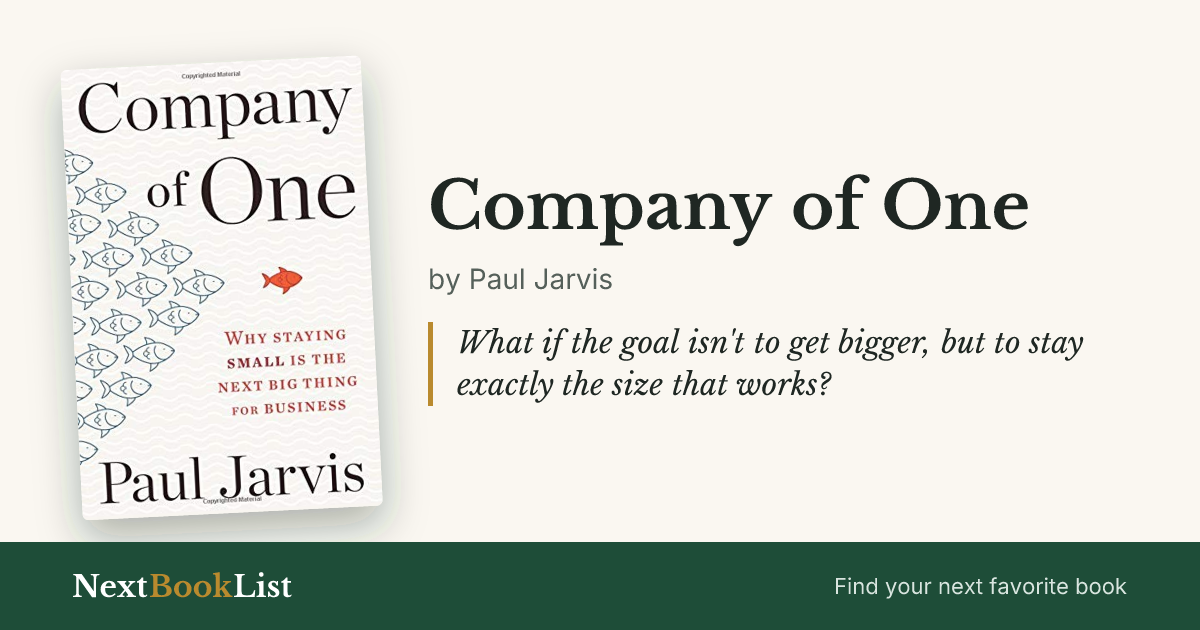
by Paul Jarvis · 2019
What if the goal isn't to get bigger, but to stay exactly the size that works?
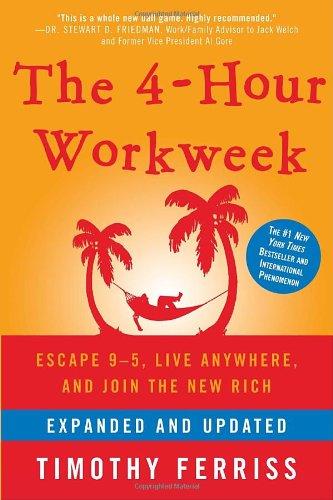
Worth reading? Company of One is the more grounded, less hacky cousin of The 4-Hour Workweek. Tim Ferriss sells the lifestyle fantasy of automating your way to a beach; Jarvis sells the operating philosophy of staying small on purpose, with the real constraints and trade-offs spelled out instead of glossed over. Read Company of One if you're already running something and want permission, plus an actual framework, to stop chasing headcount. Skip it if your business genuinely needs venture-style scale -- network effects, capital-intensive infrastructure -- staying small isn't a strategic option for every kind of company.
| Full Title | Company of One: Why Staying Small Is the Next Big Thing for Business |
|---|---|
| Author | Paul Jarvis |
| Published | 2019 |
| Publisher | Houghton Mifflin Harcourt |
| Category | Business & Money |
| Favorite quote | “Just because you can grow your company doesn't mean you should.” |
The Verdict
Jarvis runs his own small, deliberately un-scaled business, and this book reads like the case he’s made to himself for years: that the default startup script (raise, hire, grow, repeat) isn’t the only legitimate way to build something worthwhile. It won’t convince everyone, and it isn’t supposed to.
you're building a business and quietly dread the idea of managing 50 employees to get there
you're building something that genuinely needs venture scale -- network effects, capital-intensive infrastructure -- staying small isn't a strategic option for every business
Book Summary
Jarvis's contrarian pitch: growth is the default assumption in business, rarely a deliberate choice, and it's usually a mistake for a certain kind of founder. A "company of one" asks a better question before scaling -- can I get more resilient, more profitable, or more useful to customers without adding headcount, instead of automatically hiring the next person the moment things get busy.
The book leans on real solo and small-team businesses that chose to stay small on purpose, showing profitability and freedom scaling better than revenue for the founders who prioritize them. Constraints -- limited time, limited people, limited budget -- get reframed as a forcing function for better decisions rather than a problem to grow your way out of.
Jarvis pushes back specifically on venture-style thinking: growth for its own sake, hiring ahead of actual need, chasing scale before profitability. His argument is that most solo founders would end up happier, and often richer, staying small than they'd be running a bigger, more stressful version of the same business.
Top 10 Lessons from Company of One
- Growth is a default assumption in business, not automatically the right goal.
- Ask if you can solve the problem without adding headcount before you hire.
- Constraints force better decisions -- treat them as a feature, not a bug.
- Resilience and profitability can matter more than top-line revenue growth.
- Staying small on purpose is a strategy, not a failure to scale.
- Automate and systemize repeatable, low-judgment work instead of hiring for it.
- A company of one still needs real systems -- it's disciplined, not improvised.
- Know your 'enough' -- a real number, not an infinite growth target.
- Trust and reputation compound for a small, focused business just like a big one.
- Not every business needs venture-style scale to count as a genuine success.
Top 5 Quotes from Company of One
"Just because you can grow your company doesn't mean you should."
Paul Jarvis, Company of One
"Instead of growth for growth's sake, a company of one asks: what is enough?"
Paul Jarvis, Company of One
"The goal isn't to get bigger for the sake of being bigger, but to remain small on purpose."
Paul Jarvis, Company of One
"Start out as simple as possible, and always fervently question adding new layers of complexity."
Paul Jarvis, Company of One
"From an evolutionary point of view it is explainable why we wanted to gather more and more: with more food, more water, more protection against predators, we may be less likely to die. But today, growth feeds our ego and social standing."
Paul Jarvis, Company of One
Frequently Asked Questions
Is Company of One worth reading?
Yes, if you're building something and secretly dread the idea of managing dozens of employees to make it 'real.' Jarvis makes the case, with real examples, that staying small can be the smarter business decision, not a lesser one.
What is the main idea of Company of One?
Growth is usually assumed rather than chosen. A company of one deliberately asks whether it can become more resilient or more profitable without adding headcount, treating 'staying small' as a legitimate strategy instead of a failure to scale.
Is Company of One anti-growth?
Not entirely -- it's anti-growth-by-default. Jarvis isn't against getting bigger if that's genuinely the right call; he's against hiring and scaling on autopilot without asking whether it actually serves the business or the founder.
Does Company of One apply to venture-backed startups?
Not really. The book is aimed at founders with a real choice about scale -- solo consultants, small agencies, bootstrapped software. A business built on network effects or capital-intensive infrastructure doesn't have the same option to simply stay small.
Ready to read it?
Get Company of One on Amazon