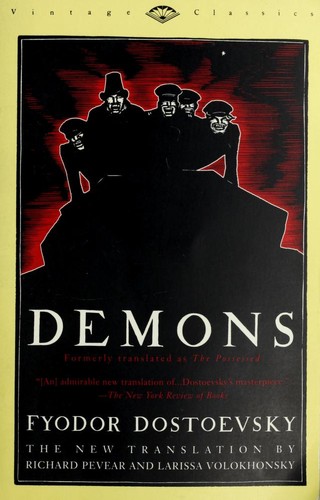
Demons
by Fyodor Dostoevsky · 1872
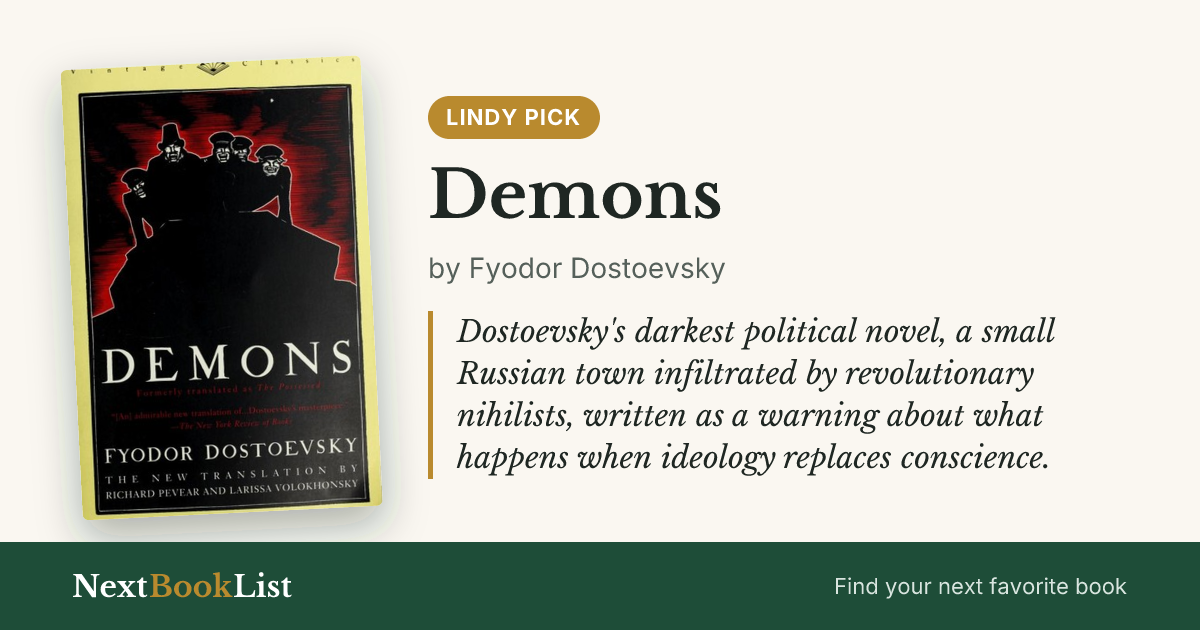
Dostoevsky's darkest political novel, a small Russian town infiltrated by revolutionary nihilists, written as a warning about what happens when ideology replaces conscience.
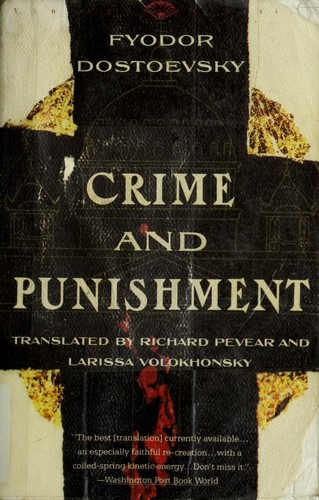
Worth reading? Written in direct response to a real political murder by Russian revolutionaries, Demons is Dostoevsky's angriest, most political novel, following a cell of nihilist conspirators whose abstract commitment to revolution curdles into manipulation, betrayal, and murder. It's less read than Crime and Punishment or The Brothers Karamazov, but it's the one that speaks most directly to what happens when ideology overrides individual conscience. Read it if Crime and Punishment left you wanting the political, not just the psychological, Dostoevsky. Skip it as a first Dostoevsky novel, it's denser and more sprawling.
| Full Title | Demons: A Novel in Three Parts |
|---|---|
| Author | Fyodor Dostoevsky |
| Published | 1872 |
| Category | Fiction |
| Favorite quote | “Man is unhappy because he doesn't know he's happy; it's only that. That's all, that's all! Whoever knows it will become happy at once, that very moment.” |
The Verdict
This is the Dostoevsky novel written with real anger, at a real murder, by real revolutionaries he watched corrupt idealism into atrocity. It’s less famous than Crime and Punishment for a reason (it’s harder, sprawling, less tightly plotted), but its warning about ideology overriding conscience has aged into one of his most relevant books.
readers who want Dostoevsky's most explicitly political novel and a study of ideological extremism's human cost
you want a shorter, gentler entry point to Dostoevsky, start with Crime and Punishment instead
Book Summary
Dostoevsky wrote Demons as a direct response to the real 1869 murder of a student by a revolutionary cell led by Sergei Nechaev, and the novel's central warning is that ideas detached from moral restraint don't liberate people, they possess them, the way demons possess the townspeople in the Gospel parable the title references.
The novel's large cast lets Dostoevsky show ideology corrupting people differently: the charismatic nihilist leader who manipulates for power's sake, the idealistic followers who convince themselves atrocity serves a greater good, and the older liberal generation whose vague, comfortable progressivism helped create the conditions for the younger generation's extremism.
Top 7 Lessons from Demons
- Ideas detached from conscience don't liberate people, Dostoevsky argues they possess them.
- Charismatic ideological leaders often care more about power than the cause they claim to serve.
- Vague, comfortable liberalism can unintentionally create the conditions for its own radical overthrow.
- Groupthink inside a small ideological cell can normalize atrocities individuals would never commit alone.
- A generation's failures often get inherited and radicalized by the next generation, in a form the first didn't intend.
- Watching characters justify a murder 'for the cause' is more instructive than any abstract argument against extremism.
- The gap between an ideology's stated ideals and its actual practitioners is where Dostoevsky finds his sharpest critique.
Top 3 Quotes from Demons
"Man is unhappy because he doesn't know he's happy; it's only that. That's all, that's all! Whoever knows it will become happy at once, that very moment."
Fyodor Dostoevsky, Demons
"If there is no God, then I am God."
Fyodor Dostoevsky, Demons
"I am bound to shoot myself because the fullest point of my self-will is when I kill myself with my own hands."
Fyodor Dostoevsky, Demons
Frequently Asked Questions
Is Demons worth reading?
Yes, especially if you want Dostoevsky's most political and least psychologically-inward novel, a direct response to real revolutionary violence in his own era.
What is Demons about?
A cell of nihilist revolutionaries infiltrates a small Russian town, and their abstract commitment to ideology curdles into manipulation, betrayal, and murder, based on a real 1869 political killing.
Should I read Demons before Crime and Punishment?
No. Crime and Punishment is the better entry point, shorter and more tightly focused. Demons is denser, more sprawling, and rewards readers already comfortable with Dostoevsky's style.
Ready to read it?
Get Demons on Amazon