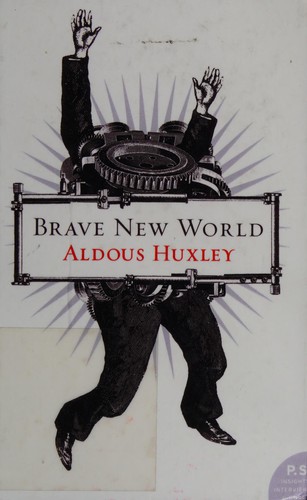
Brave New World
by Aldous Huxley · 1932
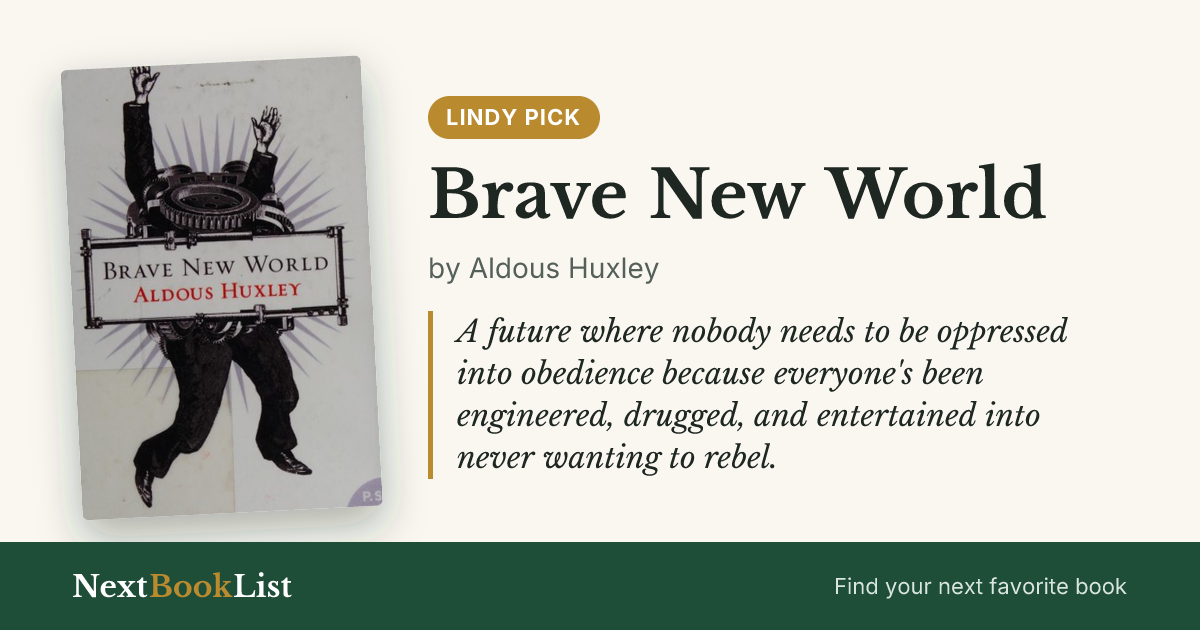
A future where nobody needs to be oppressed into obedience because everyone's been engineered, drugged, and entertained into never wanting to rebel.
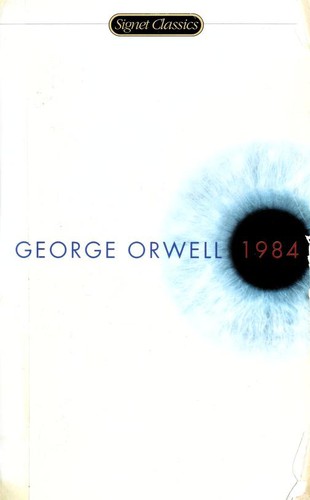
Worth reading? Brave New World and 1984 are the two dystopias everyone name-drops, and the honest answer is you should read both, but if you only have time for one, Huxley's is the sharper warning for a world of infinite entertainment and mood-altering drugs. Orwell warns about a boot on your face; Huxley warns about a soma tablet in your hand. Given how the internet actually developed, Huxley's version reads as the more prophetic one.
| Author | Aldous Huxley |
|---|---|
| Published | 1932 |
| Publisher | Harper Perennial Modern Classics |
| Category | Fiction |
| Favorite quote | “But I don't want comfort. I want God, I want poetry, I want real danger, I want freedom, I want goodness. I want sin.” |
The Verdict
The genius of the premise is that nobody in the World State is lying to you – they really are happy, mostly. Huxley’s argument isn’t that the system is built on deception, it’s that contentment this total is itself the horror. That’s a harder, sadder point than “the government is bad,” and it’s why this one still lands.
you want the dystopia that predicted control through pleasure and distraction, not just fear -- which is arguably the more accurate warning for how things actually turned out
you want a plot-driven thriller with a clear villain -- this is more idea-novel than page-turner, and the ending is deliberately unresolved rather than triumphant
Book Summary
Control doesn't require force if you can engineer people to want their own captivity. The World State conditions citizens from the embryo stage to love their assigned caste and fear nothing, which makes rebellion not just dangerous but genuinely undesirable to almost everyone in it.
Soma (a consequence-free happiness drug) and constant entertainment do the political work that violence does in other dystopias. Huxley's argument is that a population distracted and medicated into contentment never organizes against anything, because it never feels the friction that produces resistance.
John the Savage, raised outside the World State, is the only character who still wants things like tragedy, poetry, monogamy, and pain -- and the novel argues these aren't flaws to engineer away but the actual substance of being human. Stability, bought at the price of depth, is the trade the World State makes for everyone.
Top 8 Lessons from Brave New World
- A society can control its population through engineered pleasure instead of fear or force.
- Genetic and psychological conditioning from birth (Alphas to Epsilons) preempts class conflict by making everyone content with their assigned role.
- Soma removes discomfort so completely that citizens lose the capacity to want change.
- Art, religion, and deep emotion are treated as destabilizing and are engineered out of the World State.
- John the Savage's suffering, unlike everyone else's numbness, is presented as more authentically human, not as a problem to solve.
- Mustapha Mond argues stability requires sacrificing truth, beauty, and freedom -- and most citizens would choose stability.
- Consumerism (constant novelty, mandatory leisure) functions as another form of behavioral control in the novel.
- The novel questions whether a painless, contented life is actually worth wanting if it costs you your full humanity.
Top 6 Quotes from Brave New World
"Everybody's happy nowadays."
Aldous Huxley, Brave New World
"A gramme is better than a damn."
Aldous Huxley, Brave New World
"Was and will make me ill, I take a gramme and only am."
Aldous Huxley, Brave New World
"Words can be like X-rays, if you use them properly -- they'll go through anything."
Aldous Huxley, Brave New World
"But I don't want comfort. I want God, I want poetry, I want real danger, I want freedom, I want goodness. I want sin."
Aldous Huxley, Brave New World
"Community, Identity, Stability."
Aldous Huxley, Brave New World
Frequently Asked Questions
Is Brave New World worth reading?
Yes -- it's the sharper of the two classic dystopias for a world controlled by pleasure and distraction rather than overt force, and it holds up well against how technology and entertainment actually developed.
Is Brave New World better than 1984?
They warn about different mechanisms of control -- Orwell about fear and surveillance, Huxley about engineered pleasure and distraction. Read both if you can, but Huxley's version reads as more prophetic for a media-saturated world.
Is Brave New World hard to read?
No, it's a relatively short, propulsive read, though it's more idea-driven than plot-driven and the ending is deliberately unresolved.
What is the main theme of Brave New World?
That a population can be controlled through engineered happiness and distraction rather than force, and that comfort bought this way costs something essentially human.
Ready to read it?
Get Brave New World on Amazon