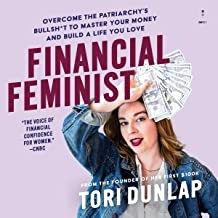
Financial Feminist
by Tori Dunlap · 2022
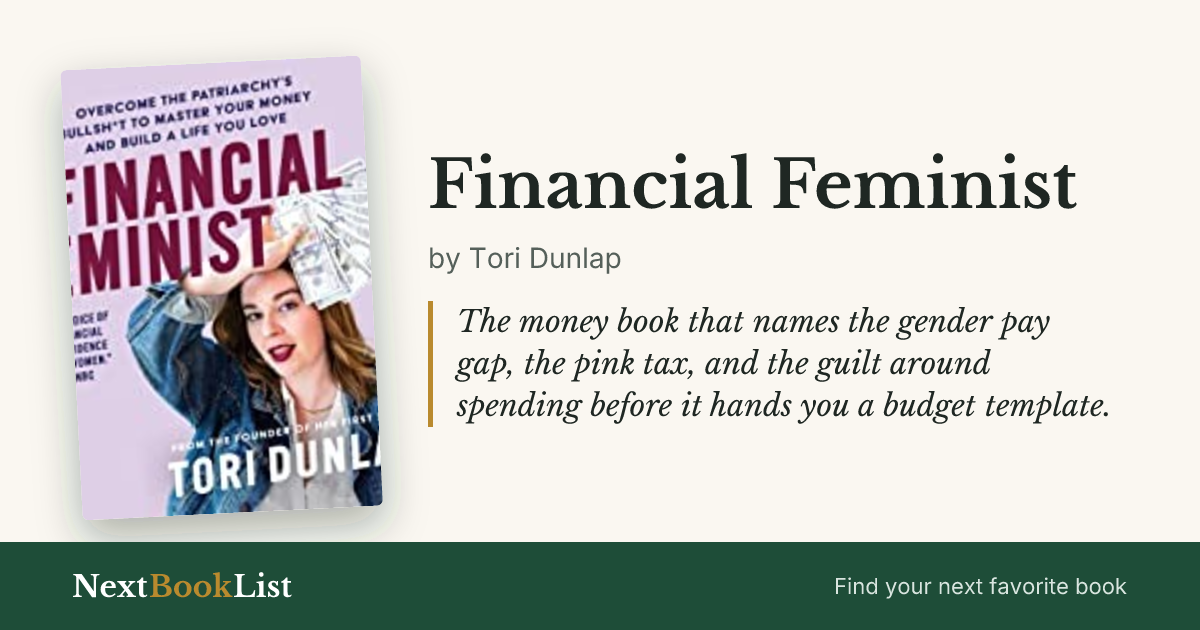
The money book that names the gender pay gap, the pink tax, and the guilt around spending before it hands you a budget template.
Worth reading? Financial Feminist earns its title honestly: Tori Dunlap spends real pages on why women's relationship with money is different -- the pay gap, the guilt marketed at women to spend on self-care, the financial abuse that keeps some women trapped -- before she ever hands you a savings rate. That framing is the book's actual value, not filler around a generic budgeting guide. Where it's less novel is the tactical layer underneath: negotiate your salary, automate your savings, invest early -- solid advice, but not different from what a dozen other finance books say. If you want the systemic why alongside the what, this delivers. If you just want the mechanics, you can get those elsewhere faster. Skip it if the gendered framing isn't what you're looking for; read it if it's exactly what's been missing from your money education.
| Full Title | Financial Feminist: Overcome the Patriarchy's Bullsh*t to Master Your Money and Build a Life You Love |
|---|---|
| Author | Tori Dunlap |
| Published | 2022 |
| Publisher | Dey Street Books |
| Category | Business & Money |
| Favorite quote | “For millions of American women, the dream of wealth is a dream of freedom, because it's money that provides us with options when our government and society fail to.” |
The Verdict
Most personal finance books start with a budget template. Tori Dunlap starts with a diagnosis: the pay gap is real, the “pink tax” is real, and a lot of what looks like bad money habits in women is actually guilt marketed at them on purpose. Financial Feminist spends real pages making that case before it ever asks you to track a dollar.
That’s the book’s actual contribution. Once the framing lands, the tactics underneath – negotiate your salary, automate your savings, invest early, watch out for financial abuse – are solid but familiar if you’ve read other money books. Dunlap isn’t inventing new mechanics. She’s making the case for why the mechanics haven’t stuck for you yet.
Where it thins out is anywhere you’re already sold on the framing. If you’ve internalized that the pay gap is real and you just want the fastest path to a better budget, you’ll find yourself skimming toward the back half.
Read it if the gendered context around money – guilt, pay gap, financial abuse – is the missing piece in your money education. Skip it if you already have that context and just want the spreadsheet.
women who feel behind on money and want the systemic context -- pay gap, financial abuse, socialized guilt -- alongside the actual tactics
you want a pure numbers-and-spreadsheets book with no framing around gender and money psychology -- this one leads with the framing
Book Summary
Women's financial disadvantage isn't a personal failing -- it's structural: the pay gap, the pink tax, socialized guilt around spending on themselves, and financial abuse all shape outcomes before any budgeting habit does.
Money mindset work has to happen before money mechanics stick. Guilt and shame around spending or earning sabotage even a good budget if they're never addressed directly.
Negotiating your worth -- salary, rates, raises -- is one of the highest-leverage financial moves available, and women are socialized out of doing it as often as men.
Top 9 Lessons from Financial Feminist
- Your money struggles are shaped by real structural forces -- the pay gap, the pink tax, socialized guilt -- not just personal discipline failures.
- Address money guilt and shame directly before building a budget. Mindset work has to happen first or the habits won't stick.
- Negotiate your salary and rates aggressively. Women are socialized to avoid this, and it's one of the highest-leverage money moves available.
- Build an emergency fund before anything else -- it's the foundation that makes every other financial decision less desperate.
- Automate your savings and investing so good behavior doesn't depend on willpower every month.
- Recognize financial abuse and controlling behavior around money as a real risk, not an overreaction.
- Invest early and consistently -- waiting for the 'right time' costs more than starting imperfectly now.
- Track your spending without judgment first. You can't fix what you refuse to look at honestly.
- Define your own 'enough' instead of chasing a number set by comparison or marketing.
Top 3 Quotes from Financial Feminist
"We live in a patriarchal world -- a system that aids and abets inequality. In this system that has gatekept financial information and tools from marginalized groups, it is an act of protest to be financially independent."
Tori Dunlap, Financial Feminist
"Many people are traumatized around money, and growing up in poverty is just chronic trauma around money. It explains your beliefs, and your beliefs predict your behaviors."
Tori Dunlap, Financial Feminist
"For millions of American women, the dream of wealth is a dream of freedom, because it's money that provides us with options when our government and society fail to."
Tori Dunlap, Financial Feminist
Frequently Asked Questions
Is Financial Feminist worth reading?
Yes, if you want the systemic context -- pay gap, guilt, financial abuse -- alongside actual budgeting and investing advice. If you just want tactics, other books get there faster.
What is the main idea of Financial Feminist?
Women's financial struggles are shaped by structural forces, not personal failure, and addressing the mindset and guilt around money has to happen before the budgeting habits stick.
Who should read Financial Feminist?
Women who feel behind on money and want both the framing and the tactics. Skip it if gendered framing isn't what you're looking for in a finance book.
Is Financial Feminist based on a podcast?
Yes -- Tori Dunlap also runs Her First $100K, a platform and podcast focused on closing the gender wealth gap, which the book draws from.
Is Financial Feminist good for investing beginners?
It covers investing basics but isn't investing-specific. If you want a deeper investing walkthrough, pair it with a book focused solely on the stock market.
Ready to read it?
Get Financial Feminist on Amazon