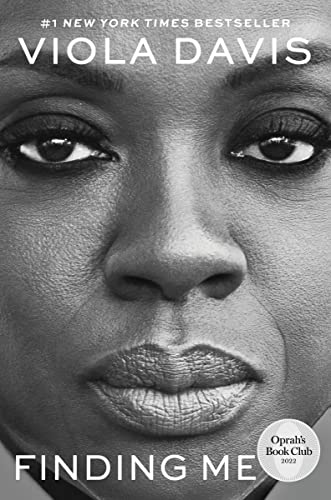
Finding Me
by Viola Davis · 2022
Before she was the first Black actress to win the Triple Crown of acting, Viola Davis was a hungry, humiliated kid in Rhode Island tenement housing -- and this memoir refuses to skip the part where that was true.
Worth reading? Finding Me earns its comparisons to the best actor memoirs because Davis treats her childhood poverty and trauma as the actual subject, not a brief origin-story preamble before the 'real' career content starts. She's unflinching about the specifics -- the cockroaches, the domestic violence she witnessed, the racial slurs thrown at her as a kid running from white boys who chased her home -- and that specificity is what makes the later triumph mean something instead of reading as a highlight reel.
| Full Title | Finding Me: A Memoir |
|---|---|
| Author | Viola Davis |
| Published | 2022 |
| Publisher | HarperOne |
| Category | Biographies & Memoirs |
| Favorite quote | “I'm no longer ashamed of me. I own everything that has ever happened to me. The parts that were a source of shame are actually my warrior fuel.” |
The Verdict
Handle this one with the weight it asks for. Davis isn’t writing a redemption montage – she’s writing about a childhood specific enough that the reader has to sit with the actual conditions (the cockroaches, the violence, the hunger) rather than let them blur into generic “hard childhood” backstory. That specificity is uncomfortable by design, and it’s the reason the book’s second-half success reads as earned rather than inspirational-poster material.
you want an unglamorized account of what it actually took -- poverty, racism, and years of self-doubt -- to build a career as decorated as Viola Davis's, told without false modesty about how hard-won it was
you want a career-focused Hollywood memoir heavy on set stories and industry gossip -- this book spends most of its pages on childhood and early adulthood, and the fame is almost an afterthought by comparison

Book Summary
Davis grew up in extreme poverty in Central Falls, Rhode Island, in tenement housing with rats, no consistent heat, and a father who was frequently violent toward her mother, while also facing sustained racist harassment as one of the only Black families in a white neighborhood. The book traces how that childhood shame and hunger (for food, for safety, for being seen) became the emotional fuel for a acting career built on total physical and psychological commitment to every role.
The memoir's back half covers her rise through Juilliard and into an acting career marked by real industry racism -- being offered roles and treatment that white actresses of her caliber never had to negotiate around -- while also documenting her own long process of therapy and self-forgiveness needed to actually inhabit the success she'd built rather than feel like an impostor inside it.
Top 7 Lessons from Finding Me
- Davis is explicit that the shame of childhood poverty didn't disappear once she achieved career success -- financial and professional achievement didn't automatically resolve the emotional damage of growing up hungry and afraid.
- Her account of her father's violence toward her mother is handled directly, not euphemized -- the book treats domestic violence as something she witnessed repeatedly and that shaped her understanding of both parents as full, complicated people rather than villain and victim.
- Racist harassment in her nearly-all-white Rhode Island neighborhood (including being chased by white boys as a child) is presented as a constant backdrop to her childhood, not an isolated incident -- it shaped her hypervigilance well into adulthood.
- Davis describes systemic industry racism in concrete terms -- pay disparities, roles she wasn't considered for, and the specific extra scrutiny Black actresses face -- rather than gesturing at it abstractly.
- Her process of reclaiming her own story required active therapeutic work, not just professional success -- she's clear that awards and acclaim didn't substitute for actually addressing childhood trauma.
- The book argues that reinventing your life is possible even from extreme starting conditions, but is explicit that reinvention required real structural help (Juilliard, mentors, scholarships) alongside her own drive -- not willpower in isolation.
- Davis frames self-acceptance of her full personal history -- including the parts that were shameful to her as a child -- as the actual source of her power as a performer, not something she had to hide to succeed.
Top 3 Quotes from Finding Me
"I'm no longer ashamed of me. I own everything that has ever happened to me. The parts that were a source of shame are actually my warrior fuel."
Viola Davis, Finding Me
"My biggest discovery was that you can literally re-create your life. You can redefine it."
Viola Davis, Finding Me
"When you're poor, you live in an alternate reality. It's not that we have problems different from everyone else, but we don't have the resources to mask them."
Viola Davis, Finding Me
Frequently Asked Questions
Is Finding Me worth reading?
Yes -- it's unusually unflinching for a celebrity memoir, spending most of its pages on childhood poverty and trauma rather than glossing over it for career highlights.
Does Finding Me focus mostly on Viola Davis's acting career?
No -- the majority of the book covers her childhood and early adulthood; her career, while covered, is treated as downstream of that earlier story rather than the main event.
Is Finding Me graphic about the poverty and violence Viola Davis experienced?
Yes, it's direct about specifics -- the domestic violence she witnessed, the racist harassment she faced as a child, and the physical conditions of her childhood housing are all described plainly rather than softened.
Did Viola Davis win an award for Finding Me?
Yes, the audiobook (narrated by Davis) won the Grammy for Best Audiobook, Narration, and Storytelling Recording in 2023.
Ready to read it?
Get Finding Me on Amazon