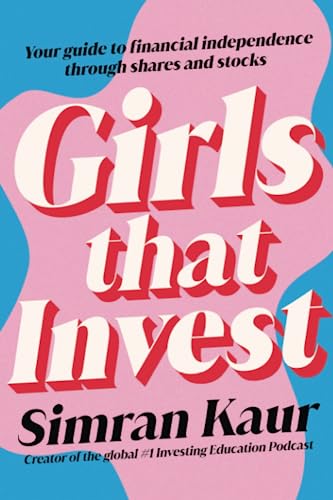
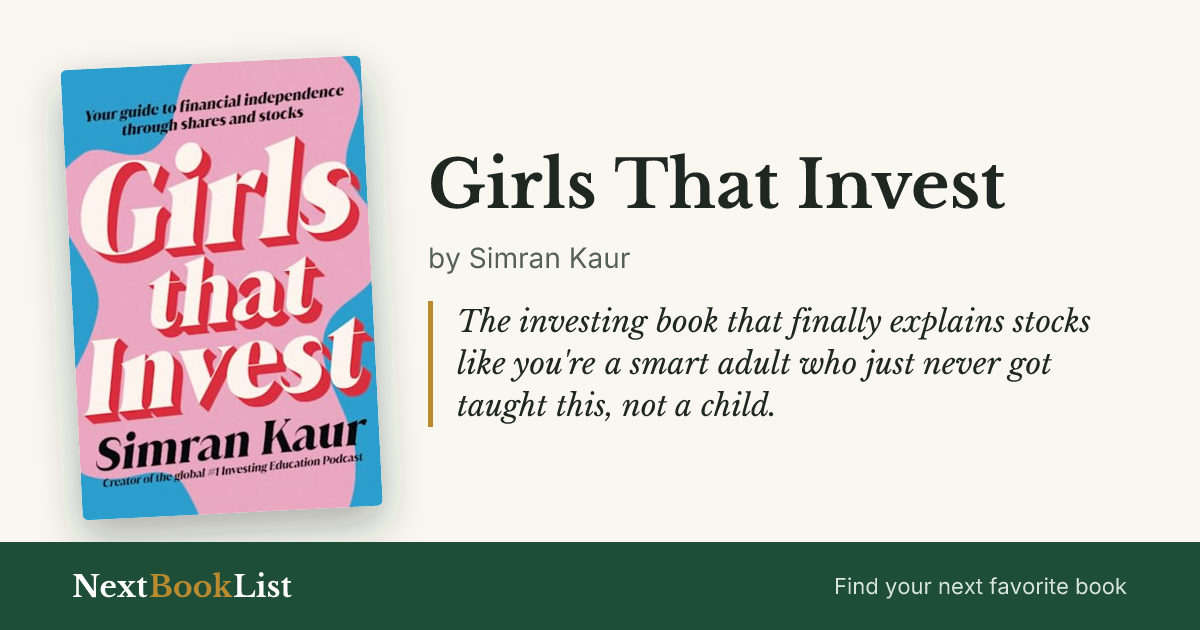
Girls That Invest
by Simran Kaur · 2022
The investing book that finally explains stocks like you're a smart adult who just never got taught this, not a child.
Worth reading? Girls That Invest does one job well: it gets a total beginner from zero to their first index fund purchase without the jargon wall most investing books put up on page one. Simran Kaur's edge is podcast-honed clarity -- she explains diversification, compound growth, and index versus individual stocks the way she'd explain it to a friend over coffee, not a finance degree. The tradeoff is depth: if you already understand asset allocation or have read a broader personal-finance book, you'll find the investing-specific focus here thinner than something like The Psychology of Money. But as a first investing book for someone who's been avoiding the stock market out of confusion, it removes the excuse. Skip it once you've made your first trade and want more nuance; read it before that.
| Full Title | Girls That Invest: Your Guide to Financial Independence through Shares and Stocks |
|---|---|
| Author | Simran Kaur |
| Published | 2022 |
| Publisher | Wiley |
| Category | Business & Money |
| Favorite quote | “Women are told we're risk averse, but we're not. We're just risk aware.” |
The Verdict
Most investing books assume you already speak the language: expense ratios, asset allocation, dollar-cost averaging tossed around like everyone grew up knowing them. Simran Kaur doesn’t make that assumption. Girls That Invest starts from the actual beginning – what a share is, why the stock market exists, why an index fund is usually the smarter first move than picking a company you like.
That starting point is the whole value. She walks through opening a brokerage account, understanding diversification, and telling the difference between investing and speculating – the stuff that feels obvious in hindsight and paralyzing before someone explains it plainly. It’s not a sophisticated strategy. It’s the strategy nobody explained to you in school.
Where it runs out of road is anywhere past the basics. If you already hold a diversified portfolio and understand fees, allocation, and rebalancing, you’ll be skimming by the halfway point. This is a floor for total beginners, not a ceiling for people already investing.
Read it if you’ve never bought a share and the whole idea of “the stock market” still feels intimidating. Skip it once you’ve made your first trade – you’ll want a book with more depth on strategy from there.
beginners who've never bought a share in their life and want a plain-English walkthrough of the stock market, from the host of the #1 investing podcast for women
you already have a brokerage account, a diversified portfolio, and know what an expense ratio is -- this is a first investing book, not a second one
Book Summary
Investing isn't reserved for people with finance degrees or trust funds -- it's a learnable skill, and the barrier for most people is confusion and jargon, not lack of money.
Index funds are the highest-leverage starting point for almost everyone: broad, low-cost, diversified exposure beats trying to pick individual winning stocks, especially early on.
Time in the market beats timing the market. The biggest driver of long-term investing outcomes is starting early and staying consistent, not finding the perfect entry point.
Top 9 Lessons from Girls That Invest
- Investing is a learnable skill, not a talent reserved for people with finance backgrounds or inherited wealth.
- Start with index funds before individual stocks -- broad, low-cost diversification beats stock-picking for most beginners.
- Compound growth rewards time more than timing. Starting five years earlier matters more than picking the perfect entry point.
- Diversify across sectors and geographies so no single company or market failure can wipe out your portfolio.
- Understand what you own. Never buy a stock or fund you can't explain in one sentence.
- Fees quietly erode returns over decades -- always check a fund's expense ratio before buying in.
- Set up automatic, recurring investments so consistency doesn't depend on remembering or feeling motivated.
- Separate your emergency fund from your investing money -- investments need years to ride out volatility.
- Ignore short-term market noise and headlines. Your investing timeline is measured in decades, not weeks.
Top 2 Quotes from Girls That Invest
"Women are told we're risk averse, but we're not. We're just risk aware."
Simran Kaur, Girls That Invest
"Nothing compares to the feeling of being completely self-reliant."
Simran Kaur, Girls That Invest
Frequently Asked Questions
Is Girls That Invest worth reading?
Yes, if you've never invested and want a jargon-free walkthrough of the stock market. If you already have a diversified portfolio, you'll find it too basic.
What is the main idea of Girls That Invest?
Investing is a learnable skill available to anyone, and index funds are the highest-leverage starting point -- broad, low-cost, diversified exposure beats trying to pick individual winners.
Is Girls That Invest only for beginners?
Mostly, yes. It's built as a first investing book. Once you've made your first trade and understand the basics, you'll want something with more depth.
Is Girls That Invest only for women?
It's written with a female audience in mind and drawn from the Girls That Invest podcast, but the investing fundamentals apply to any total beginner regardless of gender.
Is Girls That Invest similar to The Psychology of Money?
Different focus. The Psychology of Money is about behavior and mindset around money broadly. Girls That Invest is a practical, mechanics-first guide specifically to buying stocks and index funds.
Ready to read it?
Get Girls That Invest on Amazon