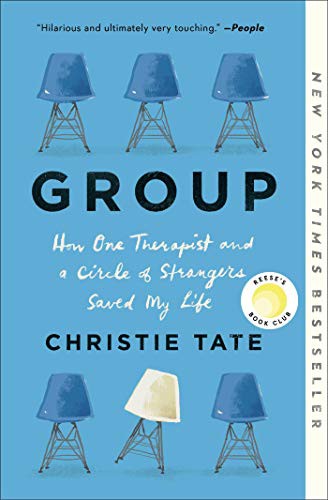
Group
by Christie Tate · 2020
A high-achieving lawyer, secretly suicidal behind a perfect resume, gets ordered into group therapy and has to say the ugliest things about herself out loud to strangers -- repeatedly -- until it actually works.
Worth reading? Tate arrives at group therapy performing wellness while planning her own death, and the book's real subject is what it costs to stop performing. Her therapist's methods are genuinely unorthodox -- some readers will bristle at how far the boundaries stretch -- but Tate is honest that the discomfort was the mechanism, not a side effect. It reads fast because the shame is specific, not vague.
| Full Title | Group: How One Therapist and a Circle of Strangers Saved My Life |
|---|---|
| Author | Christie Tate |
| Published | 2020 |
| Publisher | Avid Reader Press |
| Category | Biographies & Memoirs |
The Verdict
Tate opens as a woman who looks like she’s winning – law school, a plan, a personality built for public consumption – while privately planning to kill herself. The gap between those two facts is the whole book, and group therapy is where she’s finally forced to close it, one humiliating confession at a time.
The therapist’s methods will make some readers uneasy, and that’s a fair reaction, not a reason to skip the book. Read it for the clearest account of what group therapy actually feels like from inside a member’s skin, shame and all. Skip it if you need your therapy memoirs to stay inside conventional clinical lines.
you're skeptical of therapy-as-performance and want to see what group therapy actually looks like from inside, including the parts that feel humiliating before they feel like relief
you want a tidy therapy memoir with clean boundaries between patient and therapist -- Tate's therapist uses unconventional, boundary-pushing methods that some readers find as alarming as they find effective
Book Summary
High-functioning success can be a cover for real despair, and the two aren't in tension -- Tate is winning at law school and secretly suicidal in the same semester. External achievement tells you almost nothing about internal state.
Group therapy forces a kind of honesty individual therapy can let you avoid: you have to say your ugliest secret to a room of people who will remember it, which strips out the polish most of us bring even to our own therapist.
Genuine change often requires tolerating short-term humiliation. Tate's breakthroughs come from doing the exact things she's most afraid will make the group reject her, and finding out rejection wasn't what happened.
Top 8 Lessons from Group
- A polished exterior and genuine suicidal despair can exist in the same person at the same time.
- Group therapy strips away the private-confession comfort of one-on-one therapy -- you say the ugly thing to a room, not just a professional.
- Chronic shame often has a specific origin story, not a vague cause -- naming it precisely is part of defusing it.
- Choosing partners who can't fully show up for you can be a repeating pattern worth naming out loud.
- The fear of being rejected for your worst secret is usually worse than the actual telling.
- Unconventional therapeutic methods can work and still deserve scrutiny -- both things are true at once.
- Real intimacy requires being known for the parts of yourself you'd rather hide.
- Recovery isn't a single breakthrough -- it's returning to the same room and doing the hard thing again.
Frequently Asked Questions
Is Group worth reading?
Yes, especially if you want an honest look at what group therapy actually involves. It's a fast, specific read, though the therapist's methods are unconventional enough to raise eyebrows.
What is Group about?
Christie Tate, a secretly suicidal law student, is ordered into group therapy and spends a decade learning to say her ugliest truths out loud to a room of strangers.
Is the therapy in Group ethical?
It's genuinely unconventional -- the therapist pushes boundaries that some readers and clinicians have criticized. Tate presents it as effective for her, not as a universal endorsement.
Does Group have a happy ending?
Tate's life does improve substantially by the book's end, though the process is messy and non-linear, not a single clean turning point.
Ready to read it?
Get Group on Amazon