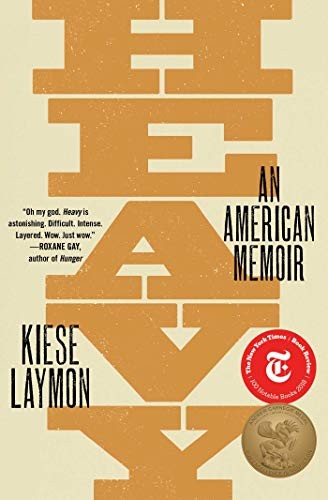
Heavy
by Kiese Laymon · 2018
A Black writer addresses his memoir directly to his mother, unpacking food, weight, gambling, and abuse in the Mississippi household that shaped him, without offering either of them an easy way out of the reckoning.
Worth reading? Laymon writes the whole book as a letter to his mother, which is a formal choice that makes the abuse, the love, and the contradictions between them impossible to look away from -- there's no narrator's remove, just direct address. It's one of the most unsparing American memoirs of the last decade about what a body carries: weight, memory, addiction, and inherited harm, all at once, and it never resolves into forgiveness for its own sake.
| Full Title | Heavy: An American Memoir |
|---|---|
| Author | Kiese Laymon |
| Published | 2018 |
| Publisher | Scribner |
| Category | Biographies & Memoirs |
The Verdict
Laymon doesn’t give himself or his mother a narrator’s distance to hide behind – the whole book is addressed to her, second person, which means every hard fact about what she did lands directly, and every hard fact about his own gambling and eating lands just as directly back on him. Nobody gets to be only the victim or only the villain here.
That refusal to simplify is what makes Heavy stand apart from most abuse-and-body memoirs. Read it for the most honest account you’ll find of how love and harm can come from the same hands. Skip it only if you need the abuse and disordered-eating material softened – Laymon won’t soften it for you.
you want a memoir that treats body, addiction, and family love as tangled together, written in a direct second-person address that refuses distance from painful material
you want the abuse and body-image material handled gently -- Laymon writes about his mother's abuse and his own disordered eating and gambling with unflinching directness, no softening
Book Summary
A body can carry the weight of things that were never physical -- shame, abuse, an unstable home -- and Laymon uses his own relationship with food and weight as a literal record of what his childhood did to him.
Writing directly to his mother, in second person throughout, forces an intimacy and accountability a third-person memoir would let both of them avoid. The book doesn't let either party off the hook.
Love and harm can come from the same source without canceling each other out. Laymon's mother is both the person who shaped his ambition and the person who hurt him, and the book refuses to simplify that into either villain or hero.
Top 8 Lessons from Heavy
- A body can hold the record of trauma -- weight and eating patterns can be inherited harm made physical.
- Writing in direct second person to the person who hurt you removes narrative distance and forces real accountability.
- Love and abuse can come from the same parent without either fact canceling the other out.
- Gambling and other compulsive behaviors can be learned coping mechanisms passed down inside a family.
- Growing up Black in Mississippi shapes a child's relationship to safety, ambition, and self-worth in specific, material ways.
- Honesty about your own worst behavior is part of the price of writing an honest memoir, not an optional flourish.
- Forgiveness isn't owed just because a memoir reaches its final pages.
- Language and education can be both an escape route and a source of guilt about who gets left behind.
Frequently Asked Questions
Is Heavy worth reading?
Yes, and it's rightly considered one of the strongest American memoirs of its decade, but be ready for unflinching material on abuse, disordered eating, and addiction.
What is Heavy about?
Kiese Laymon's childhood in Mississippi, written as a direct letter to his mother, covering weight, abuse, gambling, and the tangled love between them.
Why is Heavy written in second person?
Laymon addresses the entire book to his mother directly, which removes narrative distance and forces both of them to be accountable to what actually happened.
Is Heavy an easy or comforting read?
No. It's unsparing about abuse and self-destructive behavior, and it doesn't resolve into simple forgiveness. It's rewarding, not comfortable.
Ready to read it?
Get Heavy on Amazon