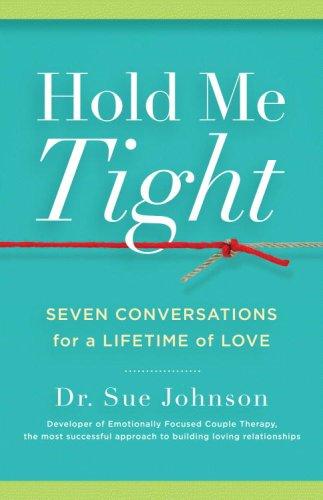
Hold Me Tight
by Sue Johnson · 2008
The self-help version of Emotionally Focused Therapy, the couples therapy approach the New York Times and Time both called the one with the highest success rate.
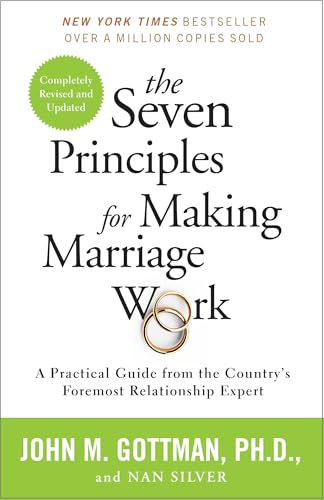
Worth reading? Johnson's core insight is that most couple fights aren't really about the dishes or the schedule -- they're a disguised protest against disconnection, an attachment-driven cry of 'are you there for me?' that gets expressed as anger because raw vulnerability feels too risky. The seven conversations she structures the book around are designed to get underneath the surface fight to that underlying attachment need. It's a warmer, more emotionally-focused complement to Gottman's Seven Principles -- Gottman gives you the research and the behavioral patterns to watch for, Johnson gives you the felt experience of what's actually happening underneath them.
| Full Title | Hold Me Tight: Seven Conversations for a Lifetime of Love |
|---|---|
| Author | Sue Johnson |
| Published | 2008 |
| Category | Self-Improvement & Psychology |
| Favorite quote | “We are wired to need close relationships, not choose to have them.” |
The Verdict
Johnson’s “disguised protest” reframe is the kind of idea that changes how you hear your own next argument – once you can recognize a partner’s anger as a mask for “I’m scared you don’t need me,” the fight itself becomes easier to navigate. Read it alongside Gottman’s book for the full picture: behavior patterns from one, the attachment wiring underneath from the other.
you want to understand the emotional cycle underneath your fights, not just better communication scripts
you want research citations and data tables like Gottman's book. Johnson writes in a warmer, more narrative, less academic style built around conversation transcripts
Book Summary
Johnson's Emotionally Focused Therapy framework treats adult romantic bonds the same way attachment theory treats infant-caregiver bonds: we have a biological need to know a partner will respond when we reach for them, and most recurring couple conflicts are actually a "protest" against a felt loss of that secure connection, expressed indirectly as criticism, withdrawal, or anger rather than the vulnerable "I need you" underneath it.
The book's seven conversations walk couples through recognizing this cycle (often called "Demon Dialogues" -- pursue-withdraw or attack-attack patterns that repeat regardless of the surface topic), then rebuilding the ability to reach for each other and respond with genuine emotional accessibility, responsiveness, and engagement -- what Johnson summarizes as being "A.R.E." for each other.
Top 7 Lessons from Hold Me Tight
- Most repeated couple fights are a disguised protest against disconnection, not really about the stated topic.
- Identify your relationship's specific negative cycle (pursue-withdraw, attack-attack) -- the pattern repeats regardless of the surface issue.
- Vulnerability ('I need you') underneath anger or withdrawal is the real message worth expressing directly.
- Being emotionally accessible, responsive, and engaged (A.R.E.) for your partner rebuilds secure attachment.
- Reaching for your partner and getting a genuine response is what actually resolves the underlying fear, not winning the argument.
- Adult romantic bonds run on the same attachment wiring as infant-caregiver bonds -- treat the need for secure connection as biological, not needy.
- Naming the cycle out loud with your partner ('there's the pattern again') can interrupt it in real time.
Top 3 Quotes from Hold Me Tight
"We are wired to need close relationships, not choose to have them."
Sue Johnson, Hold Me Tight
"The bottom line of a relationship, the key to lasting love, is emotional responsiveness."
Sue Johnson, Hold Me Tight
"Emotion is not the enemy; it is a compass that helps us create and maintain loving connections."
Sue Johnson, Hold Me Tight
Frequently Asked Questions
Is Hold Me Tight worth reading?
Yes, especially if you and a partner keep having the same fight in different disguises. It's the self-help version of Emotionally Focused Therapy, an approach with strong clinical success data behind it.
What is Emotionally Focused Therapy?
A couples therapy approach developed by Sue Johnson that treats adult romantic conflict through the lens of attachment theory -- most fights are reframed as a protest against disconnection rather than about the surface topic.
What does A.R.E. mean in Hold Me Tight?
Accessible, Responsive, and Engaged -- Johnson's shorthand for the qualities that make a partner feel securely attached to you, and the goal state the book's seven conversations work toward.
How is Hold Me Tight different from The Seven Principles for Making Marriage Work?
Gottman's book is research-heavy and behavioral, built on lab observation of thousands of couples. Hold Me Tight is warmer and more narrative, focused on the underlying emotional attachment cycle beneath the behaviors Gottman catalogs.
Ready to read it?
Get Hold Me Tight on Amazon