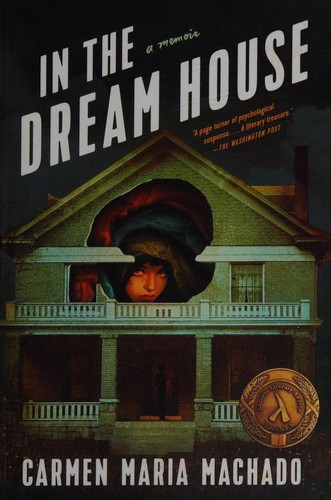
In the Dream House
by Carmen Maria Machado · 2019
A queer abuse memoir told through genre after genre -- noir, fairy tale, choose-your-own-adventure -- because the author says no single form could hold what happened to her.
Worth reading? Machado takes an abusive relationship that culture has no ready template for -- queer, woman-on-woman, largely invisible in both domestic violence literature and the popular imagination -- and builds one chapter at a time, borrowing the rules of noir, gothic romance, road-trip movie, and legal thriller to show how abuse actually feels from inside: disorienting, genre-shifting, never one clean story. It's not an easy read structurally or emotionally, but the fragmentation is the point, not a gimmick.
| Full Title | In the Dream House: A Memoir |
|---|---|
| Author | Carmen Maria Machado |
| Published | 2019 |
| Publisher | Graywolf Press |
| Category | Biographies & Memoirs |
| Favorite quote | “The memoir is a genre I've been writing my whole life without knowing it.” |
The Verdict
Machado had a problem most memoirists don’t: almost no prior book had done what she was trying to do, put a queer abusive relationship into the record with the same weight straight domestic-violence memoirs get. So she built her own form, chapter by chapter, each one borrowing a genre – noir, road movie, Bildungsroman, erotica – to show a different facet of what happened.
That structure is the whole case for reading it. A straight chronological account of manipulation and control might have read as another abuse memoir. This one reads as an argument that abuse itself resists a single narrative shape, and that trying to force it into one is part of what keeps victims silent. Skip it if you need your memoirs linear. Read it if you want to see form used as evidence, not decoration.
you want to understand domestic abuse in a queer relationship, a story rarely told, and you're open to a memoir that breaks its own form to tell it
you want a linear, chronological narrative -- this is fragmented on purpose, structured as dozens of short chapters each borrowing a different genre's rules
Book Summary
Domestic abuse doesn't only happen in straight relationships, and the near-total absence of queer abuse stories in both legal history and pop culture leaves victims without language for what's happening to them. Machado writes partly to fill that archival silence.
No single genre can hold the experience of being abused, so Machado refuses to pick one -- each short chapter reframes the relationship through a different narrative convention, which mimics how abuse actually distorts a victim's sense of what kind of story they're living in.
The Dream House of the title, the abusive partner's home, becomes a haunted-house metaphor: a place that looked like desire and safety from outside and became a trap once she was inside it, and leaving it took longer and cost more than outsiders assume.
Top 8 Lessons from In the Dream House
- Domestic abuse in queer relationships is real, underdocumented, and often unrecognized by the people living through it.
- Legal and cultural history has almost no framework for abuse between two women, which isolates victims further.
- An abuser's charisma and the victim's own desire can coexist with real danger -- that contradiction is what makes leaving so hard.
- Gaslighting works by making you doubt your own memory of events you lived through.
- Genre and form aren't just style choices -- the way a story gets told shapes what a reader is able to understand about it.
- A relationship can look like a fairy tale from outside and be a trap from inside, sometimes simultaneously.
- Recovery includes reconstructing a coherent memory out of an experience designed to fracture it.
- Writing what has no precedent is its own act of survival, not just documentation.
Top 4 Quotes from In the Dream House
"The memoir is a genre I've been writing my whole life without knowing it."
Carmen Maria Machado, In the Dream House
"Abusers do not need to be, and rarely are, cackling maniacs. They just need to want something and not care how they get it."
Carmen Maria Machado, In the Dream House
"The past never leaves us; there's always atmosphere to consider; you can wound air as cleanly as you can wound flesh."
Carmen Maria Machado, In the Dream House
"A reminder to remember: just because the sharpness of the sadness has faded does not mean that it was not, once, terrible."
Carmen Maria Machado, In the Dream House
Frequently Asked Questions
Is In the Dream House worth reading?
Yes, if you're prepared for a structurally unusual, emotionally heavy memoir. It's one of the few widely read accounts of abuse inside a queer relationship, and the genre-hopping format works rather than distracts.
What is In the Dream House about?
Carmen Maria Machado's abusive relationship with a woman she calls the 'dream house occupant,' told across dozens of short chapters that each adopt a different genre's conventions.
Is In the Dream House hard to read?
Emotionally, yes -- it covers psychological and some physical abuse in detail. Structurally, it's short chapters and accessible prose, so it moves faster than the subject matter might suggest.
Do you need to be queer to relate to In the Dream House?
No. The specifics are queer, but the mechanics of gaslighting, isolation, and doubting your own memory translate to abusive relationships generally.
Ready to read it?
Get In the Dream House on Amazon