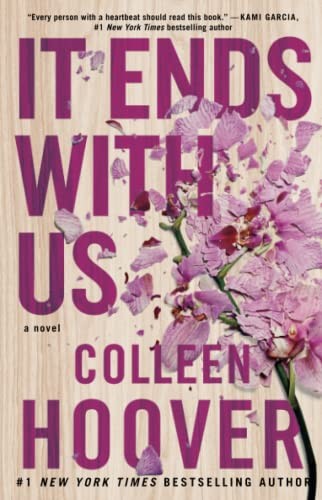
It Ends with Us
by Colleen Hoover · 2016
Lily Bloom falls for a charming neurosurgeon whose sudden flashes of violence start to mirror the abusive relationship she watched destroy her own parents -- while her first love re-enters her life at the worst possible time.
Worth reading? It Ends with Us set out to do something genuinely difficult -- write an abusive relationship from inside the fog that makes it hard to leave, instead of judging the victim from outside it -- and Hoover mostly succeeds at that emotional realism. What's genuinely contested is the packaging: marketing this as a swoony romance (down to a merchandise line and a 'casting call' social trend around the 2024 film) sits uncomfortably against a plot about surviving abuse, and that friction is a fair, real critique, not internet noise you can wave away.
| Author | Colleen Hoover |
|---|---|
| Published | 2016 |
| Category | Fiction |
| Favorite quote | “It stops here. With me and you. It ends with us.” |
The Verdict
The book’s title is doing real work: Lily’s arc is explicitly framed as breaking a generational cycle, choosing differently than her mother did, rather than a redemption arc for Ryle. Readers frustrated by the controversy owe it to themselves to notice Hoover isn’t asking you to root for the relationship to work – but that intent doesn’t erase how the book has been sold and consumed, which is the part worth going in clear-eyed about.
you want Colleen Hoover's most-discussed book, a romance that deliberately sets out to portray the cycle of domestic abuse from the inside, including why women stay
you want a book that handles domestic abuse without any tonal friction against its own romance-genre packaging -- this is a legitimately contested book on that exact point, and it's worth going in aware of the controversy rather than discovering it after
Top 8 Lessons from It Ends with Us
- Writing an abusive relationship from inside the fog that makes it hard to leave is harder, and more honest, than judging it from outside.
- A title can double as a thesis -- breaking a generational cycle, not redeeming the person who continued it.
- Marketing and packaging can create real tonal friction against a book's actual subject matter, and that friction is worth taking seriously.
- Drawing on real personal history (the author's mother's experience) can sharpen fiction's emotional accuracy without making it a memoir.
- A love story and an abuse narrative can occupy the same plot without the book endorsing the relationship.
- The hardest part of depicting why people stay is resisting the urge to make the reasons look irrational from outside.
- Lily's mother's silence about her own abuse is its own quiet tragedy -- the cycle survives partly because nobody named it out loud first.
- The book asks readers to hold sympathy for why Ryle is the way he is and zero excuse for what he does -- withholding easy villain framing is the harder choice.
Top 4 Quotes from It Ends with Us
"You can stop swimming now, Lily. We finally reached the shore."
Colleen Hoover, It Ends with Us
"You're still my favorite person, Lily. Always will be."
Colleen Hoover, It Ends with Us
"It stops here. With me and you. It ends with us."
Colleen Hoover, It Ends with Us
"It's the love. If there was no love attached to the action, the pain would be a little easier to bear."
Colleen Hoover, It Ends with Us
Frequently Asked Questions
Is It Ends with Us worth reading?
It depends what you want. As a portrayal of the psychology of staying in an abusive relationship, it's effective and clearly researched. As a comfortable romance read, be aware the central relationship is abusive by design, not a swoony love story.
Is It Ends with Us based on a true story?
Hoover has said the book draws on her own mother's experience with domestic abuse, though it's a work of fiction, not a memoir.
Why is It Ends with Us controversial?
Critics point to the gap between its subject matter (domestic abuse, and why victims stay) and its marketing as a steamy, book-club-friendly romance -- including merchandise and fan content around the abusive relationship -- which many readers and advocates argue trivializes what the book is actually depicting.
Is there a sequel to It Ends with Us?
Yes, It Starts with Us (2022) continues the story from Lily's perspective after the events of the first book.
Ready to read it?
Get It Ends with Us on Amazon