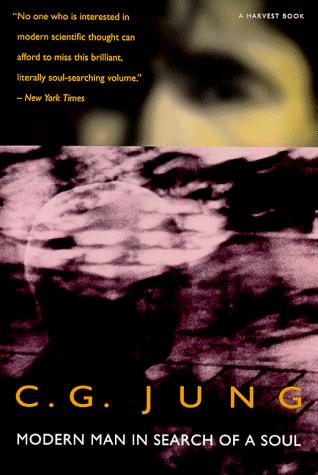
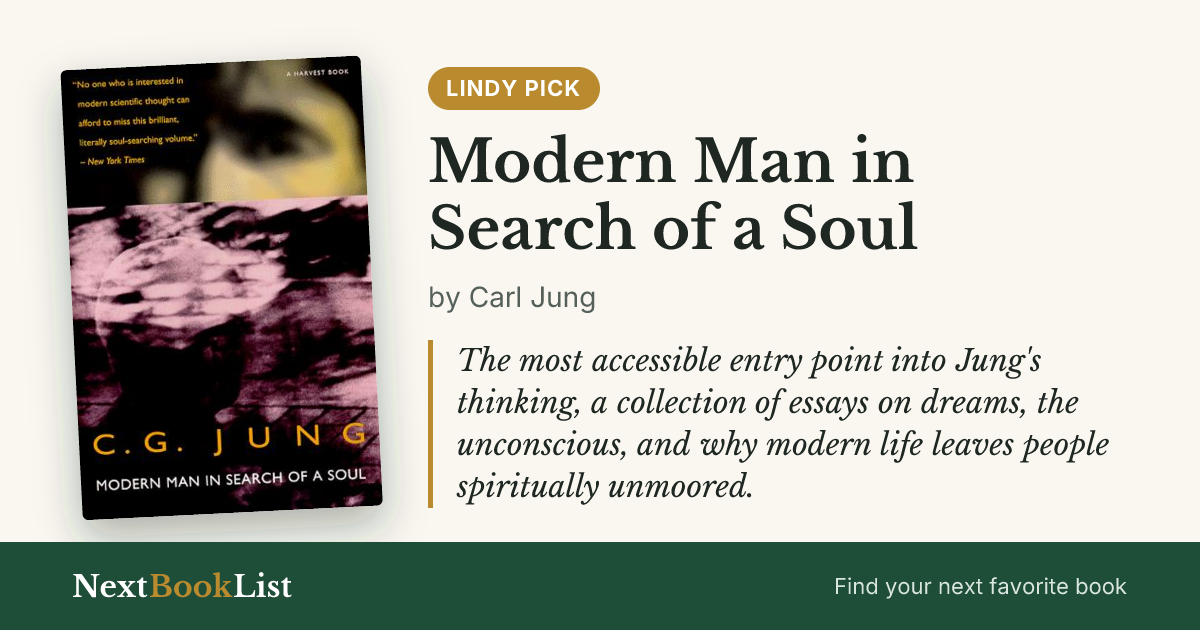
Modern Man in Search of a Soul
by Carl Jung · 1933
The most accessible entry point into Jung's thinking, a collection of essays on dreams, the unconscious, and why modern life leaves people spiritually unmoored.
Worth reading? This collection gathers Jung's more accessible lectures and essays, on dream analysis, the psychology of religion, and what he saw as modern secular life's failure to replace the meaning-making functions religion used to serve. It's the standard recommended starting point for readers who want Jung's ideas without diving straight into his denser clinical writing. Read it as the on-ramp to concepts (the collective unconscious, individuation, archetypes) that show up throughout later psychology and self-help writing. Skip it if you want one sustained argument rather than a curated set of lectures.
| Author | Carl Jung |
|---|---|
| Published | 1933 |
| Category | Self-Improvement & Psychology |
| Favorite quote | “Thoroughly unprepared, we take the step into the afternoon of life.” |
The Verdict
This is the Jung book people actually recommend to beginners, and for good reason: it collects his more accessible lectures on dreams, religion, and modern meaning-making without requiring you to already know his clinical vocabulary. Start here before his denser works.
readers who want Jung's core ideas without diving straight into his denser clinical works
you want a single sustained argument, this is a curated essay collection, not one continuous book
Book Summary
Jung's central worry, running through these essays, is that modern secular life stripped away religion's traditional meaning-making functions without replacing them with anything equally capable of giving people a sense of purpose, connecting them to something larger than themselves, or helping them process the darker parts of their own psyche.
His proposed alternative isn't a return to traditional religion, but individuation, a lifelong process of integrating the unconscious (including the parts of yourself you'd rather not acknowledge, what he calls the 'shadow') into a coherent, whole personality. Dreams, in his framework, aren't random noise, they're the unconscious communicating material the conscious mind hasn't yet integrated.
Top 7 Lessons from Modern Man in Search of a Soul
- Modern secular life removed religion's meaning-making function without fully replacing it, Jung argues this creates real psychological cost.
- Individuation, integrating unconscious material into a whole self, is Jung's proposed alternative to religious meaning.
- The 'shadow', the parts of yourself you'd rather not acknowledge, needs integration, not suppression.
- Dreams communicate unconscious material worth taking seriously, not random noise to dismiss.
- A 'modern' problem (spiritual emptiness) can have psychological, not just theological, causes and solutions.
- Jung saw psychology and religion as addressing overlapping human needs, not as enemies.
- This collection works as an entry point precisely because it's essays, not one dense continuous argument.
Top 3 Quotes from Modern Man in Search of a Soul
"Thoroughly unprepared, we take the step into the afternoon of life."
Carl Jung, Modern Man in Search of a Soul
"Every civilized human being, whatever his conscious development, is still an archaic man at the deeper levels of his psyche."
Carl Jung, Modern Man in Search of a Soul
"The least of things with a meaning is worth more in life than the greatest of things without it."
Carl Jung, Modern Man in Search of a Soul
Frequently Asked Questions
Is Modern Man in Search of a Soul worth reading?
Yes, it's the standard recommended entry point into Jung's thinking, more accessible than his clinical works while still covering his core concepts.
What is Modern Man in Search of a Soul about?
A collection of Carl Jung's essays and lectures on dream analysis, the psychology of religion, and modern secular life's failure to replace the meaning-making functions religion once served.
What is Jung's concept of 'the shadow' from this book?
The parts of a person's personality they don't consciously acknowledge or accept, Jung argues integrating rather than suppressing the shadow is essential to psychological wholeness, a process he calls individuation.
Ready to read it?
Get Modern Man in Search of a Soul on Amazon