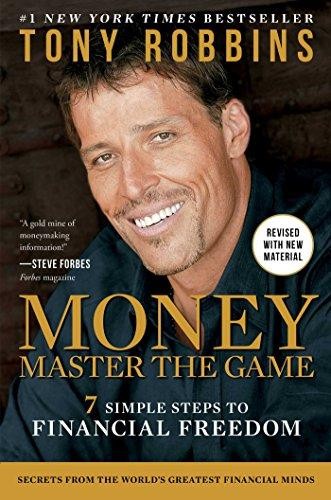
MONEY Master the Game
by Tony Robbins · 2014
Tony Robbins interviewed roughly 50 of the world's top investors and turned their advice into a seven-step, do-it-yourself plan for building a portfolio that pays you for life.
Worth reading? MONEY Master the Game is really two books stapled together: a genuinely useful crash course in fee awareness and asset allocation, and a Tony Robbins seminar in book form, complete with all-caps section headers and personal-transformation asides. The interview material with people like Ray Dalio and Carl Icahn is the actual reason to own this book -- Robbins got access most financial writers don't have, and the 'All Weather' portfolio breakdown alone is worth the price for a beginner. You have to be willing to skim past the motivational scaffolding to get to it.
| Full Title | MONEY Master the Game: 7 Simple Steps to Financial Freedom |
|---|---|
| Author | Tony Robbins |
| Published | 2014 |
| Publisher | Simon & Schuster |
| Category | Business & Money |
The Verdict
The interview chapters are the reason to buy this book. Robbins got real time with Ray Dalio, John Bogle, and Carl Icahn, and when he lets their words carry the argument, the financial advice holds up: cut fees, diversify, don’t try to time the market.
The problem is getting to those chapters. Robbins can’t resist the personal-development voice, and 600-plus pages of “unleash your financial power” framing around genuinely solid asset-allocation advice makes this a slower read than it needs to be.
Read it if you want billionaire-investor access condensed into a beginner’s plan and don’t mind skimming past the seminar energy to get it. Skip it if you already have a low-fee index fund strategy – you won’t learn much new here, just a longer road to the same conclusion.
you want the access Robbins bought -- real interview material from Ray Dalio, John Bogle, and other heavyweight investors -- boiled down into a beginner-friendly asset-allocation plan, and you don't mind 600-plus pages of motivational framing to get it
you already run a low-cost index fund plan and don't need 600 pages of celebrity-investor interviews to arrive at 'diversify, cut fees, don't panic-sell' -- a 200-page book gets you there faster
Book Summary
Robbins built this book around dozens of interviews with billionaire investors and fund managers, positioning himself as a translator turning hedge-fund-level strategy into steps an ordinary saver can follow.
The core financial argument is that fees compound against you the same way returns compound for you -- a 2% annual fee on a retirement account can quietly consume a third or more of your lifetime returns, so minimizing cost is treated as a bigger lever than picking winning stocks.
The book pushes hard for a version of Ray Dalio's "All Weather" portfolio: a mix of asset classes designed to hold up across different economic conditions (growth, recession, inflation, deflation) rather than betting on any single environment.
Robbins frames the whole project as building "lifetime income" -- a guaranteed income stream through annuities and diversified holdings -- so retirement isn't dependent on guessing the market correctly in your final working years.
Top 9 Lessons from MONEY Master the Game
- Fees compound against you the same way returns compound for you -- a seemingly small 1-2% annual fee difference can cost you hundreds of thousands of dollars over a multi-decade investing horizon.
- Most actively managed mutual funds fail to beat their benchmark index over long periods, which is the core case for low-cost index investing over stock-picking.
- Diversify across asset classes, not just individual stocks -- Dalio's 'All Weather' allocation spreads money across stocks, bonds, gold, and commodities so no single economic scenario wipes out the portfolio.
- Automate savings and investing so the plan survives your own emotional decision-making during market swings.
- Tax-advantaged accounts (401(k), IRA) should be maxed before taxable investing, since the tax drag on returns is a hidden and controllable cost.
- Annuities and other 'lifetime income' products can convert savings into a guaranteed paycheck, trading some upside for the certainty of not outliving your money.
- Asset allocation matters more than individual security selection for most long-term investors -- Robbins leans on research showing allocation explains the majority of portfolio return variance.
- The wealthiest investors interviewed in the book consistently emphasize capital preservation ('don't lose money') over chasing maximum upside.
- Behavioral mistakes -- panic-selling in downturns, chasing hot performance -- destroy more retail investor wealth than bad asset selection does.
Frequently Asked Questions
Is MONEY Master the Game worth reading?
If you can tolerate the seminar-style motivational writing, yes -- the interview material with top investors and the fee-awareness case are genuinely useful for a beginner building a long-term portfolio.
What is MONEY Master the Game about?
Tony Robbins condenses interviews with dozens of elite investors, including Ray Dalio, into a seven-step plan covering fee minimization, asset allocation, and guaranteed retirement income.
Do I need investing experience to read MONEY Master the Game?
No -- it's written for beginners and explains concepts like fees, diversification, and annuities from the ground up.
Is MONEY Master the Game just Tony Robbins' opinion, or does it draw on real experts?
Both -- the book's spine is genuine interview material with well-known investors like Ray Dalio and John Bogle, wrapped in Robbins' own commentary and motivational framing.
Ready to read it?
Get MONEY Master the Game on Amazon