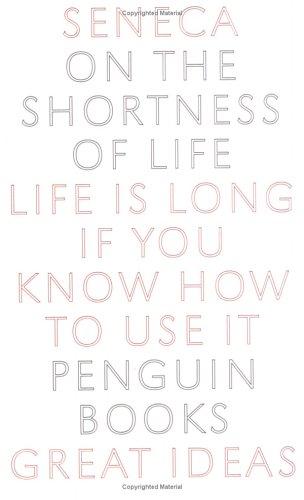
On the Shortness of Life
by Seneca · 49
A Roman Stoic argues you're not short on time, you're bad at using it, written 2,000 years before everyone started complaining about being busy.
Worth reading? This is the book every modern productivity author is pirating without credit. Seneca wrote it around 49 AD as a letter to a frazzled friend, and it reads like it was sent to your inbox this morning. The reason it's survived two millennia is that the complaint it attacks hasn't changed. People in ancient Rome also said they were too busy, also scrolled the equivalent of gossip, also died having meant to start living next year. The specifics changed; the failure mode didn't. Read it once, then reread one paragraph a year. It's short, which is the point, and it will embarrass you in the best way.
| Full Title | On the Shortness of Life: Life Is Long If You Know How to Use It |
|---|---|
| Author | Seneca |
| Published | 49 |
| Publisher | Penguin Classics |
| Category | Self-Improvement & Psychology |
| Favorite quote | “It is not that we have a short time to live, but that we waste a lot of it.” |
The Verdict
Seneca wrote this around 49 AD as a letter to a friend who claimed he had no time. The complaint hasn’t aged a day. If you’ve ever said “I’ll read it when things slow down,” this book is the slowdown you keep postponing.
Read it if you feel chronically behind and suspicious that 'no time' is an excuse you keep telling yourself.
Skip it if you want a system or an app; this is a philosophical gut-punch about how you've been spending your one life, not a productivity method.
Book Summary
Seneca's core move is to flip the complaint. We say life is short, but the problem isn't the length of life, it's that we waste most of it on other people's agendas, trivial worries, and deferred living.
He separates living from merely existing. Many people, he writes, will realize they were busy but never alive only when it's too late. Time is the one resource you can't borrow back.
The fix isn't doing more, it's protecting attention. Withdraw from the crowd, say no without guilt, and treat each day as if it might be the last, not to panic, but to stop postponing.
Top 10 Lessons from On the Shortness of Life
- You don't lack time. You waste it. 'No time' is almost always 'wrong priorities' wearing a victim costume.
- Living and existing are different. A full calendar is not proof you were alive.
- Most of your time is spent on other people's agendas. Reclaim a slice or you'll die having managed someone else's life.
- Death isn't the tragedy. Dying having postponed living is.
- The crowd is the enemy of attention. Withdraw from it on purpose, daily.
- Treat each day as if it could be your last, not to panic, but to stop deferring the things that matter.
- We fear losing time to death but hand it away freely to distraction and flattery.
- Leisure is not idleness. Real leisure is the freedom to think, which most 'busy' people never experience.
- Postponement is the stub of life. You keep saying 'someday' until someday is the funeral.
- The person who is most powerful with their time is the one who can say no without a paragraph of apology.
Top 5 Quotes from On the Shortness of Life
"It is not that we have a short time to live, but that we waste a lot of it."
Seneca, On the Shortness of Life
"As is a tale, so is life: not how long it is, but how good it is, is what matters."
Seneca, On the Shortness of Life
"You act like mortals in all that you fear, and like immortals in all that you desire."
Seneca, On the Shortness of Life
"While we are postponing, life speeds by."
Seneca, On the Shortness of Life
"Life is long if you know how to use it."
Seneca, On the Shortness of Life
Frequently Asked Questions
Is On the Shortness of Life religious?
No. Seneca was a Stoic, not a Christian, and he wrote to a Roman friend about using time well, not about the afterlife. The advice is secular and about this life.
How long is it?
Very short, often under 100 pages. You can read it in one sitting, which is the whole point. Seneca isn't asking for your time; he's arguing you should stop giving it away.
What's the one idea to take from it?
That 'life is short' is a lie you tell yourself. Life is long enough; you waste it. The reframe alone is worth more than most year-long productivity systems.
Ready to read it?
Get On the Shortness of Life on Amazon