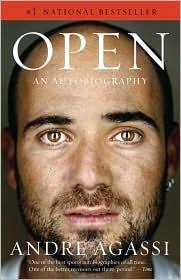
Open
by Andre Agassi · 2009
A tennis legend's confession that he hated the sport that made him famous, from the first page to the last, and the honesty is what makes it one of the best sports memoirs ever written.
Worth reading? Open's opening line -- 'I play tennis for a living, even though I hate tennis' -- sets the tone for the entire book, and Agassi never backs off it. Ghostwritten with novelist J.R. Moehringer but built from Agassi's own brutal honesty about a childhood engineered by a domineering father, a hairpiece he wore through most of his early fame, a failed marriage, and a meth habit he hid from the tour, it's a different kind of sports memoir -- closer to a psychological case study than a victory lap. Read it even if you've never watched a tennis match.
| Full Title | Open: An Autobiography |
|---|---|
| Author | Andre Agassi |
| Published | 2009 |
| Category | Biographies & Memoirs |
| Favorite quote | “I play tennis for a living, even though I hate tennis, hate it with a dark and secret passion, and always have.” |
The Verdict
The famous opening line isn’t a hook – it’s the actual thesis of the book, sustained for 400-plus pages without ever softening into the usual redemption-arc sports-memoir formula. Agassi and Moehringer built something closer to a psychological confession than an autobiography, and it’s better for it.
you want a genuinely candid athlete memoir, not the usual highlight-reel narrative dressed up as introspection
you want a book primarily about tennis technique or strategy -- this is about the psychology of forced greatness, tennis is mostly the backdrop
Book Summary
Agassi's father built a tennis-playing machine designed to hit thousands of balls a day starting in early childhood, and Agassi spent his entire career resenting the sport that machine produced, even while becoming one of its greatest players -- the book's tension throughout is between extraordinary public success and a private relationship to that success built on obligation rather than love.
He's also unusually candid about the specific ways early, forced excellence distorts identity: he describes years of performing a public persona (including a hairpiece to hide premature balding, worn through several major tournaments) while privately unraveling, culminating in a crystal meth habit and a positive drug test he lied about to the ATP. The redemption arc, when it comes late in the book through his marriage to Steffi Graf and his education philanthropy, reads as earned specifically because the low points weren't softened.
Top 7 Lessons from Open
- Excellence forced from childhood can produce genuine resentment toward the very thing you become great at.
- Public persona and private reality can diverge for years without anyone noticing, at real psychological cost.
- Hitting a goal (winning majors, reaching number one) doesn't automatically resolve the underlying reasons you were chasing it.
- Honest accounting of your own worst moments (drug use, lying to authorities) is more useful to readers than a curated highlight reel.
- A late-career pivot toward genuine purpose (Agassi's education foundation) can be real redemption, not just image rehabilitation.
- A relationship built on shared understanding (Agassi and Steffi Graf) can succeed where earlier ones, built on image, failed.
- You can be extraordinarily good at something and still be honest that you never wanted it in the way people assumed.
Top 3 Quotes from Open
"I play tennis for a living, even though I hate tennis, hate it with a dark and secret passion, and always have."
Andre Agassi, Open
"Image is not everything. Perception is everything."
Andre Agassi, Open
"I hit the tennis ball, and feel nothing but panic."
Andre Agassi, Open
Frequently Asked Questions
Is Open worth reading?
Yes, even for readers with no interest in tennis. Agassi's honesty about resentment, addiction, and identity makes it one of the most genuinely candid sports memoirs ever written, not just a victory-lap retrospective.
What is Open about?
Andre Agassi's memoir of a tennis career built by a domineering father, his complicated relationship with a sport he says he hated, and the personal unraveling -- including a hidden meth habit -- underneath his public success.
Who wrote Open?
Andre Agassi, with novelist J.R. Moehringer as ghostwriter, credited for helping shape the narrative voice while the material and honesty are Agassi's own.
Is Open really as honest as people say?
By sports memoir standards, yes -- Agassi discloses a hidden hairpiece, a failed drug test he lied about to the ATP, and a first marriage he describes candidly as a mistake, material most athlete memoirs omit or soften.
Ready to read it?
Get Open on Amazon