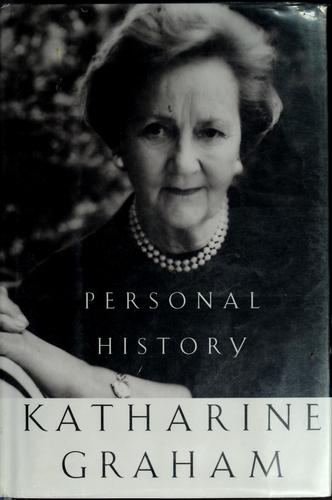
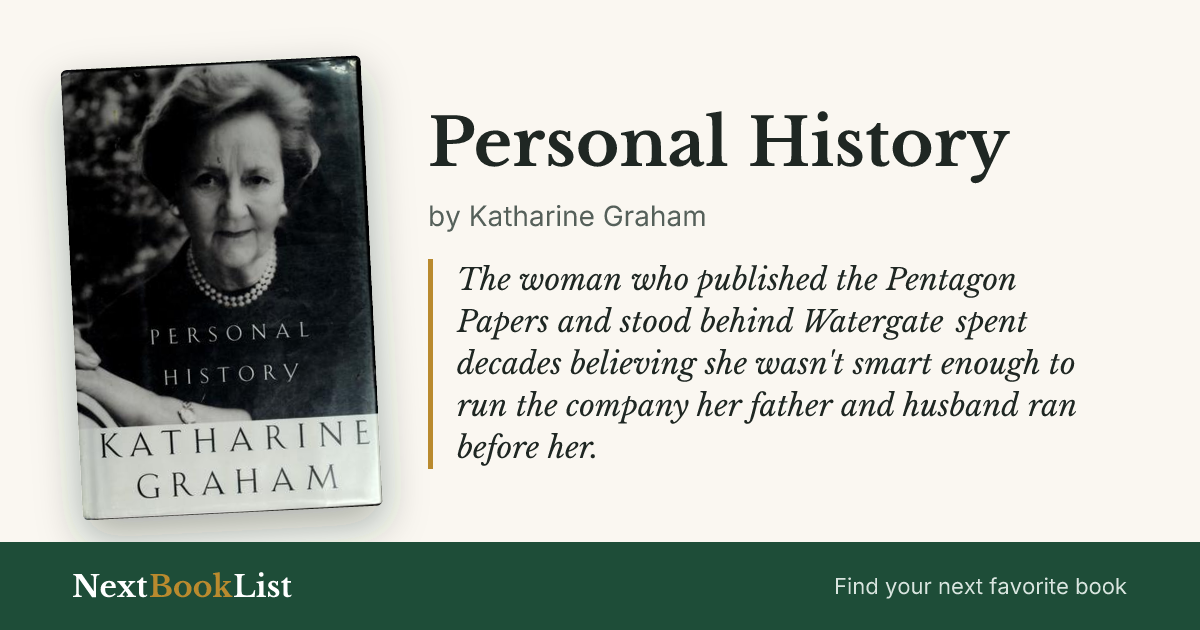
Personal History
by Katharine Graham · 1997
The woman who published the Pentagon Papers and stood behind Watergate spent decades believing she wasn't smart enough to run the company her father and husband ran before her.
Worth reading? Personal History earns its Pulitzer by refusing to flatter its own author. Graham writes about her crushing lack of confidence, her husband's mental illness and infidelity, and her own uncertainty running The Washington Post with more honesty than most executives ever manage in print, and that honesty is what makes the Pentagon Papers and Watergate chapters land as hard as they do.
| Author | Katharine Graham |
|---|---|
| Published | 1997 |
| Publisher | Alfred A. Knopf |
| Category | Biographies & Memoirs |
The Verdict
Graham could have written a tidier book, one where the Pentagon Papers and Watergate chapters do all the work and her personal insecurities get a page or two of context. She doesn’t. The self-doubt runs through the whole thing, and it’s what makes her later decisions feel earned instead of inevitable.
The sections on Phil Graham’s mental illness and the marriage’s difficulties are harder to read than the newspaper history, and that’s by design. Graham is showing you the person who had to make an enormous, company-threatening call while still working out who she was.
Read it if you want an unusually honest account of stepping into power you didn’t ask for and weren’t sure you deserved. Skip it if you’re only after the Watergate details – there are faster, more focused books on that specific story.
you want a genuinely candid memoir from someone who ran one of America's most powerful newspapers through its defining crisis, insecurities and all
you want a fast-paced narrative -- this is a long, detailed account that spends real time on Graham's personal life and self-doubt before it gets to the newspaper history you may be there for
Book Summary
Graham inherited control of The Washington Post Company not through ambition but through tragedy -- her husband Phil Graham, who ran the paper after her father, died by suicide in 1963, leaving Katharine, who had no executive experience and had spent decades as a housewife, to take over a company she'd been raised to think men ran.
The book's central drama is Graham's slow, visible growth into the job: she describes her own imposter syndrome, being talked over in meetings, and needing years to trust her own judgment, before that judgment was tested by two of the biggest press decisions of the century.
In 1971 Graham approved publishing the Pentagon Papers despite legal threats that could have destroyed the company, and during Watergate she backed Woodward and Bernstein's reporting against enormous political pressure from the Nixon White House -- decisions the book frames not as confident boldness but as choices made by someone still learning to trust herself.
Top 7 Lessons from Personal History
- Graham took over The Washington Post Company only because her husband's suicide left no other option, not because she sought the role -- competence under pressure isn't the same as wanting the pressure.
- Deep, persistent self-doubt didn't stop Graham from making two of the most consequential publishing decisions in American press history; confidence and correct judgment aren't the same thing.
- The decision to publish the Pentagon Papers risked the company's survival, since a legal loss could have triggered stock offering complications that bankrupted the Post -- Graham frames it as a real, not symbolic, risk.
- Backing Woodward and Bernstein through Watergate meant absorbing sustained pressure and threats from a sitting president's administration, not just editorial confidence in two young reporters.
- Graham's marriage to Phil Graham included his mental illness and infidelity, and she writes about both without softening them into a simpler, more sympathetic story.
- Being underestimated by the men around her, board members, executives, competitors, shaped how long it took Graham to trust her own decisions, even after she'd already made several correct ones.
- The memoir treats institutional courage (publishing under legal threat) and personal insecurity (doubting you belong in the room) as compatible, not contradictory.
Frequently Asked Questions
Is Personal History worth reading?
Yes -- it won the Pulitzer Prize for Biography and is one of the most candid executive memoirs written, especially on the Pentagon Papers and Watergate decisions.
What is Personal History about?
Katharine Graham's account of inheriting The Washington Post Company after her husband's suicide, and growing into the role of publisher through the Pentagon Papers and Watergate.
Did Personal History win any awards?
Yes -- it won the Pulitzer Prize for Biography or Autobiography in 1998.
Is the book mostly about Watergate?
No -- Watergate and the Pentagon Papers are major sections, but a large portion of the book covers Graham's upbringing, marriage, and personal struggles before she took charge of the Post.
Ready to read it?
Get Personal History on Amazon