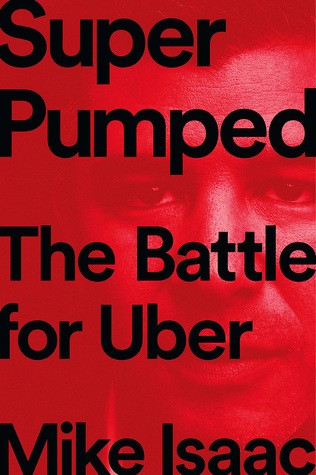
Super Pumped
by Mike Isaac · 2019
The rise and spectacular fall of Travis Kalanick, told through the culture he built that made Uber unstoppable and eventually ungovernable.
Worth reading? Super Pumped is the best account of Uber's Kalanick years because Isaac had the sourcing to show exactly how the same aggression that beat taxi regulators in city after city also produced Greyball, a toxic internal culture, and eventually a board revolt. Skip it only if you followed the 2017 news cycle in real time and remember most of the beats already.
| Full Title | Super Pumped: The Battle for Uber |
|---|---|
| Author | Mike Isaac |
| Published | 2019 |
| Publisher | W. W. Norton & Company |
| Category | Business & Money |
| Favorite quote | “Uber, its executives liked to say, was 'always be hustlin'.'” |
The Verdict
Isaac had the access most tech reporters would kill for – sources deep enough inside Uber to reconstruct board meetings, internal Slack fights, and the exact sequence of scandals that took Kalanick down in 2017. That access is the book’s whole value; without it, this would just be a recap of headlines you already read.
What makes it worth your time isn’t the “founder falls from grace” arc, which you already know the shape of. It’s watching the same aggression – the willingness to break rules city by city to beat taxi regulators – metastasize into Greyball, a broken harassment complaint system, and a board that finally decided the founder was more liability than asset. Read it for the mechanism, not the ending.
you want to understand how founder-worship culture and 'always be hustling' can both build a $70 billion company and blow it up from the inside
you already followed the Uber saga closely in real-time through 2017 tech press -- this consolidates that reporting rather than breaking dramatically new ground
Book Summary
Uber's early growth strategy was explicitly confrontational: enter a city illegally if needed, flood it with drivers and cheap rides, and dare regulators to shut down a service riders already loved -- a playbook that worked because public opinion sided with convenience over taxi-industry rules, and Kalanick was willing to burn political capital city by city to make it stick.
That same aggression turned inward. Uber's internal culture rewarded cutthroat competitiveness (the "always be hustlin'" ethos), tolerated a sexual harassment complaint system that failed employees for years, and used tools like Greyball to actively evade law enforcement -- decisions that were strategic wins in the short term and became liabilities once Susan Fowler's blog post and a string of scandals hit in 2017.
Kalanick's ouster wasn't a single event but an accumulation -- investor pressure, a damning internal investigation, board maneuvering behind his back -- that shows how founder control, once it becomes a liability instead of an asset, can be stripped away even from someone who built the company's entire identity around his own aggression.
Top 8 Lessons from Super Pumped
- A 'break the rules and apologize later' growth strategy can win market after market against entrenched regulation, but it also normalizes rule-breaking as a company value that doesn't stay contained to the regulatory fight.
- Aggressive founder culture that gets celebrated during hypergrowth (the 'always be hustlin'' ethos) often has a toxic internal cost that's invisible until a single public account (Susan Fowler's blog post) breaks the dam.
- Tools built to evade oversight (Greyball, used to dodge regulators and law enforcement) create legal and reputational exposure that can resurface years after they stop being useful.
- A company's HR and complaint-handling systems can fail for years without consequence until external pressure (press, investors, public opinion) forces an internal reckoning.
- Founder control is only as secure as investor patience -- board members who backed a founder through years of growth can turn quickly once the founder becomes a liability.
- A CEO's personal brand and the company's brand can become so fused that removing the CEO becomes an identity crisis for the whole organization, not just a leadership change.
- Aggressive competitive intelligence against rivals (Uber vs. Lyft) can escalate into ethically and legally risky behavior that outside counsel later has to investigate.
- Scandal accumulation, not one single event, is usually what forces a founder out -- Kalanick's exit followed a slow pileup of stories, not one fatal one.
Top 1 Quotes from Super Pumped
"Uber, its executives liked to say, was 'always be hustlin'.'"
Mike Isaac, Super Pumped
Frequently Asked Questions
Is Super Pumped worth reading?
Yes, if you want the fullest account of how Uber's aggressive culture built the company and then nearly destroyed it. Isaac's sourcing inside Uber is the best part.
Is Super Pumped only about Travis Kalanick?
Mostly, yes -- he's the throughline. The book uses his rise and fall as the frame for Uber's broader culture, regulatory battles, and 2017 scandals.
Does Super Pumped cover the Greyball tool and the Susan Fowler allegations?
Yes -- both are covered in detail, along with the board maneuvering that led to Kalanick's resignation as CEO in 2017.
Is there a TV adaptation of Super Pumped?
Yes, Showtime adapted it into a limited series in 2022, though the book has more room for the regulatory and internal-culture detail than the show does.
Ready to read it?
Get Super Pumped on Amazon