The Barefoot Investor
by Scott Pape · 2016
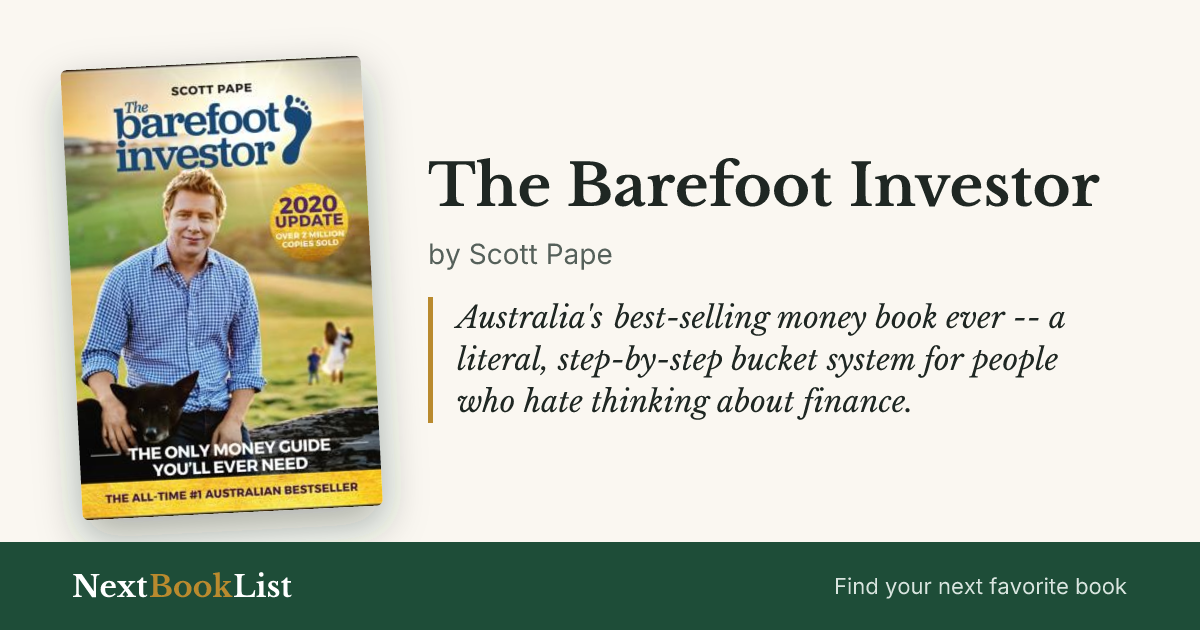
Australia's best-selling money book ever -- a literal, step-by-step bucket system for people who hate thinking about finance.
Worth reading? The Barefoot Investor works because it removes every decision except one: follow the steps in order. Scott Pape's bucket system -- Blow, Mojo, Grow, and a set of specific accounts -- turns money management into a checklist instead of an ongoing debate with yourself. The catch is that it's written for Australians, down to specific banks and superannuation advice, so the exact steps need translating if you're reading from elsewhere; the underlying structure still transfers. It's at its best for people who've never had a system at all. Skip it if you already have working accounts and automation in place -- read it if you need someone to just tell you the order to do things in.
| Full Title | The Barefoot Investor: The Only Money Guide You'll Ever Need |
|---|---|
| Author | Scott Pape |
| Published | 2016 |
| Publisher | Wiley |
| Category | Business & Money |
The Verdict
Scott Pape’s real insight is that most people don’t fail at money because they lack knowledge – they fail because every dollar requires a fresh decision. The Barefoot Investor’s bucket system removes that. Set up the accounts once, automate the transfers, and the system runs whether you’re paying attention or not.
The book is unapologetically Australian: specific banks, specific superannuation funds, specific fee benchmarks. If you’re in Australia, that specificity is the whole appeal – you can follow the steps exactly. If you’re not, you’ll need to translate the structure to your own country’s accounts and retirement system, but the underlying order of operations still holds up.
Where it’s most useful is for someone who has never had any system at all. If you already automate your savings and know your fund’s fee structure, you’ll recognize most of this rather than learn it.
Read it if you want a literal, sequenced system and don’t mind translating the country-specific parts. Skip it if you already have working automation and low fees in place – you’ve done what this book is trying to get you to do.
readers who want a specific, sequenced system: which accounts to open, what percentage goes where, in what order
you're outside Australia and need advice tied to your own country's banks, super/retirement funds, and tax rules
Book Summary
Removing emotion from money means removing daily decisions. Separate accounts for spending, saving, and emergencies sort your money automatically, so willpower stops being the deciding factor.
Fees on your retirement fund compound against you exactly as hard as returns compound for you. Most people never check, and it quietly costs them a fortune over decades.
You don't need to be a finance expert. You need a system simple enough to run on autopilot, and disciplined enough that you only have to set it up once.
Top 10 Lessons from The Barefoot Investor
- Set up separate bank accounts for spending, saving, and a 'mojo' emergency fund so money sorts itself automatically.
- Fees on your superannuation or retirement fund compound against you as hard as returns compound for you -- check them.
- Build a mojo account of three months' expenses before doing anything else. It buys calm, not just cash.
- Automate transfers on payday so good money behavior doesn't depend on daily discipline.
- Get on the same page as your partner with a regular scheduled money date, not a surprise confrontation.
- Buy a home you can actually afford, not the maximum amount a bank is willing to lend you.
- Insurance protects your income and your family -- it isn't the place to cut corners to save a few dollars.
- Give kids pocket money tied to chores and their own simplified version of the bucket system, early.
- Investing doesn't need to be exciting. Low-fee index funds and consistency beat stock-picking for most people.
- Review your financial plan once a year, not constantly. Checking it daily breeds anxiety, not better decisions.
Frequently Asked Questions
Is The Barefoot Investor worth reading?
Yes, especially for Australian readers who want a literal step-by-step system. Non-Australian readers get value from the structure but need to translate the specific account and fund advice.
What is the main idea of The Barefoot Investor?
Remove daily money decisions by setting up separate accounts and automated transfers -- a fixed order of operations beats willpower-based budgeting.
How long does it take to read The Barefoot Investor?
About 5 to 6 hours. It's 288 pages, written in a plain, step-by-step style with minimal jargon.
Who should read The Barefoot Investor?
People who want an exact sequence of actions rather than general principles, particularly Australian readers. Skip it if you need country-specific advice for elsewhere.
Is The Barefoot Investor only useful for Australians?
The specific banks and superannuation advice are Australia-specific, but the bucket system and automation principles transfer to any country's accounts.
Ready to read it?
Get The Barefoot Investor on Amazon