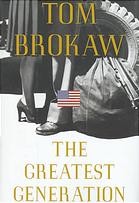
The Greatest Generation
by Tom Brokaw · 1998
Brokaw set out to profile the ordinary Americans who fought World War II and came home to build the postwar country without much fanfare, and ended up naming the generation in the process.
Worth reading? The Greatest Generation is less a single narrative than a collection of short, warm profiles, soldiers, nurses, factory workers, and the choice to keep each chapter brief means the book trades depth for breadth. It succeeds at what it's actually trying to do: put a name and a shape on a generation's collective sacrifice, even if it doesn't interrogate that generation very hard.
| Author | Tom Brokaw |
|---|---|
| Published | 1998 |
| Publisher | Random House |
| Category | History |
| Favorite quote | “It is, I believe, the greatest generation any society has ever produced.” |
The Verdict
Brokaw isn’t trying to write a definitive history, and the book is more digestible for it. Each profile runs a handful of pages, which makes it easy to read in pieces, though it also means no single story gets the depth a full biography would give it.
The home-front chapters are underrated relative to the combat ones. Watching Brokaw give equal weight to a factory worker or a wartime nurse as to a combat veteran broadens what “greatest generation” means beyond just the soldiers.
Read it if you want an accessible, emotionally resonant introduction to the WWII generation through many short, human stories. Skip it if you want the book to grapple honestly with that generation’s contradictions rather than mostly celebrate it.
you want an accessible, story-driven tribute to WWII-era Americans told through dozens of individual profiles rather than one continuous narrative
you want a critical or complicated portrait -- Brokaw's framing is consistently admiring, with little space for the generation's contradictions or failures
Book Summary
Brokaw structures the book as a series of individual profiles, mostly Americans who came of age during the Depression and then served in World War II, either in combat or on the home front, and returned to build careers, families, and communities without much public acknowledgment of what they'd been through.
The unifying argument is that this generation's defining trait wasn't just wartime service but the quiet, largely unheralded way they rebuilt civilian life afterward: going to college on the GI Bill, starting businesses, raising families, and rarely talking about the war itself, a contrast Brokaw draws deliberately against later generations' more public forms of self-expression.
The book became a cultural touchstone partly by giving a memorable name to a generation that hadn't previously had one, and the phrase "the greatest generation" entered common usage well beyond the book itself.
Top 7 Lessons from The Greatest Generation
- Brokaw's profiles emphasize modesty as a defining trait -- many subjects had rarely discussed their wartime experiences with their own families before being interviewed for the book.
- The GI Bill's funding of college education and home loans for returning veterans is presented as one of the generation's most consequential, if underdiscussed, legacies, reshaping the postwar American middle class.
- Women's contributions on the home front, factory work, nursing, running households and businesses alone, get dedicated space alongside combat narratives rather than being treated as a footnote.
- The book deliberately profiles non-famous, ordinary people rather than generals or political leaders, arguing that the generation's real character shows up in individual, unheralded lives.
- Brokaw frames the generation's reluctance to discuss trauma as both a strength (resilience, forward motion) and a cost (unprocessed pain that shaped some family relationships for decades).
- The book's admiring tone means it spends little time on the generation's contradictions -- segregation in the military, unequal access to GI Bill benefits for Black veterans, and other complicating realities get limited treatment.
- Naming a generation turned out to have lasting cultural power -- 'the greatest generation' became shorthand well beyond the book, shaping how WWII-era Americans are remembered publicly.
Top 1 Quotes from The Greatest Generation
"It is, I believe, the greatest generation any society has ever produced."
Tom Brokaw, The Greatest Generation
Frequently Asked Questions
Is The Greatest Generation worth reading?
Yes, as an accessible, story-driven introduction to WWII-era Americans, though it's more admiring than critical and works best read as individual profiles rather than continuous narrative.
Who coined the term 'the greatest generation'?
Tom Brokaw popularized the phrase with this book, and it became the common name for Americans who came of age during the Depression and WWII.
Is the book only about soldiers?
No -- it includes home-front profiles too, covering nurses, factory workers, and civilians alongside combat veterans.
Does the book address inequality within the generation, like segregation?
Only lightly -- the book's tone is largely celebratory and spends limited time on unequal treatment of Black veterans or other structural inequities of the era.
Ready to read it?
Get The Greatest Generation on Amazon