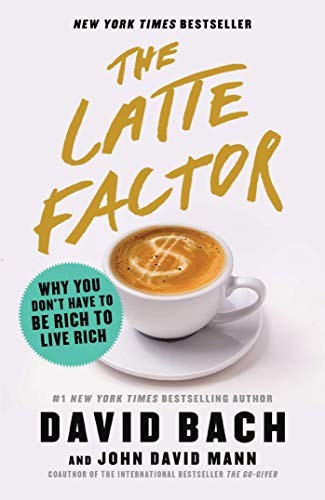
The Latte Factor
by David Bach · 2019
A financial parable that argues you're already earning enough to be secure -- you're just leaking it in small, invisible ways.
Worth reading? The Latte Factor is David Bach's signature idea -- that small, recurring expenses quietly cost you a fortune over decades -- wrapped in a parable about a struggling young professional and an elderly barista who mentors her. As fiction, it's thin: the dialogue is expository and the plot exists to deliver financial lessons, not to be a good story. As a delivery mechanism for one specific idea, though, it works, because the emotional arc makes 'automate your savings and pay yourself first' land harder than a bullet list would. The math behind the 'latte factor' itself has been publicly disputed -- treat the specific dollar figures as illustrative, not gospel. Read it for the parable's momentum if you've never automated a single savings transfer; skip it if you already have, since there's exactly one idea here and you already know it.
| Full Title | The Latte Factor: Why You Don't Have to Be Rich to Live Rich |
|---|---|
| Author | David Bach |
| Published | 2019 |
| Publisher | Atria Books |
| Category | Business & Money |
| Favorite quote | “You don't have to make a lot of money to be rich. You just have to make your money automatic.” |
The Verdict
David Bach has been making the same argument since Smart Women Finish Rich: your daily coffee, lunch out, or subscription you forgot about is quietly costing you a fortune over a few decades. The Latte Factor wraps that argument in a parable – a young New Yorker drowning in debt, an elderly barista who turns out to know more about money than her boss does.
As a story, it’s functional at best. The dialogue exists to deliver financial lessons, and you can feel the seams. But that’s also the point: the emotional arc around Zoey’s situation makes “automate your savings” land with more weight than another bullet-point list would.
The specific math behind the “latte factor” has taken public criticism over the years – the compounding projections assume return rates and time horizons that don’t always hold up. Take the idea seriously; take the exact dollar figures with a grain of salt.
Read it if you’ve never automated a single savings transfer and need the parable’s momentum to finally do it. Skip it if you already pay yourself first automatically – you’ve already learned the one lesson this book has to teach.
readers who respond better to a story than a spreadsheet, and who suspect their spending has small leaks they've never actually tracked
you already automate your savings and track your spending -- the parable format repeats one idea you've already internalized
Book Summary
Small, recurring daily expenses -- the 'latte factor' -- compound into a shockingly large sum over decades, even though each individual purchase feels too small to matter.
You don't need to earn more to build wealth; you likely already earn enough. The gap is usually in automatic saving, not income.
Pay yourself first: automate a percentage of every paycheck into savings and investing before you ever see the money, so the habit doesn't depend on willpower.
Top 8 Lessons from The Latte Factor
- Small recurring expenses compound into a large sum over decades -- track them before dismissing them as too minor to matter.
- Pay yourself first: automate savings and investing before the money hits your checking account, not after.
- You likely already earn enough to build wealth. The real gap is usually in automatic saving habits, not income.
- Automating a habit removes the need for daily willpower -- decide once, and let the system run itself.
- Find your own 'latte factor' -- the specific small expense you can redirect toward savings without feeling deprived.
- Start investing with whatever amount you have now rather than waiting until you feel like you have 'enough' to start.
- A mentor or outside perspective can reveal financial blind spots you can't see from inside your own habits.
- Financial change doesn't require a dramatic overhaul -- small automated shifts compound the same way small expenses do.
Frequently Asked Questions
Is The Latte Factor worth reading?
Yes, if you respond better to a story than a spreadsheet and have never automated your savings. If you already have, there's only one idea here and you already know it.
What is the main idea of The Latte Factor?
Small recurring expenses compound into large sums over decades, and automating your savings -- paying yourself first -- closes that gap without relying on willpower.
Is the 'latte factor' math in the book accurate?
The core idea -- small expenses compound -- is sound, but the specific dollar projections in the book have been publicly disputed. Treat the numbers as illustrative, not precise forecasts.
How long does it take to read The Latte Factor?
About 2 to 3 hours. It's a short parable at 176 pages, written to be read in one or two sittings.
Is The Latte Factor good for people who already budget and save?
Not particularly. It's aimed at readers who haven't automated their savings yet. If you already have a system, the parable format will feel like a repeat of something you've internalized.
Ready to read it?
Get The Latte Factor on Amazon