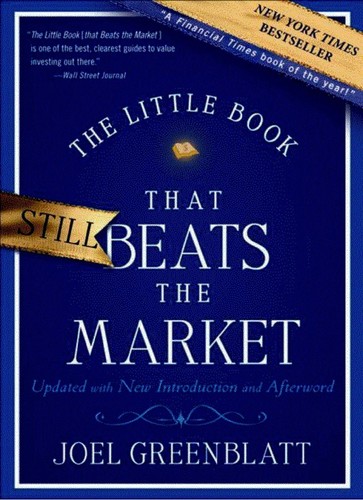
The Little Book That Still Beats the Market
by Joel Greenblatt · 2010
A formula for picking stocks, explained simply enough that Greenblatt tested it on his own kids.
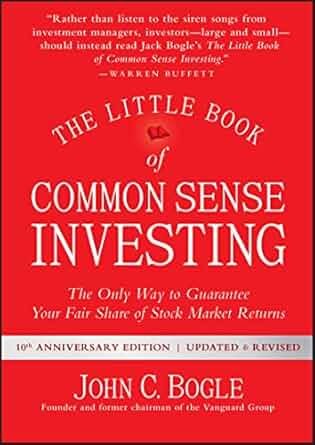
Worth reading? This is not the same book as The Little Book of Common Sense Investing, even though the titles sit next to each other on a shelf and both promise simplicity. Bogle's book is a case for buying the entire market through a low-cost index fund and never picking a stock again. Greenblatt's book is the opposite bet: a mechanical formula -- rank companies by return on capital and earnings yield, buy the cheapest good businesses, hold and rotate for a year -- designed to beat the index by picking stocks systematically rather than by gut feel. Worth reading if you want to understand why "good company at a good price" can be turned into an actual, testable rule instead of a vague Warren Buffett platitude. Skip it if you've already decided indexing is your strategy -- Greenblatt's formula demands discipline through stretches of underperformance that most people, tested against Bogle's simpler promise, won't stick with.
| Author | Joel Greenblatt |
|---|---|
| Published | 2010 |
| Category | Business & Money |
| Favorite quote | “Buy good companies at bargain prices.” |
The Verdict
Greenblatt wrote this so plainly he tested the explanation on his own children, and it shows – there’s no jargon standing between you and the two numbers that drive the whole strategy. The honesty about the formula’s bad years is what separates this from the usual “beat the market” pitch.
you want a rules-based, quantitative way to pick individual stocks instead of picking by gut feel
you've already decided you'd rather own the whole market than pick stocks -- this book won't talk you out of indexing
Book Summary
Greenblatt's "magic formula" ranks stocks on two numbers: return on capital (how good the business is at generating profit from the money invested in it) and earnings yield (how cheap the stock is relative to its earnings). Buy a basket of the stocks that score well on both, hold each for about a year to manage taxes, rotate into the next batch, and repeat. The formula does the picking so you don't have to rely on judgment calls you're not equipped to make.
The case for why this works is Greenblatt's real contribution: the market misprices individual stocks constantly for reasons that have nothing to do with the underlying business -- forced selling, index rebalancing, bad quarters, boring industries -- and a mechanical formula ignores the noise a human investor can't. Buying good businesses cheap and holding a diversified basket of them removes the emotional decision-making that ruins most stock-picking attempts.
The formula doesn't work every year, and Greenblatt is upfront about that. It underperforms the market in roughly one year out of three or four, sometimes for uncomfortably long stretches, which is exactly why it keeps working -- if it beat the market every single year, everyone would use it and the edge would disappear.
Top 10 Lessons from The Little Book That Still Beats the Market
- Rank stocks by return on capital and earnings yield, not by story or hype.
- A good business is one that earns high returns on the capital invested in it.
- A cheap stock is one with a high earnings yield relative to its price.
- Buy a diversified basket of stocks that score well on both measures.
- Hold each position roughly a year, then rotate into the next batch.
- The formula beats the market over time precisely because it underperforms sometimes.
- Mechanical rules remove the emotional decisions that wreck most stock-picking.
- Individual stocks get mispriced for reasons that have nothing to do with the business.
- Discipline matters more than sophistication -- most investors quit during the formula's bad stretches.
- If a strategy worked every single year, everyone would copy it and the edge would vanish.
Top 1 Quotes from The Little Book That Still Beats the Market
"Buy good companies at bargain prices."
Joel Greenblatt, The Little Book That Still Beats the Market
Frequently Asked Questions
Is The Little Book That Still Beats the Market worth reading?
Yes if you want a rules-based approach to picking individual stocks and can stomach years of underperformance without abandoning the strategy. No if you've already committed to index investing.
What is the main idea of The Little Book That Still Beats the Market?
Rank stocks by return on capital and earnings yield, buy a diversified basket of the cheapest good businesses, hold about a year, and repeat -- a mechanical alternative to gut-feel stock picking.
Is this the same book as The Little Book of Common Sense Investing?
No. Bogle's book argues for buying the whole market through index funds. Greenblatt's book argues for picking individual stocks through a quantitative formula. Same 'little book' branding, opposite strategies.
Does Greenblatt's magic formula actually work?
Backtested data shows it beating the market over long periods, but it underperforms in roughly one year out of three or four -- the formula requires patience through those stretches to pay off.
Ready to read it?
Get The Little Book That Still Beats the Market on Amazon