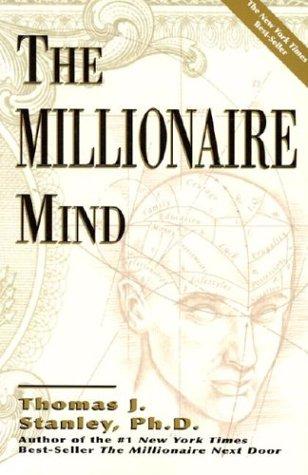
The Millionaire Mind
by Thomas J. Stanley · 2000
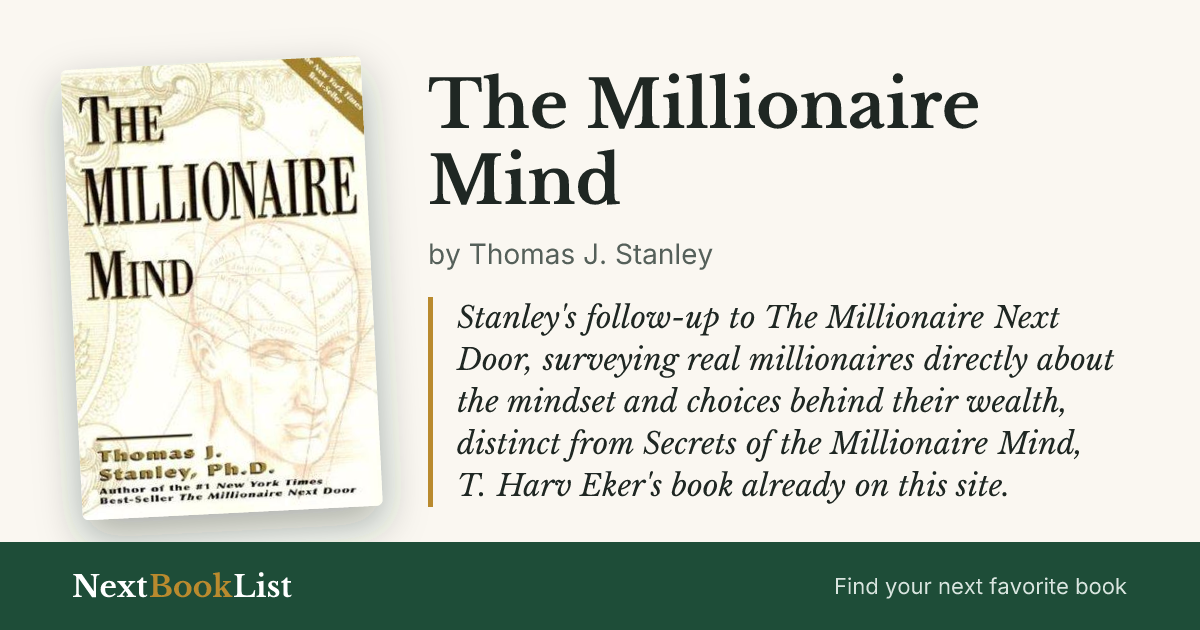
Stanley's follow-up to The Millionaire Next Door, surveying real millionaires directly about the mindset and choices behind their wealth, distinct from Secrets of the Millionaire Mind, T. Harv Eker's book already on this site.
Worth reading? The Millionaire Mind continues Stanley's survey-based research approach from The Millionaire Next Door, digging deeper into the specific mindset, risk tolerance, and career choices of self-made millionaires rather than just their spending habits. Don't confuse it with Secrets of the Millionaire Mind, T. Harv Eker's differently-titled, differently-sourced mindset book already on this site -- Stanley's book is grounded in survey data, Eker's is built around psychological 'money blueprints.'
| Author | Thomas J. Stanley |
|---|---|
| Published | 2000 |
| Category | Business & Money |
| Favorite quote | “Choose your career and your business very carefully. Autonomy is often more important than income.” |
The Verdict
Stanley’s survey-driven method is the book’s real strength – rather than theorizing about what makes people wealthy, he asked actual self-made millionaires directly, and the answers (ordinary businesses, unglamorous industries, low status-anxiety) consistently undercut popular assumptions. Keep it separate in your head from Eker’s differently-titled, differently-sourced book on the same general topic.
you want survey-based research on how actual self-made millionaires think about risk, career choice, and money, from the author of The Millionaire Next Door
you're looking for Secrets of the Millionaire Mind, that's a different book, by T. Harv Eker, focused on money 'blueprints' and mindset psychology rather than Stanley's survey-driven demographics
Book Summary
Stanley's surveys of real millionaires found that most self-made wealth doesn't come from a single lucky break or an especially high-status career -- it comes disproportionately from ordinary business ownership (especially in unglamorous industries), consistent risk-taking within a person's own area of competence, and a willingness to be misjudged by people who equate visible status symbols with actual financial success.
He also found self-made millionaires reported unusually high satisfaction from their work itself and unusually low anxiety about social status compared to popular assumptions about the wealthy -- many chose unglamorous, overlooked industries specifically because competition was thinner there, a pattern that echoes the same industry-selection logic that shows up in In Search of Excellence and other business-strategy books, applied here to individual entrepreneurship instead of corporate strategy.
Top 7 Lessons from The Millionaire Mind
- Most self-made millionaire wealth in Stanley's surveys comes from ordinary, often unglamorous business ownership, not high-status careers.
- Choosing less competitive, overlooked industries can be a deliberate wealth-building strategy, not a fallback.
- Consistent risk-taking within your own area of genuine competence outperforms occasional high-risk bets outside it.
- Willingness to be misjudged by others (driving an ordinary car, living in a modest house) correlates with actual wealth-building in Stanley's data.
- Job satisfaction and low status-anxiety were unusually common among the self-made millionaires surveyed.
- Financial success tends to follow from focus and consistency in one domain over many years, not diversification of effort.
- Popular assumptions about what wealthy people value (status, luxury) are frequently wrong according to direct survey data.
Top 1 Quotes from The Millionaire Mind
"Choose your career and your business very carefully. Autonomy is often more important than income."
Thomas J. Stanley, The Millionaire Mind
Frequently Asked Questions
Is The Millionaire Mind worth reading?
Yes, if you want survey-based research on self-made millionaires' actual mindset and choices, as a follow-up to The Millionaire Next Door. It's grounded in data rather than motivational anecdote.
Is The Millionaire Mind the same as Secrets of the Millionaire Mind?
No -- they're different books by different authors. The Millionaire Mind is Thomas J. Stanley's survey-based research. Secrets of the Millionaire Mind is T. Harv Eker's mindset-and-psychology book built around 'money blueprints.'
What is the main idea of The Millionaire Mind?
Most self-made wealth comes from consistent, often unglamorous business ownership and risk-taking within a person's own competence, not from lucky breaks or high-status careers -- based on direct survey data from real millionaires.
Is The Millionaire Mind a sequel to The Millionaire Next Door?
Yes, it's a follow-up using similar survey methodology, focused more specifically on mindset, risk tolerance, and career/business choice rather than the spending-habits focus of the first book.
Ready to read it?
Get The Millionaire Mind on Amazon