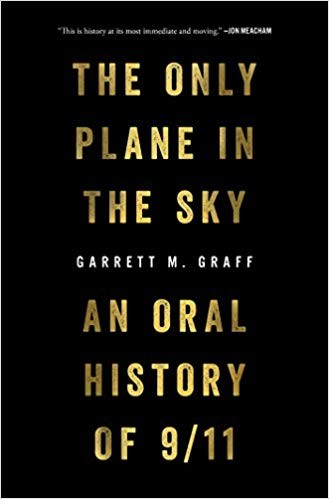
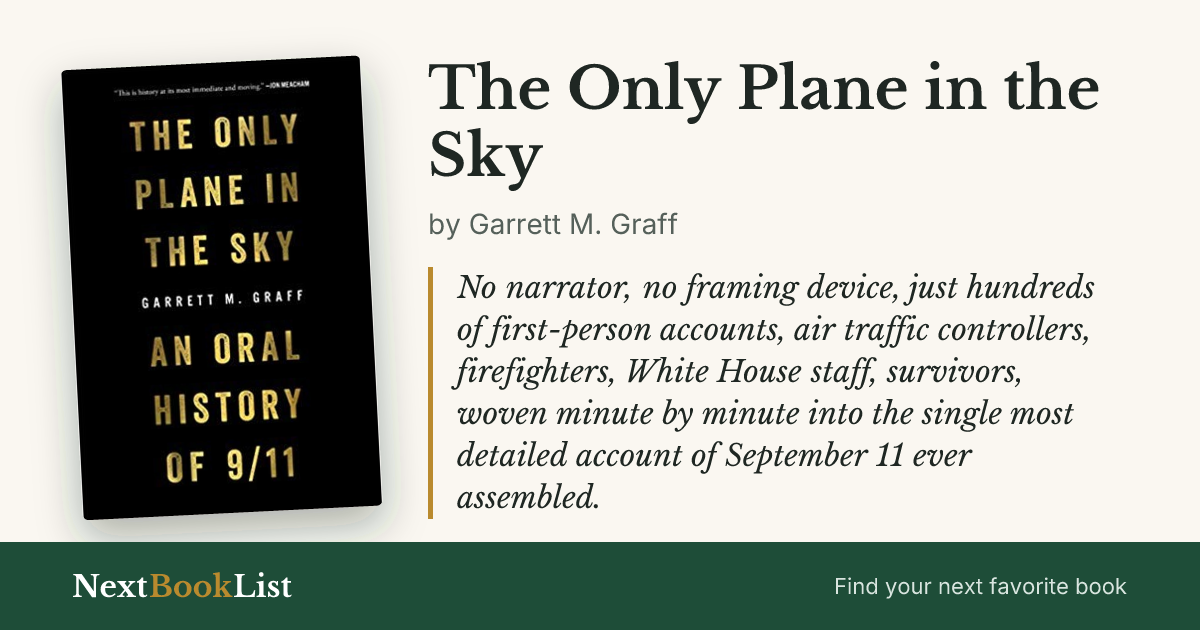
The Only Plane in the Sky
by Garrett M. Graff · 2019
No narrator, no framing device, just hundreds of first-person accounts, air traffic controllers, firefighters, White House staff, survivors, woven minute by minute into the single most detailed account of September 11 ever assembled.
Worth reading? Graff assembled this from hundreds of interviews (his own and previously archived ones) and structured it entirely as first-person testimony, minute by minute, with no narrator smoothing it over. That format is the whole point -- it puts you inside the day's confusion and fear in a way a single-author narrative account can't.
| Full Title | The Only Plane in the Sky: An Oral History of 9/11 |
|---|---|
| Author | Garrett M. Graff |
| Published | 2019 |
| Publisher | Avid Reader Press |
| Category | History |
The Verdict
The format is the argument here. Graff could have written a conventional narrative history of 9/11, and there are good ones already. Instead he assembled hundreds of first-person accounts and let them run minute by minute, unfiltered by a narrator’s hindsight, which is what makes this feel less like history and more like being back inside the day itself.
That’s also the book’s real limit: it doesn’t explain causes, doesn’t cover the wars or policy fallout, doesn’t offer analysis. It stays inside roughly 24 hours. If you want that context, read this alongside a standard history of the attacks and their aftermath, not instead of one.
Read it if you want the closest thing to living through that morning through the eyes of the people who actually did. Skip it, or pair it with something else, if you’re looking for the “why” and “after” – this book is entirely about the “during.”
you want to experience 9/11 through the people who actually lived it in real time, not through a single author's retrospective analysis
you want historical context and analysis of causes and aftermath -- this book stays inside the day itself, told in the voices of the people there, not the policy or intelligence-failure debates that followed
Book Summary
Graff built the book entirely from oral history -- first-person accounts from air traffic controllers, Pentagon staff, firefighters, passengers' families, White House officials, and survivors, sequenced minute by minute across the day, with no narrator's voice smoothing the transitions or imposing hindsight.
The format surfaces the day's genuine, moment-to-moment confusion -- what people actually knew, misunderstood, or feared in real time, before the events had been shaped into a settled historical narrative with a clear beginning, middle, and end -- which is different from how most retrospective 9/11 accounts read.
Because it's built entirely from many individual first-person voices rather than one author's analysis, the book deliberately withholds interpretation and context about causes or consequences, staying inside the lived experience of the day itself rather than the intelligence failures, wars, or policy debates that followed.
Top 7 Lessons from The Only Plane in the Sky
- Oral history, assembled minute by minute from many first-person accounts, can convey the felt confusion of a crisis in a way retrospective narrative analysis can't.
- People living through a historic event in real time rarely understand it with the clarity later hindsight provides -- confusion and misinformation were the lived reality of the day, not a footnote.
- The experience of a national crisis varies enormously by vantage point -- an air traffic controller, a Pentagon staffer, and a passenger's family member lived entirely different versions of the same morning.
- First responders and ordinary bystanders made split-second decisions with radically incomplete information, and many of those decisions turned out to matter enormously.
- A historical event's official narrative, built after the fact, often smooths over the contradictions and uncertainty that were present in the moment.
- Institutional communication broke down badly across agencies on 9/11, and that breakdown shaped outcomes as much as any single decision did.
- Preserving a large number of individual first-person testimonies, without editorial framing, is itself a form of historical accountability -- it resists a single simplified version of events taking over.
Frequently Asked Questions
Is The Only Plane in the Sky worth reading?
Yes -- it's the most detailed, minute-by-minute account of September 11 available, and the oral history format puts you inside the day's real confusion in a way a standard narrative history can't.
What is The Only Plane in the Sky about?
An oral history of September 11, 2001, told entirely through first-person accounts from air traffic controllers, Pentagon staff, firefighters, survivors, and families, sequenced minute by minute across the day.
Does the book explain why the attacks happened or what came after?
No -- it stays inside the day itself, told through the people living it in real time. It's not the book for intelligence-failure analysis, the wars that followed, or policy debate.
Is this the right book for someone too young to remember 9/11?
Yes -- the oral history format makes the day's felt experience accessible without requiring prior context, though pairing it with a broader history of the aftermath fills in what this book deliberately leaves out.
Why doesn't the book quote its own interviewees on this page?
Every line in the book is a direct, named individual's own account of that day, not the author's narration -- quoting any one of them here would misattribute their words to Graff, so this page doesn't excerpt them out of context.
Ready to read it?
Get The Only Plane in the Sky on Amazon