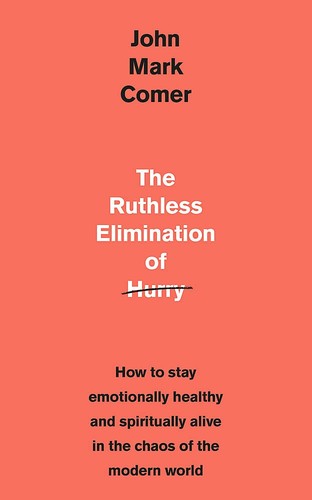
The Ruthless Elimination of Hurry
by John Mark Comer · 2019
A pastor who burned out on ministry makes the case that hurry, not sin, is the biggest threat to your spiritual life.
Worth reading? The Ruthless Elimination of Hurry is a burnout memoir dressed up as a spirituality book, and that's exactly why it works. Comer, a former megachurch pastor who quit his own growing church because the pace of it was destroying him, doesn't lecture from a distance. He diagnoses hurry itself, not busyness, not sin, not distraction, as the main enemy of a healthy inner life, then borrows Dallas Willard's old line and takes it further: you cannot follow Jesus and be in a hurry, full stop. The back half hands you four concrete practices, silence and solitude, sabbath, simplicity, slowing, instead of leaving you with a diagnosis and no prescription. It's the best on-ramp in this cluster because it names the actual disease before it starts prescribing.
| Full Title | The Ruthless Elimination of Hurry: How to Stay Emotionally Healthy and Spiritually Alive in the Chaos of the Modern World |
|---|---|
| Author | John Mark Comer |
| Published | 2019 |
| Publisher | WaterBrook |
| Category | Religion & Spirituality |
| Favorite quote | “Hurry is not just a disordered schedule. Hurry is a disordered heart.” |
The Verdict
Comer earns the right to write this book the hard way: he built a fast-growing church, burned out running it, and quit. That’s not a bio detail, it’s the whole argument. He’s not lecturing from outside the hurry, he’s reporting back from inside it, and the diagnosis he brings back is sharper than most burnout books manage. Hurry isn’t a scheduling problem, it’s a heart problem, and it wrecks patience, love, and presence faster than anything else in modern life.
What separates this from a shelf of similar titles is the second half. Instead of leaving you with a correctly-named disease and no treatment, Comer hands you four practices, silence and solitude, sabbath, simplicity, slowing, that are old, unfashionable, and actually specific enough to start this week. Read it if you’re a Christian or spiritually curious reader who’s busy enough to suspect something’s wrong but hasn’t been able to name it. Skip it if you want a secular productivity book with hacks instead of disciplines, this one asks more of you than that.
you're a Christian (or spiritually curious) reader who's busy, distracted, and suspects the pace of your life is the actual problem, not your willpower
you want a purely secular productivity book -- this is Jesus-centered throughout, and the solutions are spiritual disciplines, not hacks
Book Summary
Hurry, not any particular sin, is the defining spiritual crisis of modern life. Comer argues it corrodes love, patience, and presence faster than almost anything else, and most people mistake being busy for being faithful or productive.
Jesus's own pace of life, unhurried, walking everywhere, taking naps, disappearing to pray, is presented as the actual model to imitate, not just his teachings. Comer's line, borrowed from Dallas Willard, is blunt: ruthlessly eliminate hurry from your life.
Four practices are offered as the real antidote: silence and solitude, sabbath, simplicity, and slowing down on purpose. None of them are hacks. They're old, unfashionable disciplines that require you to rebuild your relationship with time itself.
Top 10 Lessons from The Ruthless Elimination of Hurry
- Hurry is the actual enemy of a healthy spiritual and emotional life, not busyness or sin in the abstract.
- You can be doing good, important work and still be spiritually corroded by the pace at which you're doing it.
- Jesus's unhurried pace of life is a model to copy, not just background detail in the gospels.
- Silence and solitude aren't luxuries for introverts -- they're maintenance for anyone's soul.
- Sabbath is a weekly, non-negotiable rhythm, not an occasional day off when you get around to it.
- Simplicity means cutting obligations and possessions on purpose, not just tidying your calendar.
- Slowing down is a practice you build in small moments (driving, walking, eating) before it shows up in the big ones.
- Comparison and hurry feed each other -- a hurried life has no margin left to resist comparing itself to everyone else's.
- Burnout in ministry or any calling is a warning sign about pace, not proof you should quit the calling itself.
- Community and deep relationships require unhurried time that a packed schedule structurally can't produce.
Top 2 Quotes from The Ruthless Elimination of Hurry
"Hurry is not just a disordered schedule. Hurry is a disordered heart."
John Mark Comer, The Ruthless Elimination of Hurry
"The great enemy of spiritual life in our day is not media or Marxism, and it's not sex or drugs or rock 'n' roll. It's hurry."
John Mark Comer, The Ruthless Elimination of Hurry
Frequently Asked Questions
Is The Ruthless Elimination of Hurry worth reading?
Yes, especially if you're a busy Christian reader who suspects the pace of your life, not your willpower, is the real problem -- Comer diagnoses it clearly and gives concrete practices, not just theory.
Is The Ruthless Elimination of Hurry only for Christians?
It's written from a Christian, Jesus-centered perspective throughout, but the core argument about hurry corroding your inner life lands for a spiritually curious reader too.
What is the main idea of The Ruthless Elimination of Hurry?
Hurry, not sin or distraction, is the biggest threat to a healthy spiritual and emotional life, and the fix is four old disciplines: silence and solitude, sabbath, simplicity, and slowing.
Does the book give practical steps or just philosophy?
Both -- the first half diagnoses hurry as the problem, and the second half hands you four specific practices to actually change your pace of life.
Who should read The Ruthless Elimination of Hurry?
Busy, distracted Christians (or spiritually curious readers) who feel like their schedule is quietly wrecking their inner life and want a diagnosis plus a real prescription.
Ready to read it?
Get The Ruthless Elimination of Hurry on Amazon